
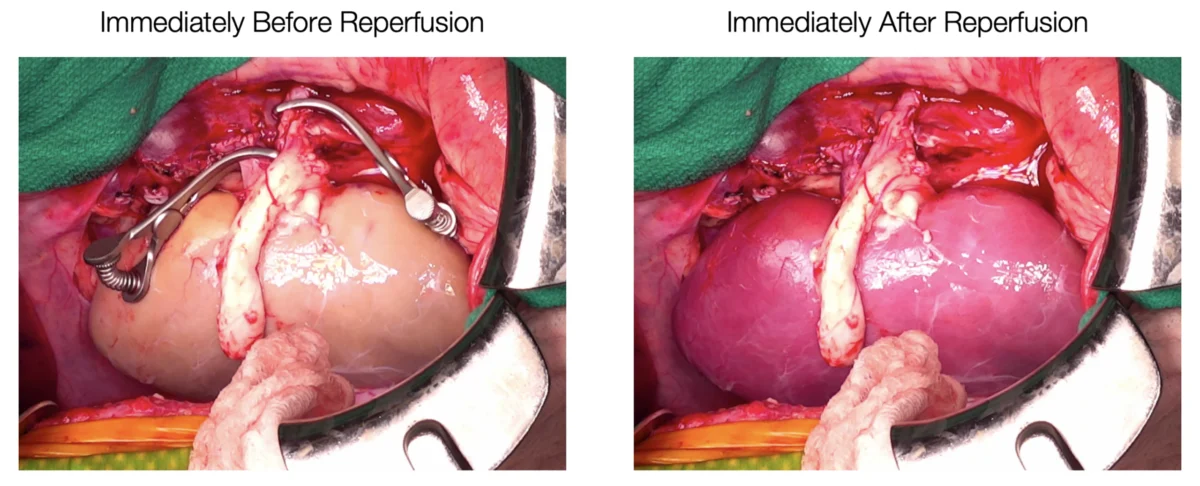
Time is the ultimate adversary in the world of organ transplantation. For decades, the medical community has operated under a strict biological deadline: once an organ is harvested from a donor, the clock begins to tick toward an inevitable decline. Surgeons are typically granted a window of fewer than 24 hours to successfully transport and implant a kidney before the organ suffers irreparable ischemic damage. This narrow timeframe is a primary driver of the global organ shortage crisis, where thousands of viable organs are discarded annually simply because they cannot reach a suitable recipient in time.
However, a breakthrough study from Texas A&M University is poised to shatter these limitations. A team of researchers led by thermodynamicist Matthew Powell Palm has successfully demonstrated that kidneys can be "supercooled" to -4 °C (25 °F) without the formation of ice, extending the viability of the organ to at least 72 hours. This landmark achievement, recently presented at the American Transplant Congress in Boston, suggests that the future of transplant logistics could move from a race against the clock to a more calculated, flexible, and globalized system.
The Physics of Preservation: Moving Beyond the Ice Bucket
For more than three decades, the gold standard for organ preservation has been static cold storage. Organs are typically flushed with a protective solution and submerged in ice at approximately 4 °C. While this slows metabolic activity, it does not stop it entirely. More importantly, it is a delicate balance; if the temperature drops below the freezing point, ice crystals form. Because ice expands, it causes structural damage at the cellular level, effectively destroying the tissue it was meant to preserve.
For years, the scientific community has looked toward cryopreservation—the practice of freezing biological matter—as the holy grail. While cryopreservation has been successful for smaller biological units like eggs, sperm, and embryos, the complexity of a whole organ presents a unique set of challenges. Traditional cryoprotectants, which function as biological antifreeze, often carry toxic side effects and require complex regulatory approval paths.
Dr. Powell Palm’s approach shifts the focus from chemistry to thermodynamics. By maintaining an organ under constant, precisely controlled pressure, the research team has enabled the cooling of kidneys to -4 °C while preventing the phase transition into ice. This "low-tech, high-science" method avoids the need for external chemical additives, utilizing the existing, clinically approved preservation solutions already standard in hospitals. The device, a hermetically sealed chamber with a transparent lid, monitors the organ’s thermal state in real-time, ensuring it remains in a liquid-subcooled state rather than a frozen one.
A Chronology of the Research and Validation
The validation process for this technology was rigorous, involving a series of porcine (pig) kidney transplantations to prove functionality and long-term health. The study structure followed a clear progression to compare the new method against current clinical standards:
- Baseline Testing: Researchers first removed kidneys from pigs and flushed them with standard preservative solutions. A control group was stored on ice for two to 24 hours, mimicking the current clinical reality.
- Experimental Phase: The primary test group was subjected to the supercooling device for 24, 48, and 72 hours.
- Transplantation: The stored kidneys were reimplanted into the original donor pigs, with the second healthy kidney removed to ensure the animal relied entirely on the experimental organ.
- Assessment: The recovery of renal function was measured through urine production, serum markers, and long-term growth analysis over a 30-day period.
The results were striking. Kidneys supercooled for 24 hours regained function almost immediately upon transplantation. Perhaps more significantly, kidneys stored for 72 hours—triple the current clinical limit—showed recovery rates that outperformed organs stored on ice for just 24 hours. Even after 30 days, the organs demonstrated consistent growth in proportion to the animals’ overall development, and a follow-up analysis at 200 days confirmed that the organs remained healthy and fully integrated.
Addressing the Organ Shortage Crisis
The human cost of the current 24-hour limit is staggering. In the United States alone, the Health Resources and Services Administration (HRSA) reports that over 104,000 individuals are currently on the waiting list for a kidney transplant. The mortality rate associated with this wait is severe, with an estimated 17 patients passing away every day while awaiting a life-saving procedure.

Beyond the shortage of donors, the logistical wastage is an equally critical issue. Data indicates that as many as one in three donated kidneys are discarded annually. These organs are often perfectly healthy at the time of donation, but due to flight delays, difficulty in cross-matching recipients, or the sheer geographic distance between the donor and the patient, the "cold ischemia time" expires before the surgery can be performed.
Kevin Myer, president and CEO of the Texas-based organ procurement organization LifeGift, described the study as a "landmark achievement." From his perspective, the implications for logistics are profound. "If we can get up to 72 hours, that would change everything," Myer noted. A three-day window would allow for more thorough tissue matching, a reduction in emergency overnight surgeries, and the potential for international organ sharing, which is currently largely impossible due to transport time constraints.
Expert Analysis and Future Implications
The scientific community has met the findings with cautious optimism. Heidi Yeh, a transplant surgeon at Mass General Brigham, highlighted the significance of the recovery time. "Often, kidneys that have been stored for 48 hours in other studies take a week or two before they start working again," Yeh noted. The fact that the Texas A&M team’s supercooled organs begin functioning rapidly suggests that the cellular damage typically associated with prolonged storage is significantly mitigated.
However, the team is not resting at the 72-hour mark. Preliminary data suggests that the technology could potentially preserve organs for up to 120 hours. While these organs have not yet been transplanted, the structural integrity appears sound, hinting at a future where organs could be stored for nearly a week.
Furthermore, the simplicity of the device offers a distinct advantage for rapid deployment. Unlike complex perfusion machines that require electricity and mechanical pumps to mimic blood flow, the supercooling chamber is passive and compact. The research team has already successfully transported supercooled kidneys across the United States in the back of a vehicle, demonstrating a level of stability that could eventually make air travel and long-distance ground transit standard for organ distribution.
The Path to Human Trials
As the researchers, including collaborator Sebastian Giwa, move toward launching a dedicated company to commercialize the technology, the focus is shifting to regulatory hurdles. Because the method does not introduce novel chemical cryoprotectants, the team is hopeful for an accelerated approval process from the U.S. Food and Drug Administration (FDA).
If successful, this technology could decentralize the organ transplant landscape. Currently, transplant medicine is highly centralized in large urban centers where surgical teams can be mobilized on short notice. If the "shelf life" of an organ is extended, smaller community hospitals could play a larger role in the recovery and preparation of donor organs, while larger, specialized centers could focus on the surgical procedures, knowing that the timing is no longer an immediate crisis.
As the team prepares for the next phase of development, the prospect of "stopping biological time" offers a tangible glimmer of hope for the thousands of patients waiting for the call that their transplant is ready. By solving the thermodynamic problem of freezing, Powell Palm and his colleagues may have provided the missing piece in the complex puzzle of organ transplantation, effectively turning a race against time into a manageable, deliberate, and more successful medical procedure. The research serves as a reminder that some of the most significant advancements in modern medicine are not necessarily found in new drugs, but in the fundamental physical laws that govern the tissues of the human body.