
As the aerospace community prepares for the launch of the Nancy Grace Roman Space Telescope as early as the end of next month, astronomers are bracing for a transformative moment in observational science. The mission represents a paradigm shift in how humanity surveys the cosmos, moving beyond the mere detection of planetary shadows to the direct visual capture of distant worlds. At the heart of this endeavor is the most sophisticated coronagraph ever launched into orbit—an instrument designed to perform a surgical "vanishing act" on starlight, clearing the path for the direct observation of planets that have previously remained hidden within the blinding glare of their host stars.
Named in honor of Nancy Grace Roman, NASA’s first chief of astronomy and the woman widely regarded as the "Mother of Hubble," this telescope is designed to be a high-resolution, wide-field observatory. It will carry a 300-megapixel camera capable of capturing images with a field of view roughly 100 times larger than that of the Hubble Space Telescope, all while maintaining equivalent or superior resolution. This technical leap allows for a comprehensive census of the sky, providing researchers with the data necessary to unravel the mysteries of dark matter, dark energy, and the distribution of exoplanetary systems across the galaxy.
A Technological Leap in Wavefront Control
The fundamental challenge in exoplanet imaging has always been the extreme contrast ratio between a star and its orbiting planets. A sunlike star is typically billions of times brighter than the planets that orbit it, rendering them invisible to standard telescopic optics. Previous missions, such as the James Webb Space Telescope (JWST) and Hubble, utilize coronagraphs—internal masks that block the central light of a star. However, these systems are essentially static, leaving them vulnerable to "stray glare" caused by minute imperfections in mirror coatings or thermal fluctuations that can scatter starlight into artificial speckles that mimic the appearance of a planet.
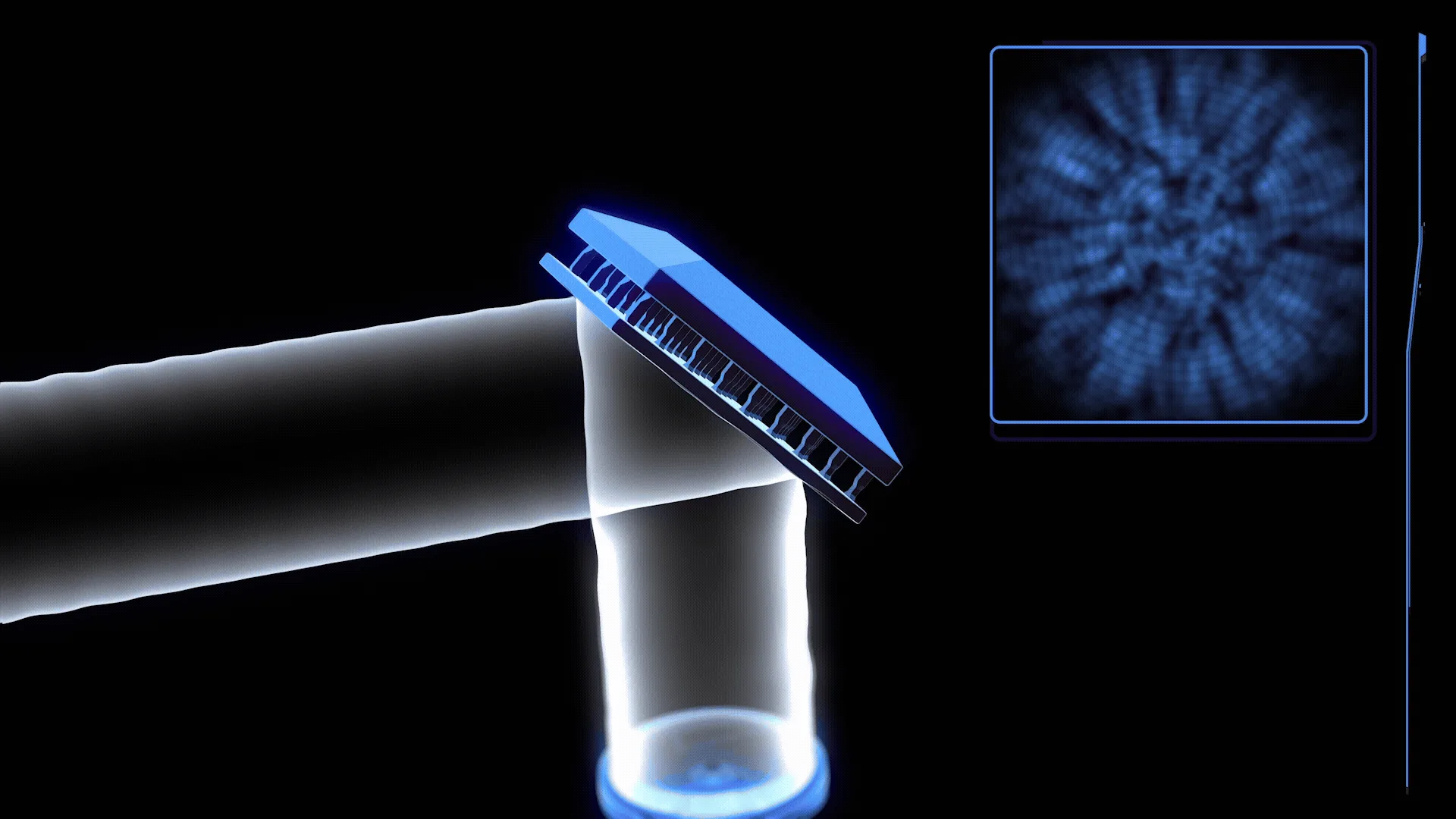
The Roman Space Telescope introduces a radical departure from this methodology through "active wavefront control." The system employs two deformable mirrors, each equipped with a 48-by-48 grid of actuators—microscopic pistons capable of minute, high-precision adjustments. These actuators can deform the mirror surfaces by increments as small as 10 picometers, roughly one-tenth the diameter of a hydrogen atom. By constantly adjusting these mirrors, the telescope effectively cancels out incoming wavefronts of light, similar to how noise-canceling headphones neutralize ambient sound.
This "active" suppression creates a dark, doughnut-shaped region around the star, significantly increasing the sensitivity of the telescope. By trapping stray photons within the system using specialized components like "silicon grass"—a dense, light-absorbing forest of microscopic spikes—the coronagraph can reduce stellar glare by a factor of up to 1,000 compared to existing space-based instruments. This enables the observation of smaller, dimmer, and more "Earth-like" planets that have remained beyond the reach of human technology until now.
Expanding the Exoplanet Census
The scientific implications of this mission are vast. Since the first discovery of an exoplanet in the early 1990s, the vast majority of confirmed worlds have been detected via indirect methods, such as the transit method (observing the dip in a star’s light as a planet passes in front) or radial velocity (measuring the gravitational wobble of a star). While these methods have cataloged thousands of planets, they rarely provide direct physical data about the planet itself.
Javier Viaña, a research scientist at Harvard and a successful applicant for Roman’s inaugural observation cycle, characterizes the transition as moving from "interviewing a handful of people" to "conducting a global census." The Roman telescope is expected to detect approximately 100,000 new transiting planets throughout its primary mission, utilizing its wide-field camera to survey vast swaths of the Milky Way.
However, it is the coronagraph’s ability to conduct direct imaging that has the astronomical community particularly focused. Current direct imaging successes are largely limited to massive, young, self-luminous gas giants orbiting far from their host stars. These "hot Jupiters" are essentially planetary newborns, still glowing with the heat of their formation. The Roman telescope will change this by targeting "Jupiter analogues"—mature, gas-giant planets that have cooled over billions of years and are primarily visible through reflected starlight. By capturing this reflected light, scientists can analyze the chemical composition of a planet’s atmosphere, providing clues about its potential to host conditions conducive to life.
The Path to Earth 2.0
Brandon Creager, the lead mechanical engineer for the coronagraph at NASA’s Jet Propulsion Laboratory (JPL), views the project as a critical evolution in space exploration. "I hope it’s remembered for it being that critical stepping stone for finding Earth 2.0," Creager states. The data collected by the Roman mission will serve as the technical blueprint for the proposed Habitable Worlds Observatory, a future flagship mission currently in the conceptual stages. The goal of that future observatory will be to directly image an Earth-sized planet orbiting in the habitable zone of a sunlike star—a task that requires a contrast ratio of ten billion to one.
The road to this achievement is paved with rigorous technical testing. In the coming months, mission controllers will face the "digging of the dark hole"—a process where they must calibrate the deformable mirrors to stabilize the coronagraphic nulling of starlight while the telescope orbits in the harsh, thermally fluctuating environment of space. Maintaining this delicate balance is a feat of engineering that many in the field acknowledge as being on the edge of the possible.
Managing a Data Deluge
The scientific community is also preparing for the logistical challenge of processing the unprecedented volume of data the telescope will return. Meredith MacGregor, a professor of astronomy at Johns Hopkins, notes that the sheer scale of the mission is daunting. "I’m honestly a little terrified about how we’re all going to deal with it, because I think it’s just so much data," she says. "I think people will legitimately still be working on Roman data for decades."
The expectation is not for high-definition imagery of alien landscapes; rather, the "images" will likely appear as a faint, single point of light or a smattering of pixels. Yet, as MacGregor points out, even a single pixel of reflected light from an exoplanet is a massive scientific victory. By applying spectroscopy to that point of light, astronomers can deconstruct the atmosphere, searching for biomarkers such as water vapor, methane, or oxygen.
Broader Implications and Historical Context
The Nancy Grace Roman Space Telescope occupies a unique position in the history of NASA’s flagship missions. It serves as a bridge between the infrared legacy of the James Webb Space Telescope and the future of life-finding missions. Its ability to simultaneously survey the dark-matter-dominated structure of the universe while performing granular investigations into individual planetary systems makes it one of the most versatile instruments ever constructed.
The timeline for the mission is critical. Following its launch, a commissioning period will take place, during which the coronagraph will undergo extensive testing. If the active wavefront control performs as expected, the telescope will begin its primary science operations, focusing on a mix of wide-field surveys and deep-field exoplanet characterization. The findings are expected to fundamentally alter our understanding of planetary formation and the frequency of solar systems resembling our own.
For the engineers like Creager and Poberezhskiy, the project represents the culmination of years of work that began in 2018. The act of "engineering darkness" around a distant star is a metaphor for the telescope’s broader mission: to strip away the overwhelming distractions of the universe to see what truly lies in the shadows. As the launch window approaches, the anticipation within the scientific community is palpable. The Roman Space Telescope does not just promise better pictures of the universe; it promises a clearer understanding of our place within it, potentially answering the age-old question of whether we are alone in the cosmos. With the successful deployment of this instrument, the "global census" of the galaxy will finally begin, marking the start of a new era in which distant worlds are no longer just statistical probabilities, but tangible objects of study.