
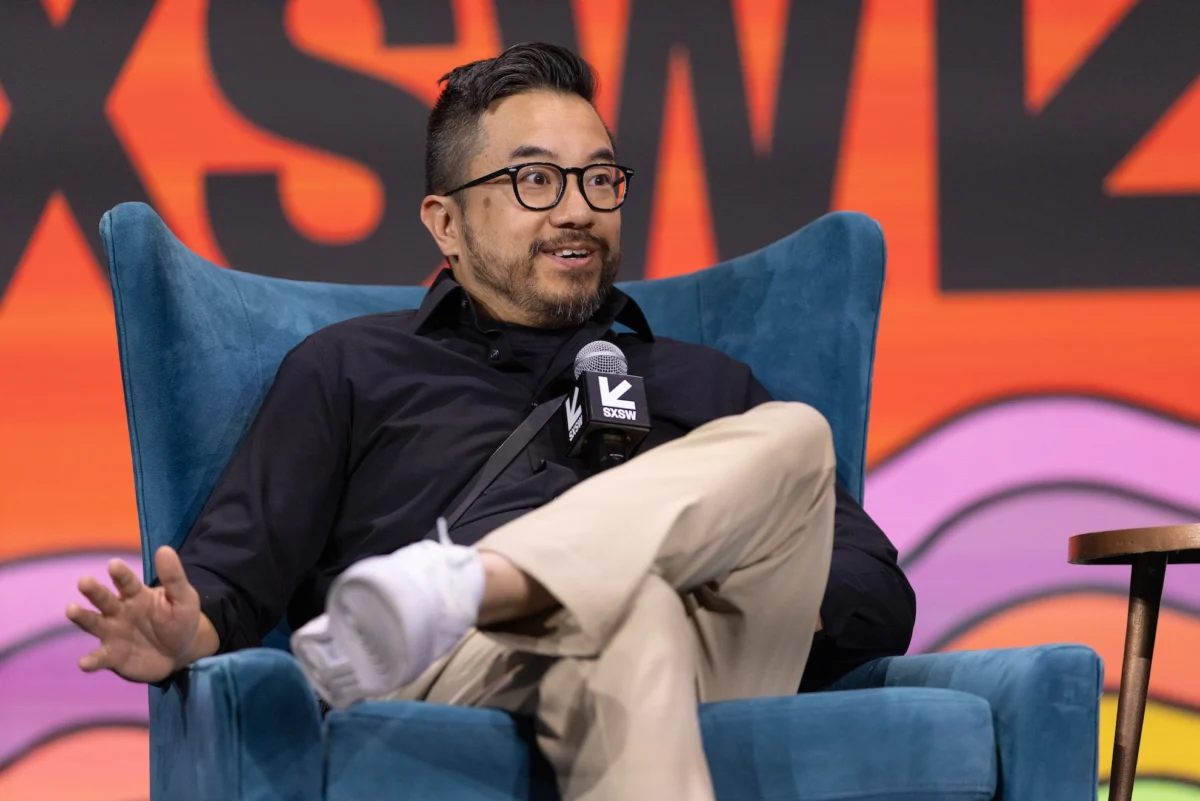
The debate surrounding the governance of artificial intelligence has intensified following recent revelations regarding model distillation, intellectual property usage, and international competition. Garry Tan, the chief executive officer of prestigious Silicon Valley startup accelerator Y Combinator, has taken a controversial stance against regulatory intervention targeting AI model distillation. While prominent frontier model developers—most notably Anthropic—have aggressively campaigned for government crackdowns on the practice, Tan contends that regulators should maintain a hands-off approach. Furthermore, he suggests that domestic open-weight AI laboratories should actively utilize similar methods to bolster the United States’ competitive positioning against foreign developers, particularly those based in China.
Model distillation is a widely utilized training procedure wherein a smaller, secondary artificial intelligence is prompted extensively by a more advanced, frontier model. By analyzing the outputs, reasoning patterns, and responses of the superior model, the smaller system effectively absorbs its capabilities. While legitimate AI developers routinely employ distillation to optimize efficiency and reduce computational costs, the practice has become a major flashpoint regarding cybersecurity, trade secrets, and intellectual property.
The controversy highlights a deepening ideological rift within the technology sector. On one side are the creators of proprietary frontier models who argue that unauthorized or deceptive distillation constitutes intellectual property theft and security vulnerabilities. On the other side are advocates of open-source and open-weight AI who view distillation as a natural evolutionary process that prevents market monopolization and democratizes access to advanced technological capabilities.
Chronology and Recent Escalations
The friction surrounding model distillation reached a critical juncture following a series of public disclosures and intelligence reports from top-tier AI laboratories. The timeline of recent events underscores the urgency with which industry leaders are pressing regulators for clarity and enforcement:
- March 2026: Garry Tan captured industry attention with his prolific adoption of cutting-edge developer tools, humorously describing his intensive utilization of advanced coding assistants as a form of "cyber psychosis," highlighting the relentless pace at which startup founders are integrating generative AI into production environments.
- July 2026: Anthropic secured a landmark $1.5 billion copyright settlement, a watershed moment that legally validated the contentious reality of how frontier model developers ingest vast quantities of human knowledge and copyrighted text without direct, upfront permission from every individual intellectual property holder.
- Early September 2026: Anthropic published its comprehensive threat intelligence report detailing what the company categorized as "illicit distillation attacks." The report alleged that specific Chinese laboratories actively obscured their identities, utilized stolen credentials, and bypassed terms of service to illegally extract proprietary reasoning capabilities from Western frontier models without authorization.
- Mid-September 2026: In response to these security reports, Anthropic CEO Dario Amodei publicly petitioned U.S. regulators to establish strict federal guardrails against unauthorized distillation. Shortly thereafter, during a media appearance, Y Combinator CEO Garry Tan directly countered this narrative, advocating instead for a "do nothing" regulatory stance and proposing an officially sanctioned American distillation framework.
The Debate Over Intellectual Property and Access
At the heart of Garry Tan’s argument is an appeal to consistency regarding data ingestion and intellectual property rights. Proprietary AI laboratories have built their multi-billion-dollar empires by sweeping up massive repositories of public and copyrighted human knowledge—ranging from news archives and books to code repositories and academic journals—often without explicit, transactional consent from the original creators. Tan argues that it is hypocritical for these same commercial entities to turn around and restrict third-party users or smaller labs from learning from the output generated by their models.
During interviews with major technology publications, Tan articulated that enforcing rigid restrictions on API calls to closed-weight models places an unfair constraint on customers and developers. In his view, once an AI model is trained on broad, publicly accessible data and commercialized for API interaction, the intelligence it exhibits should function more as a public good rather than being locked away permanently behind restrictive corporate terms of service.
However, industry defenders draw a distinct legal and ethical line between web-scraping public text for foundational pre-training and deploying automated, high-volume extraction protocols designed to replicate a proprietary model’s exact commercial advantage. Frontier labs invest tens of millions of dollars in specialized compute clusters, proprietary reinforcement learning techniques, and expert human alignment to achieve cutting-edge reasoning capabilities. When foreign actors or competing labs systematically harvest these capabilities via automated distillation—particularly by utilizing fraudulent credentials or masking their digital footprint—executives like Amodei argue it undermines the economic viability of domestic research and development.
The Doomer Scenario: The Risk of Monolithic Centralization
Tan’s overarching philosophy is shaped by a deep-seated concern regarding market consolidation. For the leader of the startup ecosystem that helped launch giants like Airbnb, Stripe, and Coinbase, the ultimate nightmare scenario for the artificial intelligence landscape is not unauthorized distillation, but rather the emergence of a single, monolithic corporate entity.
In Tan’s assessment, if regulatory bodies capitulate to the demands of frontier labs and criminalize or heavily restrict model distillation, the barrier to entry for smaller competitors will become insurmountable. This regulatory capture would consolidate the immense power of artificial intelligence into the hands of a tiny handful of exceptionally well-capitalized, proprietary providers. Should this happen, a single company possessing superior capital reserves and exclusive access to elite researchers could permanently pull away from the rest of the market, effectively eliminating healthy competition.
To prevent this outcome, Tan advocates for a symbiotic relationship within the broader AI ecosystem. He acknowledges that frontier labs play an essential role in pushing the boundaries of science and capability, and he agrees that their massive capital investments must remain financially viable and profitable. Concurrently, however, he insists that robust open-weight models are vital for ensuring that developers, startups, and international allies maintain freedom, transparency, and accessible compute options.
Economic and Strategic Implications for the United States
The policy debate over model distillation carries profound implications for U.S. national security, economic competitiveness, and the future of open-source software. Policymakers in Washington, D.C., are currently wrestling with how to balance national security directives—such as export controls on high-end semiconductors and restrictions on adversarial access to advanced algorithms—with the vibrant traditions of open scientific inquiry.
If the United States adopts Tan’s suggestion to foster an "American distillation regime," it could fundamentally reshape federal AI policy. Rather than treating distillation strictly as an illicit security vulnerability, an official regime could establish clear legal frameworks allowing domestic open-weight labs to legally and efficiently distill insights from domestic frontier models. This would effectively accelerate the capabilities of American open-source alternatives, ensuring that the global open-weight ecosystem is dominated by democratic, Western-aligned technologies rather than foreign state-backed alternatives.
Conversely, following the path advocated by Anthropic and other frontier labs would prioritize corporate security, intellectual property protection, and rigorous defensive postures against foreign espionage. Proponents of this approach argue that maintaining a wide technological moat between Western frontier models and foreign competitors is essential to preserving American geopolitical dominance in the twenty-first century.
As Congress, the Department of Commerce, and various regulatory agencies continue to evaluate the security implications of generative AI, the divide between Silicon Valley’s venture capitalists and its frontier research labs remains wide. Whether policymakers choose to clamp down on the extraction of machine intelligence or embrace an era of open-weight proliferation will ultimately determine the structural architecture of the global artificial intelligence economy for decades to come.