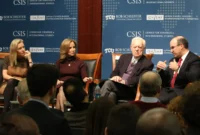

The Center for Strategic and International Studies (CSIS), a prominent Washington, D.C.-based bipartisan think tank, officially launched a comprehensive International Security Program (ISP) initiative designed to scrutinize the complex dynamics shaping the U.S. Armed Forces. Titled Defense Outlook: A CSIS Series on Strategy, Budget, Forces, and Acquisition, the initiative debuted at a high-profile public event on January 27, 2016. The multi-year project seeks to unpack the critical interlinkages connecting national security strategy, fiscal resource allocation, military force structure, and defense acquisition processes, offering policymakers and defense analysts a holistic view of modern military readiness.
Against a backdrop of ongoing budget caps, shifting global threat matrices, and rapid technological modernization cycles, the launch event served as a focal point for defense discourse. During the evening session, which ran from 8:00 to 10:00 p.m. EST and was broadcast globally via video stream, CSIS experts rolled out a suite of foundational publications alongside a dedicated digital hub, the Defense 360 website. These releases aimed to establish a rigorous, data-driven baseline for evaluating the defense posture of the United States as it navigated the mid-2010s and planned for the challenges of the coming decade.
Background Context of the Defense Outlook Initiative
The launch of the Defense Outlook initiative occurred during a period of profound turbulence for U.S. defense policy. In the wake of the Budget Control Act of 2011, the Department of Defense (DoD) faced years of severe fiscal uncertainty, characterized by sequestration, continuing resolutions, and prolonged budget negotiations in Congress. These fiscal constraints forced military leadership to make difficult choices between maintaining end-strength, funding urgent operations, and investing in long-term modernization programs.
Simultaneously, the global security environment was undergoing a tectonic shift. After over a decade of counterinsurgency operations in Iraq and Afghanistan, the U.S. military found itself pivoting back toward the challenge of great power competition, marked by the resurgence of a modernized Russian military and the rapid expansion and technological advancement of the People’s Liberation Army in China. This dual pressure—shrinking or unpredictable budgets on one hand, and a rapidly expanding and diversifying threat environment on the other—created an urgent need for independent, comprehensive analysis. CSIS designed the Defense Outlook initiative to address this exact gap, providing a centralized platform where strategy, economics, and force design could be analyzed not in isolation, but as deeply interconnected elements of national power.

Core Releases and Publications at the Launch
The centerpiece of the January 27 event was the introduction of three major publications authored by leading experts within the CSIS International Security Program, complemented by the debut of the Defense 360 web portal designed to serve as an ongoing resource for defense analysts and journalists.
The first publication, Defense Acquisition Trends 2015: Acquisition in an Era of Budget Uncertainty, provided an exhaustive empirical examination of how the Pentagon’s procurement and contracting systems were adapting to financial volatility. The report analyzed trends in research, development, test, and evaluation (RDT&E) funding, weapon system program stability, and the health of the defense industrial base. It highlighted the systemic inefficiencies introduced by erratic federal budgeting, noting that stop-gap funding measures and abrupt spending cuts disproportionately harm long-term research and development initiatives, ultimately driving up unit costs for major defense platforms.
The second publication, Defense Modernization Plans through the 2020s: Addressing the Bow Wave, tackled one of the most critical structural challenges facing the U.S. military: the simultaneous need to recapitalize all three legs of the nuclear triad, modernize conventional tactical aviation, upgrade surface and subsurface naval fleets, and field next-generation ground combat systems. The report detailed the phenomenon known as the modernization "bow wave"—a massive surge in projected procurement costs scheduled to hit in the late 2020s—and warned that without substantial budget increases or difficult programmatic cancellations, the Department of Defense would face an insurmountable fiscal mismatch between its modernization ambitions and available resources.
The third publication, Defense Outlook 2016: What to Know, What to Expect, served as a forward-looking briefing book for policymakers. It synthesized key indicators across the defense enterprise, outlining the critical milestones, legislative hurdles, and operational inflection points that decision-makers would need to monitor throughout the calendar year. Together, these reports established a comprehensive framework for assessing the health, capability, and preparedness of the U.S. Armed Forces.
Leading Voices and Expert Contributions

The initiative drew upon the deep expertise of distinguished scholars and senior researchers associated with CSIS. The launch event and associated research efforts featured prominent defense authorities, including:
- John J. Hamre, CEO Emeritus and Langone Chair in American Leadership, who brought decades of high-level government experience—including serving as the U.S. Deputy Secretary of Defense—to the discussion on institutional governance and defense management.
- Todd Harrison, then Director of Defense Budget Analysis and Senior Associate for the Aerospace Security Project, who led the analytical work on fiscal trends, spending allocations, and the mechanics of the defense budget.
- Mark F. Cancian, Senior Adviser with the Defense and Security Department and a retired U.S. Marine Corps colonel, who provided critical insights on force structure, military operations, and historical readiness trends.
- Andrew Philip Hunter, an expert in defense industrial policy and acquisition reform, who contributed extensive analysis on the relationship between government procurement practices and industrial base performance.
- Kathleen H. Hicks, a former Principal Deputy Under Secretary of Defense for Policy who directed the CSIS International Security Program, overseeing the strategic direction of the broader initiative.
These experts emphasized that fixing the challenges facing the U.S. military required breaking down institutional silos. Too often, strategy was formulated independently of budget realities, while acquisition programs proceeded without sufficient regard for changing force structure needs or operational demands.
Chronology of the Initiative’s Rollout
The genesis and public unveiling of the Defense Outlook series followed a structured timeline designed to maximize impact among lawmakers, military officials, and the broader policy community:
- Mid-2015: CSIS researchers begin synthesizing multi-year data sets on defense spending, force end-strengths, and procurement cycles in anticipation of the fiscal year 2017 budget submission.
- January 2016: Finalization and publication of the three core ISP research papers, alongside the backend development of the Defense 360 digital platform.
- January 27, 2016 (8:00 – 10:00 p.m. EST): Official public launch event held at CSIS headquarters in Washington, D.C., featuring panel discussions, live video broadcasting, and the simultaneous release of online materials.
- Post-Launch (2016 and Beyond): Integration of the Defense Outlook framework into ongoing congressional testimony, briefings with combatant command leadership, and continued updates via the Defense 360 portal.
Fact-Based Analysis of Strategic Implications
The implications of the research presented during the Defense Outlook launch extended far beyond academic debate, directly influencing key policy discussions in Washington during a critical election year.

First, the analysis underscored the reality that incremental budgetary adjustments would be insufficient to resolve the structural mismatch between U.S. global commitments and military capacity. As peer competitors continued to close technological gaps, the Pentagon’s traditional technological superiority could no longer be taken for granted. The findings suggested that defense planners would eventually be forced to make stark choices: either accept a higher level of strategic risk by narrowing the scope of U.S. global security commitments, or secure bipartisan agreement to raise spending caps and reform the internal mechanics of the defense enterprise.
Second, the spotlight on acquisition reform highlighted the urgent need to streamline how the Department of Defense buys goods and services. Traditional weapon system acquisition programs routinely spanned decades from initial concept to full operational capability, a timeline ill-suited to an era of rapid technological change where commercial innovations often outpace traditional military research and development pipelines. The CSIS research provided empirical backing for legislative efforts aimed at empowering program managers, incentivizing commercial technology adoption, and reducing regulatory burdens within the defense contracting sector.
Broader Impact and Legacy within Defense Discourse
In the years following its 2016 introduction, the Defense Outlook initiative cemented its place as a cornerstone of independent defense analysis in the United States. By institutionalizing a comprehensive approach that linked strategy, budget, forces, and acquisition, CSIS provided a vital analytical compass for successive congressional committees, military service chiefs, and executive branch officials.
The launch event not only marked the debut of influential baseline publications and the innovative Defense 360 website, but it also elevated the standard of public debate surrounding national defense. By grounding complex fiscal and strategic concepts in rigorous data, the initiative helped foster a more informed dialogue among policymakers tasked with ensuring that the United States military remains prepared to meet the security challenges of the twenty-first century.