On March 4, 2016, from 3:00 to 5:00 PM EST, the Center for Strategic and International Studies (CSIS) hosted a pivotal seminar titled "The U.S.-Japan Alliance and Maritime Security in the Asia-Pacific Region." This event brought together leading experts and officials from both the United States and Japan to deliberate on the evolving security landscape in one of the world’s most dynamic geopolitical theaters. The seminar, supported by the Ministry of Foreign Affairs of Japan, underscored the critical importance of the bilateral alliance in navigating the complex challenges of maritime security and regional stability.
The forum commenced with welcoming remarks, setting the stage for a deep dive into the strategic imperatives facing the two key allies. Michael J. Green, Senior Vice President for Asia and Japan Chair at CSIS and holder of the Chair in Modern and Contemporary Japanese Politics and Foreign Policy at Georgetown University, opened the proceedings. His initial address was followed by remarks from Yoshi Nogami, President of The Japan Institute of International Affairs (JIIA), establishing a strong foundation for the subsequent discussions.
Deepening the U.S.-Japan Security Partnership
The core of the seminar focused on the multifaceted aspects of maritime security in the Asia-Pacific, a region characterized by burgeoning economic activity, increasing territorial disputes, and the growing influence of various state and non-state actors. The discussions were framed by the enduring strength and adaptability of the U.S.-Japan alliance, a cornerstone of regional security for decades.
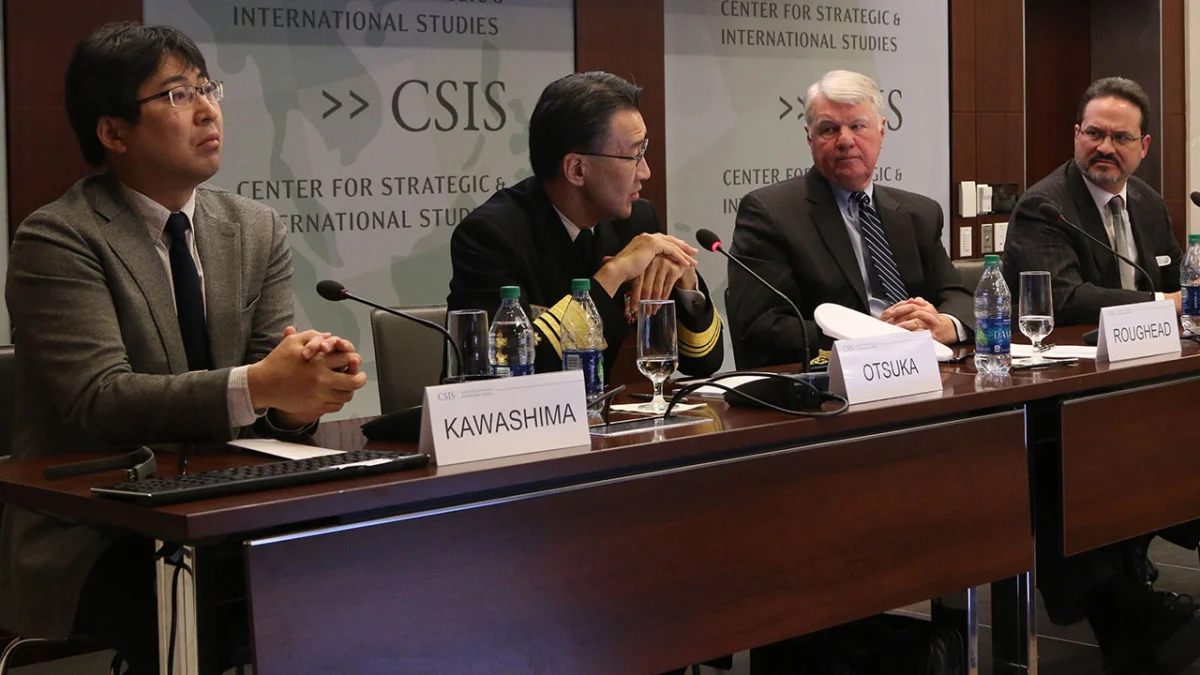
The first substantive session, beginning at 3:15 p.m., featured Vice Admiral Umio Otsuka, President of the Japan Maritime Self Defense Force Command and Staff College. His insights likely provided a Japanese perspective on current maritime threats, capabilities, and strategic priorities. This was complemented by the analysis of Shin Kawashima, Professor at the Graduate School of Arts and Sciences at the University of Tokyo. Professor Kawashima’s academic standing suggests a focus on the theoretical underpinnings and historical context of maritime security cooperation, potentially addressing issues of international law, alliance dynamics, and regional governance.
The U.S. perspective was articulated by Admiral Gary Roughead (USN, Ret.). As a former Chief of Naval Operations, Admiral Roughead’s experience offered a wealth of practical knowledge regarding naval strategy, operational readiness, and the challenges of maintaining maritime superiority in a contested environment. His contributions were crucial in bridging the strategic visions of both nations and highlighting areas for enhanced collaboration. Michael J. Green moderated this critical panel, ensuring a cohesive and productive exchange of ideas.
The discussions at the seminar likely touched upon several key areas of concern and cooperation:
- Freedom of Navigation and Overflight: With increasing assertiveness in maritime claims, particularly in the South China Sea, the seminar would have addressed the importance of upholding international norms and ensuring unimpeded access to vital sea lanes.
- Regional Power Dynamics: The seminar’s timing, March 2016, placed it amidst significant geopolitical shifts. The rise of China’s maritime capabilities, North Korea’s nuclear ambitions, and the ongoing developments in Southeast Asia were likely central to the discussions on regional stability.
- Technological Advancements and Capabilities: Modern maritime security necessitates continuous adaptation to new technologies. Discussions may have explored advancements in naval platforms, surveillance systems, and cyber capabilities, and how the U.S. and Japan can leverage these for mutual benefit.
- Crisis Management and Response: The seminar likely examined mechanisms for effective crisis communication, joint response strategies, and interoperability between U.S. and Japanese forces to address potential maritime incidents.
- Economic Interdependence and Maritime Trade: The Asia-Pacific is the engine of global trade, with a significant portion of it flowing through maritime routes. The security of these routes is paramount for the economic prosperity of both nations and the global community.
Background and Context of the U.S.-Japan Alliance
The U.S.-Japan alliance, formalized in the Treaty of Mutual Cooperation and Security, has been the bedrock of peace and stability in the Asia-Pacific since its signing in 1960, with subsequent revisions. In 2016, the alliance was undergoing a period of significant re-evaluation and enhancement, driven by a changing regional security environment. The "Guidelines for U.S.-Japan Defense Cooperation," revised in April 2015, marked a significant step in broadening the scope of bilateral security cooperation beyond territorial defense to include a wider range of contingencies, including responses to crises in areas surrounding Japan and the strengthening of alliance resilience.
The seminar’s focus on maritime security was particularly pertinent. The Asia-Pacific maritime domain is crucial for global commerce, energy transport, and communication. It is also an area of increasing strategic competition, marked by territorial disputes in the South China Sea and East China Sea, the proliferation of advanced military capabilities, and the need for effective responses to humanitarian assistance and disaster relief (HA/DR) operations.
The Japan Institute of International Affairs (JIIA), as a partner in organizing this event, plays a vital role in fostering informed public discourse and policy recommendations on Japan’s foreign policy and security challenges. Its collaboration with CSIS, a globally recognized think tank, amplified the reach and impact of the seminar’s deliberations.

Key Participants and Their Contributions
Michael J. Green: As a leading authority on East Asian security, Michael J. Green’s role as moderator and opening speaker was instrumental. His deep understanding of U.S. foreign policy and the intricacies of the U.S.-Japan relationship provided a guiding framework for the discussions. His dual affiliation with CSIS and Georgetown University highlights his significant influence in both policy and academic circles.
Yoshi Nogami: President of the JIIA, Nogami’s participation underscored the commitment of Japanese institutions to promoting dialogue on critical security issues. His address likely set the tone for the Japanese perspective on alliance priorities and regional security challenges.
Vice Admiral Umio Otsuka: Leading the Japan Maritime Self Defense Force Command and Staff College, Vice Admiral Otsuka’s presence brought a direct operational and strategic viewpoint from Japan’s naval forces. His insights would have been crucial for understanding the practical challenges and capabilities related to maritime security.
Shin Kawashima: As a professor at the University of Tokyo, Professor Kawashima likely offered an academic and analytical perspective, potentially delving into the historical context, legal frameworks, and broader geopolitical implications of maritime security in the region.
Admiral Gary Roughead: A highly respected figure in U.S. naval strategy, Admiral Roughead’s retired status allowed for candid and insightful commentary on the U.S. Navy’s role, challenges, and opportunities in the Asia-Pacific. His experience as a former CNO provided unparalleled expertise.
Q&A and Reception
Following the panel discussions, a Q&A session, scheduled from 4:30 p.m., provided an invaluable opportunity for the audience to engage directly with the speakers, posing questions and seeking clarification on the complex issues discussed. This interactive segment likely fostered a deeper understanding of the nuances of maritime security and the U.S.-Japan alliance. The seminar concluded at 5:00 p.m., with a reception offering a more informal setting for networking and continued discussion among participants, speakers, and attendees.
Broader Impact and Implications
The seminar held at CSIS on March 4, 2016, was more than just an academic discussion; it was a timely reflection of the evolving strategic landscape and a reaffirmation of the indispensable role of the U.S.-Japan alliance in maintaining regional stability. The discussions likely reinforced the shared understanding between the two nations regarding the importance of freedom of navigation, the need for a rules-based international order, and the imperative of enhanced military interoperability.
The event also served to highlight the increasing complexity of maritime security challenges, encompassing not only traditional military threats but also issues such as piracy, illegal fishing, and environmental protection. The collaborative approach championed by the U.S. and Japan, as evidenced by this seminar, is crucial for addressing these multifaceted threats effectively.
The generous support from the Ministry of Foreign Affairs of Japan underscored the strategic significance attached to this dialogue by the Japanese government. Such initiatives are vital for building consensus, fostering transparency, and strengthening partnerships in a region that is central to global peace and prosperity. The insights shared and connections forged during this seminar would have undoubtedly contributed to ongoing policy formulation and strategic planning within both governments and the broader international security community. The continued commitment to such dialogues remains essential as the Asia-Pacific region navigates an increasingly intricate and dynamic future.