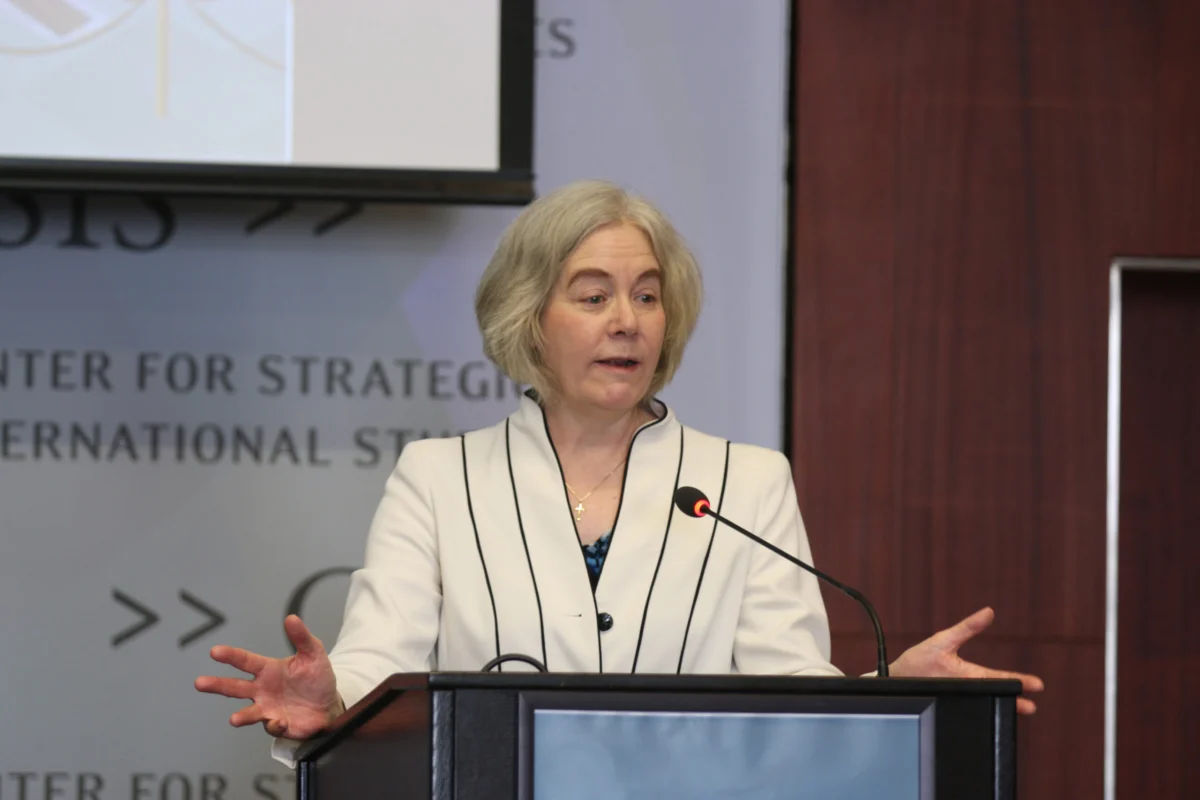
The Center for Strategic and International Studies (CSIS) hosted a pivotal discussion on March 10, 2016, featuring Dr. Ellen Williams, Director of the Department of Energy’s Advanced Research Projects Agency-Energy (ARPA-E). The event, held from 10:00 to 11:30 a.m. EST, focused on the evolving landscape of United States energy technology, with a particular emphasis on modernizing the electric grid, advancing grid-scale storage solutions, and implementing the newly launched Mission Innovation initiative.
The session commenced with introductory remarks by Sarah Ladislaw, then Director and Senior Fellow of the CSIS Energy and National Security Program. The main discussion was moderated by Frank O’Sullivan, Senior Associate with the CSIS Energy and National Security Program and Director of Research and Analysis at the MIT Energy Initiative. Dr. Williams used the platform to detail how federal investments in high-risk, high-reward energy research are shaping the commercial market and addressing the technical hurdles of the twenty-first century.
Background Context: The Urgency of Grid Modernization
The United States electric grid, largely constructed in the mid-twentieth century, faces unprecedented stress in the modern era. Originally designed for unidirectional power flow—from large, centralized fossil-fuel and nuclear power plants to passive consumers—the grid must now accommodate a decentralized array of renewable energy sources, including intermittent wind and solar power.
Integrating these variable resources requires sophisticated management systems, real-time data analytics, and robust energy storage capabilities. Without technological breakthroughs in these areas, the grid risks inefficiencies, vulnerabilities to cyber and physical disruptions, and an inability to meet aggressive national and international climate targets.
Established by the America COMPETES Act of 2007, ARPA-E was created to bridge the gap between foundational scientific research and the commercial deployment of energy technologies. Modeled after the Defense Advanced Research Projects Agency (DARPA), ARPA-E funds transformational projects that commercial entities often bypass due to high technological and financial risks. By 2016, the agency had become a cornerstone of U.S. strategy for maintaining technological leadership in clean energy.
Key Focus Areas for 2016: Grid Management and Storage
During her keynote presentation, Dr. Williams emphasized that while generation technologies like solar panels and wind turbines had seen dramatic cost reductions and market penetration, the supporting infrastructure had lagged behind.
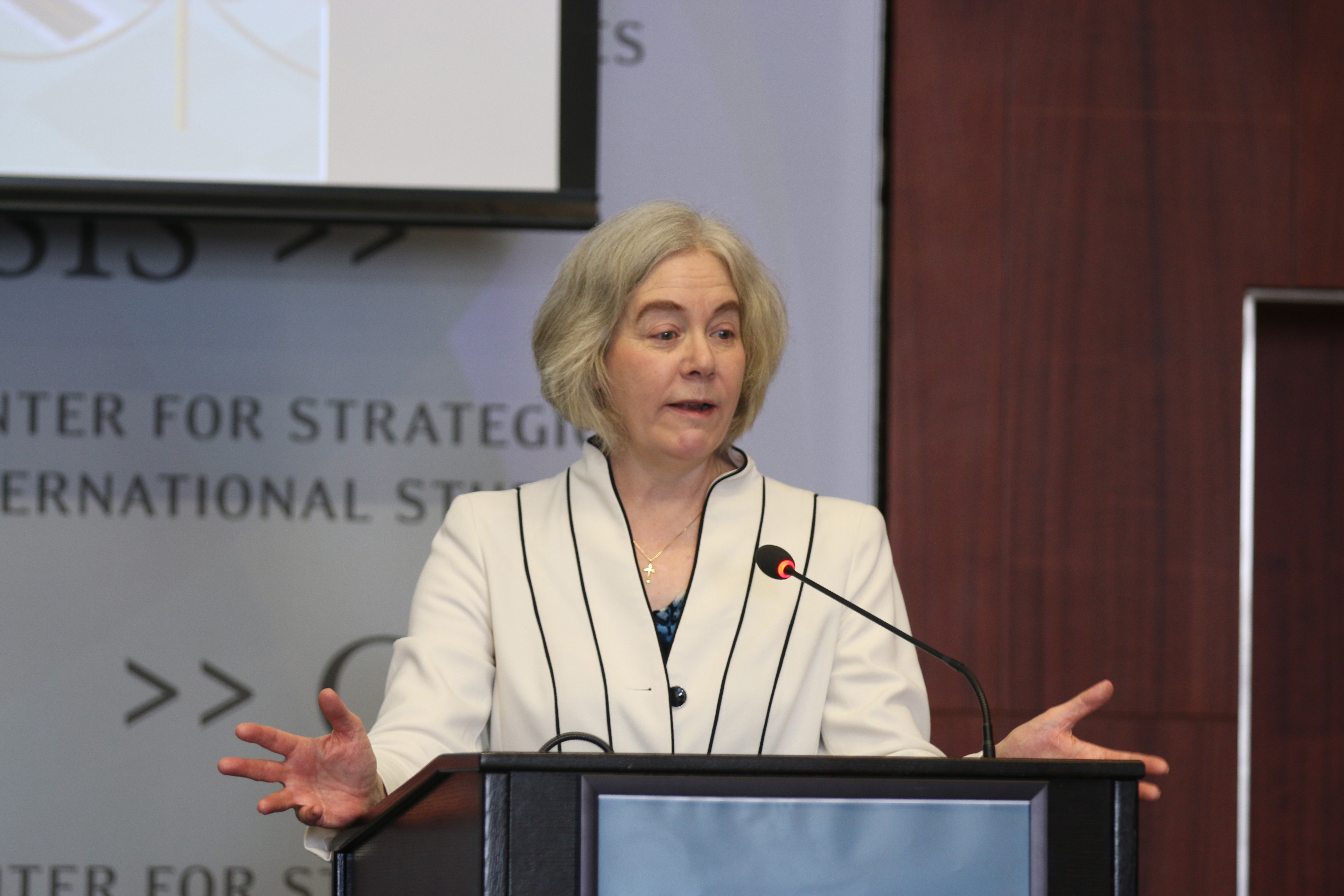
"One issue where real progress on both technology and market deployment continues to be needed is the electric grid," Dr. Williams stated during the event. She outlined two primary pillars of ARPA-E’s 2016 agenda:
- Advanced Grid Management: Modernizing software and hardware to dynamically control power flows, predict system bottlenecks, and automatically reroute electricity during demand surges or localized failures. This includes utilizing artificial intelligence and machine learning to manage millions of smart devices and distributed energy resources at the edge of the grid.
- Grid-Scale Energy Storage: Developing cost-effective, durable, and scalable storage solutions capable of smoothing out the intermittency of renewable energy. Dr. Williams highlighted ongoing ARPA-E programs focused on novel chemistries, flow batteries, compressed air energy storage, and thermal storage systems that can discharge power over hours or even days.
Dr. Williams noted that solving these challenges is essential not only for environmental sustainability but also for national security. A resilient grid ensures economic stability, protects critical infrastructure, and safeguards military installations against prolonged blackouts.
Mission Innovation and International Collaboration
A major theme of the 2016 discussion was the launch of Mission Innovation, a global initiative announced months prior at the COP21 climate talks in Paris. Twenty-two countries and the European Union initially committed to doubling their respective clean energy research and development (R&D) budgets over five years.
Dr. Williams detailed how ARPA-E would serve as a vital engine for the U.S. commitment under Mission Innovation. By increasing funding for early-stage energy research, the agency aimed to accelerate breakthroughs in areas beyond the grid, including advanced nuclear power, building efficiency, and industrial decarbonization.
The initiative underscored a broader geopolitical shift: major economies recognized that climate change mitigation could not rely solely on deployment subsidies for existing technologies. Instead, it required a fundamental acceleration of scientific innovation to bring disruptive, low-cost alternatives to the global market.
Expert Perspectives and Moderated Discussion
Following Dr. Williams’ presentation, Frank O’Sullivan led a rigorous discussion examining the practical pathways for moving technologies out of the laboratory and into commercial utility portfolios.
O’Sullivan, drawing on his dual perspective from MIT and CSIS, questioned how regulatory frameworks could evolve to encourage utilities to adopt unproven, innovative technologies. Utility companies, historically risk-averse due to their regulated rate-of-return business models, have traditionally been slow to integrate cutting-edge software and hardware without explicit mandates or financial incentives from state public utility commissions.

Sarah Ladislaw, in her introductory remarks, framed the discussion within the broader geopolitical and economic context of the global energy transition. Ladislaw noted that the intersection of energy technology and national security is increasingly defined by competitiveness. Nations that lead in developing the next generation of grid infrastructure and storage solutions will dominate the global energy export markets of the future.
The dialogue also touched on the friction between federal R&D funding and private venture capital. In the years following the 2008 financial crisis, venture capital investment in clean hardware experienced a significant contraction—frequently referred to in policy circles as the "Valley of Death." ARPA-E’s funding model was specifically designed to help startups survive this perilous transition phase by providing non-dilutive capital and rigorous technical validation.
Implications for the Future of U.S. Energy Policy
The insights shared by Dr. Williams at CSIS in March 2016 prefigured many of the structural transformations that continue to define the modern energy landscape.
From an economic perspective, the emphasis on grid storage and management validated the shift toward a market where energy is treated as a flexible, dynamic commodity rather than a static utility. The ongoing reduction in the cost of lithium-ion batteries, combined with emerging alternative chemistries supported by agencies like ARPA-E, has gradually transformed storage from a theoretical luxury into an indispensable component of utility-scale resource planning.
From a policy standpoint, the integration of federal research initiatives like ARPA-E with international frameworks like Mission Innovation demonstrated a coordinated approach to global challenges. By maintaining a bipartisan consensus around the value of high-risk energy research, the U.S. government established a foundation for sustained technological advancement regardless of shifting political administrations.
Ultimately, the 2016 CSIS event served as a critical checkpoint for energy stakeholders. It highlighted the undeniable progress made in renewable generation while issuing a sober reminder that the invisible architecture of the electric grid remains the ultimate determinant of a clean, secure, and resilient energy future.