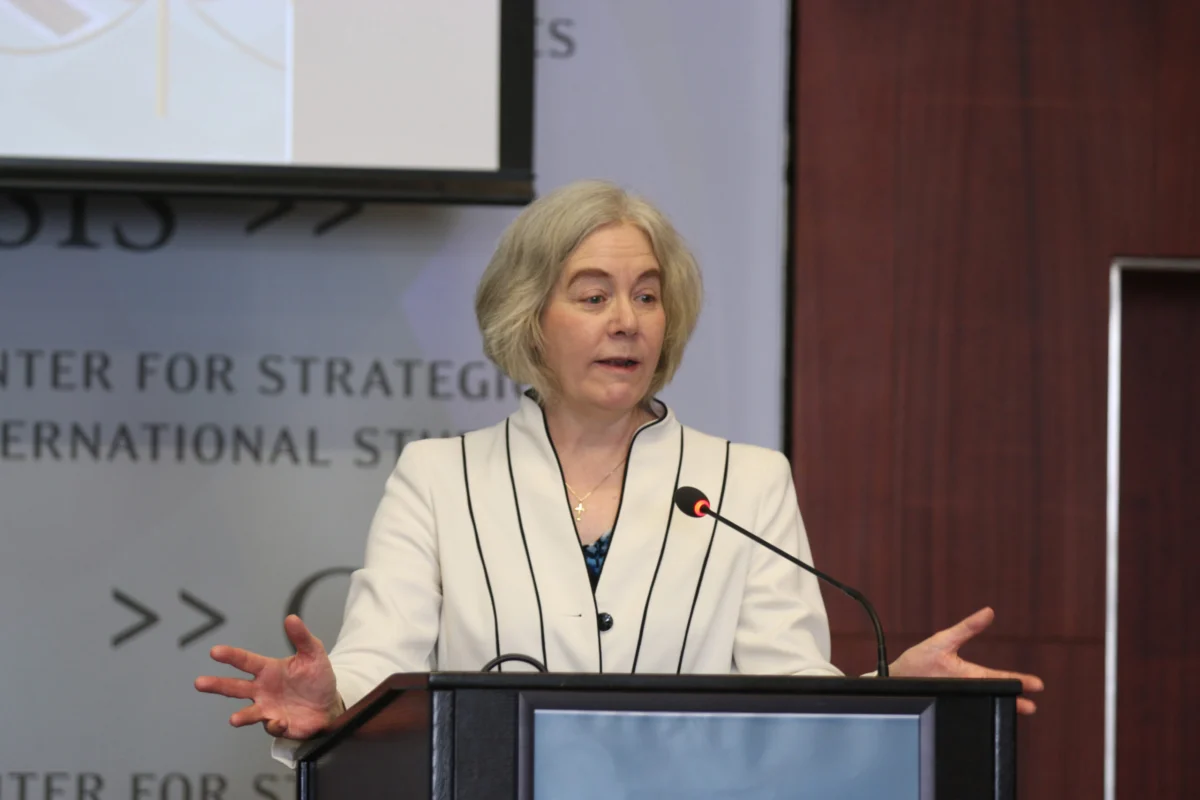
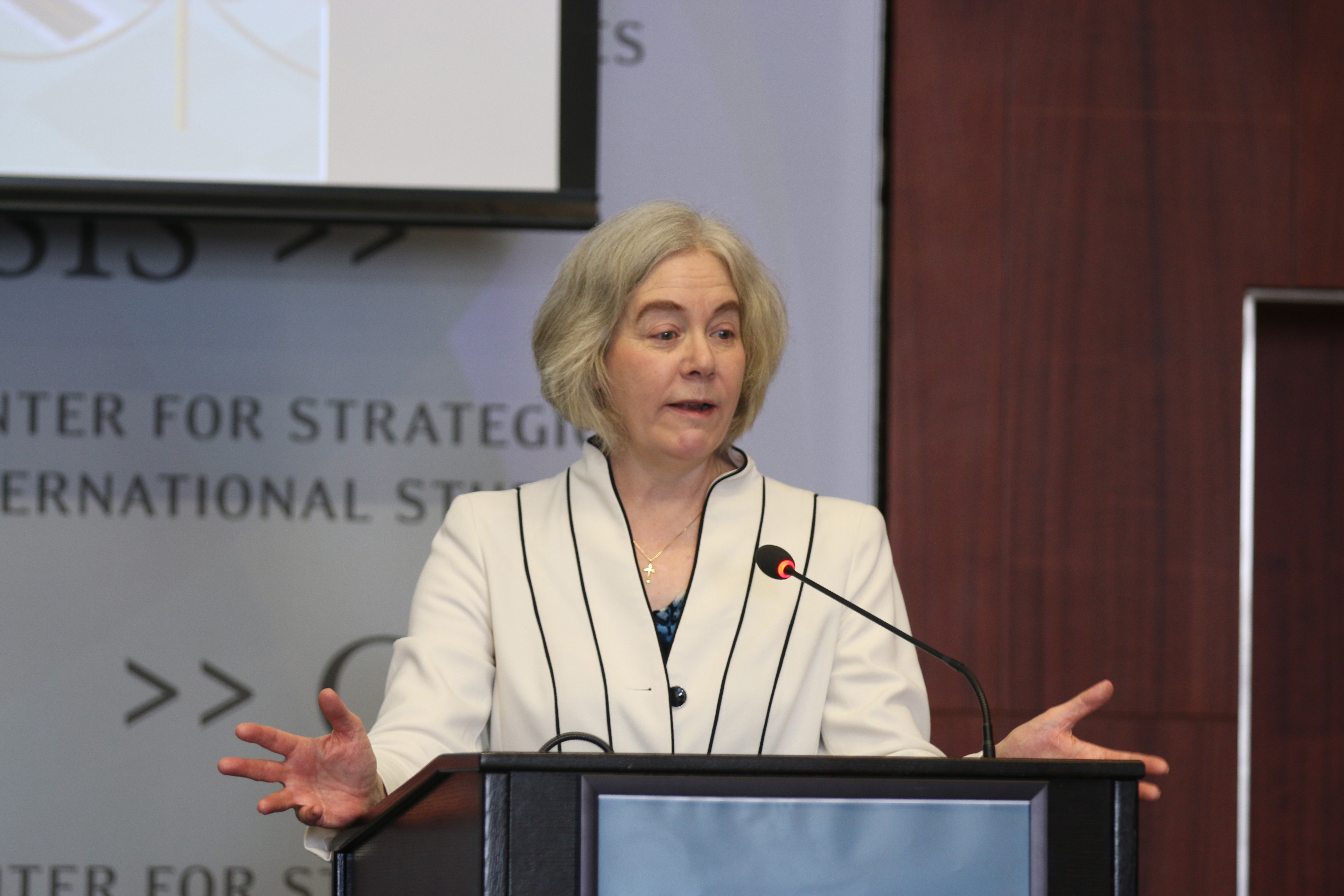
On March 10, 2016, the Center for Strategic and International Studies (CSIS) hosted a pivotal discussion featuring Dr. Ellen Williams, the then-Director of the Advanced Research Projects Agency-Energy (ARPA-E). The event, moderated by Frank O’Sullivan of the MIT Energy Initiative and introduced by Sarah Ladislaw of the CSIS Energy and National Security Program, provided a deep dive into the technological imperatives facing the United States’ electrical infrastructure. As the energy sector stood at a crossroads between legacy fossil-fuel reliance and an emerging paradigm of renewable integration, the conversation served as a critical pulse check on how federal research and development initiatives were attempting to modernize the grid.
The Role of ARPA-E in the Energy Landscape
Established in 2009, ARPA-E was modeled after the Defense Advanced Research Projects Agency (DARPA) with the explicit mission to identify and promote revolutionary energy technologies that are too nascent or high-risk for private-sector venture capital. By the time of this 2016 address, the agency had solidified its reputation as a catalyst for "high-risk, high-reward" energy research.
Dr. Williams, a distinguished physicist, utilized the platform to articulate the agency’s strategic shift toward grid-scale challenges. While early ARPA-E projects often focused on specific breakthroughs in materials science or biofuels, the mid-2010s marked a pivot toward systemic grid management. The electrical grid, often described as the largest and most complex machine ever built, was becoming increasingly stressed by the decentralized nature of solar and wind power. Dr. Williams emphasized that for the grid to transition into the 21st century, it required more than just new generation sources; it required a fundamental reimagining of how electricity is stored, balanced, and distributed.
Contextualizing the Grid Crisis of 2016
To understand the urgency of the 2016 dialogue, one must consider the operational environment of the U.S. energy sector at the time. The United States was in the midst of a transition driven by the shale gas boom and the rapidly falling costs of photovoltaic panels. However, the existing infrastructure—much of it designed in the mid-20th century—was struggling to accommodate these variables.
During the discussion, the panel highlighted that the primary technical hurdles included the lack of cost-effective, large-scale battery storage and the inability of grid management software to handle the bidirectional flow of electricity. Before the widespread deployment of smart-grid sensors, utilities often operated on a "blind" system, reacting to outages rather than proactively balancing loads. Dr. Williams noted that ARPA-E was investing heavily in projects such as the GRIDS (Grid-scale Rampable Intermittent Dispatchable Storage) program, which aimed to create storage solutions that could bridge the gap between short-term power fluctuations and long-term supply security.
Chronology of Federal Energy Innovation
The 2016 CSIS event occurred during a period of significant policy momentum. The following timeline outlines the environment leading up to and following the presentation:
- 2009: ARPA-E is formally established under the American Recovery and Reinvestment Act, receiving an initial appropriation of $400 million.
- 2013: The agency launches the GRIDS program, focusing on high-capacity storage technologies that could outpace traditional lithium-ion applications for grid services.
- Late 2015: The Paris Agreement is signed, setting international benchmarks for carbon reduction that necessitate a cleaner, more efficient grid.
- March 10, 2016: Dr. Ellen Williams addresses the CSIS community on the urgency of integrating grid management software and "Mission Innovation" initiatives.
- Late 2016: Increased focus on grid security and resilience follows, as the U.S. government begins to formalize cyber-physical security protocols for the energy sector.
Supporting Data: The Challenge of Intermittency
The data presented by the experts during the session underscored the "Duck Curve" phenomenon—a challenge in which solar energy production peaks during the day while demand peaks in the evening, creating a sharp imbalance that grid operators must manage.
According to reports referenced during the 2016 era by the Department of Energy, the U.S. grid was losing roughly 5% to 7% of electricity during transmission and distribution. Furthermore, the integration of variable renewable energy (VRE) required a 30% increase in flexible capacity to maintain frequency stability. Dr. Williams argued that without technological intervention, the cost of grid stabilization would eventually be passed down to the consumer, rendering the green energy transition economically unfeasible. ARPA-E’s role was, therefore, to lower the "levelized cost of storage" (LCOS), making it as reliable as traditional base-load power plants.
Mission Innovation and International Collaboration
A significant portion of the conversation focused on "Mission Innovation," a global initiative launched at COP21 in Paris. The program committed participating countries to doubling their investment in clean energy research and development over five years.
Dr. Williams positioned ARPA-E as the American engine for this commitment. By fostering collaboration between academia, private startups, and the Department of Energy’s national laboratories, ARPA-E aimed to compress the timeline from laboratory discovery to commercial deployment. This "valley of death" between research and market-readiness was identified as the greatest barrier to innovation. The discussion highlighted that federal funding was not merely a subsidy but a necessary risk-mitigation tool that allowed the private sector to eventually take over and scale proven technologies.
Expert Perspectives and Moderation
The insights provided by Sarah Ladislaw and Frank O’Sullivan framed the technical aspects of the discussion within the broader context of national security. Ladislaw, a noted expert in energy geopolitics, emphasized that a resilient grid is a pillar of national security. When the grid is vulnerable to technical failure or cyber interference, the entire economic and social fabric of the nation is at risk.

Frank O’Sullivan’s role as both a researcher at MIT and a senior associate at CSIS allowed him to bridge the gap between academic theory and practical utility operations. His questioning focused on the scalability of ARPA-E’s projects. He pushed for clarity on how technologies tested in a laboratory setting—often at a kilowatt scale—could be adapted to the gigawatt scale required by regional transmission organizations (RTOs). Dr. Williams’ responses highlighted the agency’s rigorous "milestone-based" funding structure, which forces researchers to prove the commercial viability of their projects at every stage of development.
Implications and Long-term Impact
The legacy of the 2016 discussion lies in the roadmap it helped define for modern grid architecture. The technologies and initiatives discussed—ranging from advanced flow batteries to sophisticated machine-learning-based grid management systems—have since seen significant growth. The focus on "grid-edge" technology, which involves managing energy at the level of the consumer and the microgrid, has become a standard feature of modern energy discourse.
Furthermore, the session highlighted that technological innovation cannot exist in a vacuum. It requires a regulatory framework that incentivizes efficiency and resilience. The collaborative spirit encouraged by Dr. Williams and the CSIS panel emphasized that the transition to a low-carbon, high-efficiency grid is a collaborative effort involving public policy, private investment, and scientific ingenuity.
In retrospect, the 2016 CSIS event was more than a status report on ARPA-E; it was a diagnostic of the American energy system. By identifying the critical bottlenecks in grid storage and management, the participants helped prioritize the research agenda for the years that followed. As the United States continues to face the dual challenges of climate change and grid reliability, the principles of high-risk investment and interdisciplinary collaboration championed by Dr. Williams remain the cornerstone of the national energy strategy. The event underscored a fundamental reality that remains true today: the grid is the backbone of the economy, and its evolution is the primary prerequisite for a secure and sustainable future.