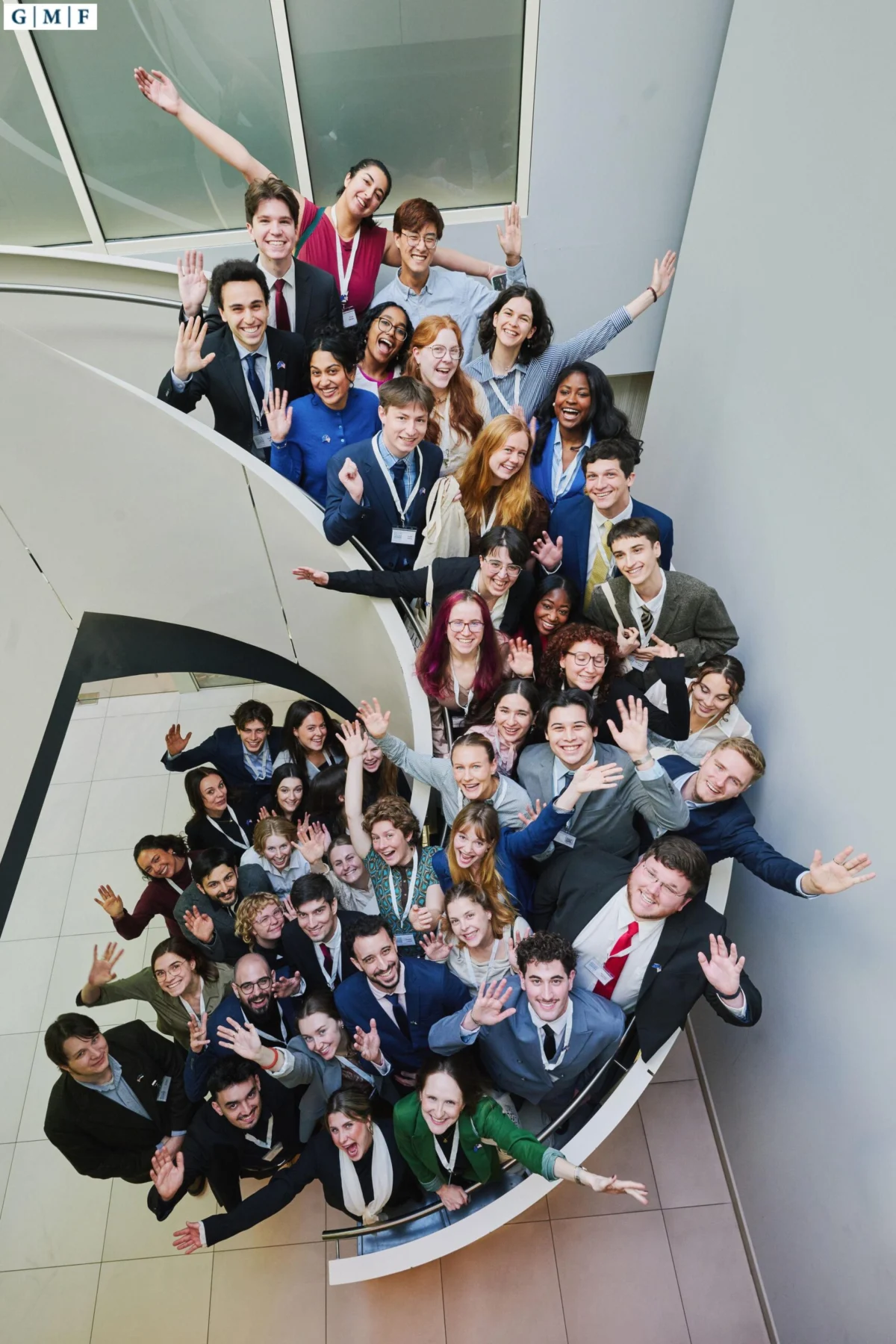
BRUSSELS, Belgium – Between March 23-26, the ninth edition of the EU-US Young Leaders Seminar (YLS) convened in Brussels, bringing together 50 distinguished beneficiaries of EU and U.S.-funded education exchange programs. The pivotal four-day event served as a crucial platform for these emerging leaders to delve into and critically assess the rapidly evolving global skills landscape and its profound implications for education systems and the intricate demands of the labor market. Through a dynamic format encompassing expert-led panels, interactive workshops, and a sophisticated simulated learning exercise, the seminar fostered intensive peer and professional exchange, aimed at equipping participants with foresight and practical strategies for the future.
The Imperative Theme: The Future of Skills and Leadership
The selection of "The Future of Skills and Leadership" as the central theme for the 2026 seminar was a deliberate response to the undeniable shifts in skill requirements impacting young people across both the European Union and the United States. In an era defined by accelerated technological advancement, particularly the burgeoning influence of artificial intelligence, the skills acquired early in one’s life are no longer sufficient for lifelong career success. The consensus among policymakers, educators, and industry leaders is that these foundational skills must be continuously renewed, expanded, and adapted throughout an individual’s professional journey. This necessitates a fundamental reimagining of education systems to cultivate more open, flexible learning pathways and credentialing models. Crucially, fostering young people’s capacity to "learn how to learn" has emerged as a paramount policy objective, recognized as essential for navigating an unpredictable future.
Beyond pedagogical reforms, the seminar underscored the critical importance of robust workforce data monitoring and the seamless integration of education with business needs. These elements are vital for proactively addressing the skills gaps that inevitably arise from rapid labor market transformations. The omnipresent role of artificial intelligence was a recurring motif, examined not only as a transformative technology supporting systemic adaptation but also as a primary driver of entirely new skill demands, necessitating a profound re-evaluation of human-machine collaboration.
A Legacy of Transatlantic Dialogue: The YLS Series
The EU-US Young Leaders Seminar stands as a cornerstone of transatlantic cooperation in education and youth development, with the 2026 iteration marking its ninth successful edition. Initiated to cultivate a new generation of leaders well-versed in the complexities of the transatlantic partnership, the YLS provides a unique forum for dialogue, networking, and mutual understanding between individuals who have directly benefited from significant cross-cultural exchange experiences. Programs such as the EU’s Erasmus+ and the U.S.’s Fulbright Scholarship are emblematic of the foundational investments in human capital that underpin the YLS, providing participants with a global perspective invaluable for addressing shared challenges.
Over nearly a decade, the seminar has consistently focused on themes pertinent to the evolving relationship between the EU and the US, ranging from digital governance and climate action to economic cooperation and social cohesion. Its enduring success lies in its ability to bring together diverse perspectives, fostering a common understanding of challenges and promoting collaborative solutions. The YLS is more than just a conference; it is a strategic investment in the intellectual and social capital of the transatlantic alliance, nurturing individuals who will lead future policy discussions and drive innovation in both regions.
Opening Perspectives: Setting the Policy Context
The seminar commenced with high-level opening addresses that meticulously set the policy context for the discussions to follow. Pia Ahrenkilde Hansen, Director-General for Education, Youth, Sport and Culture (DG EAC) at the European Commission, emphasized the EU’s strategic priorities in adapting education and training systems to meet the demands of the twin green and digital transitions. She underscored the Commission’s commitment to initiatives like the European Skills Agenda, which aims to support individuals in acquiring the skills needed for the jobs of today and tomorrow, promoting lifelong learning and inclusive education. Director-General Hansen highlighted the necessity of a holistic approach, integrating formal, non-formal, and informal learning to empower citizens.
Joining her was Sara Mathews, Minister Counselor for Public Diplomacy from the U.S. Mission to the European Union, who articulated the United States’ perspective on workforce development and the critical role of international collaboration. Minister Counselor Mathews stressed the importance of fostering a highly skilled and adaptable workforce capable of driving innovation and economic competitiveness in a globalized economy. She reiterated the U.S. commitment to strengthening educational ties with the EU, recognizing that shared challenges like technological disruption and demographic shifts require coordinated, transatlantic solutions. Both speakers highlighted that the future prosperity and security of the EU and US are intrinsically linked to their ability to develop and retain a skilled workforce.
Following these foundational remarks, discussions transitioned to a comprehensive scene-setter on the transatlantic partnership, featuring insightful contributions from Eva Gross of the European External Action Service and Etienne Soula from the German Marshall Fund to the U.S. Their dialogue explored the geopolitical and economic dimensions of EU-US relations, providing a macro-level understanding of the strategic environment in which skills development and leadership initiatives operate.
A notable moment of the seminar was the engaging TEDx talk delivered by Deep Parekh from the Solvay Brussels School of Economics and Management. His presentation focused on the nuanced requirements of leadership in a fast-paced, ever-changing environment, challenging participants to consider agility, resilience, and ethical decision-making as core tenets of modern leadership. The seminar also had the distinct honor of welcoming MEP Pasquale Tridico, who offered a heartfelt tribute to "Mama Erasmus," Sofia Corradi. Corradi, the visionary Italian educator, is widely credited with conceiving the Erasmus program, which has since transformed the lives of millions of European students, embodying the very spirit of international exchange and skill development that the YLS champions.
Expert Insights: Panels and Discussions
The core of the seminar involved a series of high-impact panel discussions designed to dissect various facets of the skills and leadership challenge.
Critical Skills for Career Development: Francesca Borgonovi from the OECD, Caitlin Kirby from Michigan State University, and Jasper van Loo from Cedefop (European Centre for the Development of Vocational Training) presented compelling research and insights on the critical skills young people need to cultivate for successful career trajectories. Their presentations underscored the shift from purely technical skills to a blend of cognitive, socio-emotional, and digital competencies. The OECD’s work on future skills frameworks, Cedefop’s analysis of vocational education and training trends, and Michigan State University’s focus on interdisciplinary learning provided a comprehensive overview of current best practices and future demands. They highlighted problem-solving, critical thinking, creativity, digital literacy, and collaboration as indispensable attributes in the contemporary labor market.
AI, Innovation, and Social Responsibility: A panel featuring Laura Corrado from DG Employment, Social Affairs and Inclusion at the European Commission, Caroline S. Culliére of Gifftid, and Justin Young from the University of Antwerp tackled the rapid advances of Artificial Intelligence. This discussion explored the delicate balance businesses must strike between pursuing innovation and upholding social responsibility. Corrado articulated the EU’s regulatory approach to AI, particularly concerning ethical guidelines and worker protection, referencing the AI Act. Culliére brought an industry perspective, discussing how companies can integrate AI ethically while maximizing its potential for growth. Young provided an academic viewpoint, examining the societal implications of AI, including its impact on employment, equity, and the nature of work itself. The panel underscored the urgent need for a human-centric approach to AI development and deployment.
Building Future-Ready Systems: Talent Development: The panel on Talent Development brought together John Edwards from EURASHE (European Association of Institutions in Higher Education) and Karen Triquet from Vrije Universiteit Brussel. Their discussion centered on strategies for creating future-ready education and training systems and empowering individuals to thrive in the current working environment. Edwards emphasized the role of professional higher education in producing work-ready graduates, advocating for closer ties between institutions and industry. Triquet focused on lifelong learning initiatives and the importance of continuous professional development, particularly within higher education institutions, to ensure that the workforce remains agile and relevant. They explored models for micro-credentials, flexible learning pathways, and competency-based education.
Transatlantic Economic Relations and Business Leadership: The seminar concluded with a fireside chat featuring Malte Lohan from the American Chamber of Commerce to the EU (AmCham EU) and Luisa Santos from Business Europe. This high-level discussion provided a strategic overview of the development of the EU-U.S. economic and trade relationship, addressing current challenges and future opportunities. They also delved into the crucial role of business leadership in navigating times of economic disruption, such as supply chain volatility, geopolitical tensions, and inflationary pressures. Lohan highlighted the perspective of American businesses operating in Europe, emphasizing the need for regulatory predictability and open markets. Santos articulated the European business community’s priorities, including fostering innovation, ensuring competitive markets, and investing in skills to maintain global competitiveness. The conversation underscored the symbiotic nature of the EU-US economic partnership and the necessity of coordinated policy responses to global economic shifts.
These insightful panel discussions were expertly moderated by Erica Lutes (Fulbright Commission), Georgiana Plesu (DG EAC), and Joy Young (EU Delegation to the U.S.), ensuring a coherent flow of ideas and engaging interaction among the panelists and participants.
Interactive Learning: Workshops and Simulations
Beyond theoretical discussions, the seminar placed significant emphasis on practical skill development through a series of interactive training workshops. These sessions were designed to provide participants with tangible tools and strategies applicable to their professional and leadership journeys.
Throughout the two days, workshops covered critical soft skills such as negotiation and conflict transformation, facilitated by Michael Koplovsky (College of Europe). This session equipped participants with techniques for effective dialogue, dispute resolution, and building consensus in complex environments. Another vital workshop focused on communication and storytelling, led by Viktorya Muradyan (Ceemet), enhancing participants’ ability to articulate ideas persuasively and connect with diverse audiences. Sarah Jones (German Marshall Fund of the United States) facilitated a workshop on inclusive leadership, exploring strategies for fostering diverse teams, promoting equity, and leveraging varied perspectives for organizational success.
A second set of workshops addressed more specialized skills crucial for young leaders. Lucy Delgadillo (Utah State University) conducted a session on financial literacy, providing essential knowledge for managing personal and organizational finances. Kristina Pitalskaya (GMF) guided participants through the essentials of EU funding, offering practical insights into securing grants and navigating European project landscapes. Kristin Lerfald Grostad (Vrije Universiteit Brussel) led a workshop on research methods, enhancing participants’ analytical capabilities and their ability to conduct rigorous inquiry.
The seminar culminated in an immersive training simulation, a highlight designed to challenge participants in a high-stakes, real-world scenario. This simulation explored strategies for coping with uncertain business environments and making critical decisions with incomplete data, mirroring the complexities faced by leaders in today’s volatile landscape. The meticulously designed and managed simulation, orchestrated by Annika Vollmer (GMF) and Jace Jasper (Fulbright Commission), provided a powerful experiential learning opportunity, allowing participants to apply theoretical knowledge in a practical, problem-solving context.
Broader Impact and Implications for Transatlantic Cooperation
The 2026 EU-US Young Leaders Seminar reinforced the profound implications of skills development for the future of transatlantic relations. The shared challenges posed by technological disruption, climate change, and evolving geopolitical landscapes necessitate a highly adaptable and skilled workforce in both the EU and the US. By fostering a common understanding and shared strategies, events like the YLS directly contribute to enhancing the competitiveness and resilience of both economies.
Implications for Education Systems: The seminar highlighted the urgent need for education systems on both sides of the Atlantic to move beyond traditional models. This includes accelerating the adoption of flexible learning pathways, micro-credentials, and lifelong learning frameworks. Curricula must be continually updated to integrate digital and green skills, alongside critical soft skills like adaptability, creativity, and ethical reasoning. The emphasis on "learning how to learn" signifies a paradigm shift towards empowering individuals with the metacognitive skills necessary to thrive in an environment of constant change.
Implications for the Labor Market: The discussions underscored that governments and industries must collaborate more closely to anticipate future skill demands and bridge existing gaps. This involves investing in robust reskilling and upskilling programs, leveraging AI for personalized learning, and fostering public-private partnerships that connect education providers directly with industry needs. The ethical deployment of AI in the workplace, ensuring fair labor practices and opportunities for all, remains a critical area of focus.
Implications for Transatlantic Relations: The seminar served as a vital forum for exchanging best practices and forging common approaches to shared challenges. By bringing together young leaders from both regions, it strengthens the human dimension of the transatlantic partnership, cultivating a network of individuals committed to cooperation. This direct engagement is crucial for building trust, overcoming cultural differences, and fostering a shared vision for a prosperous and secure future. The participant’s powerful quote — "Exchange programs are one of the few real antidotes to echo chambers. Algorithms optimize for sameness. Physical rooms force you to confront difference. There is no substitute for sitting across from someone whose worldview is completely different from yours and choosing to listen and understand it." — encapsulates the invaluable role of such direct exchange in an increasingly polarized world.
Acknowledgements and Future Outlook
The seminar, expertly MC’ed by Sarah Elson-Rogers, received widespread commendation from both speakers and participants for its highly relevant content and the unparalleled value of the EU-US format. The tangible benefits of direct dialogue and collaborative problem-solving were palpable throughout the event.
The organizers extended their sincere gratitude to Norman Thatcher Scharpf, Deputy Chief of the U.S. Mission to the EU, for his steadfast support of the event, notably by hosting a reception that provided an additional opportunity for informal networking and strengthened transatlantic bonds.
The success of the 2026 EU-US Young Leaders Seminar underscores the enduring importance of investing in human capital and fostering international collaboration. As the world continues to navigate unprecedented changes, the insights and networks forged at events like the YLS will be instrumental in shaping future policy, driving innovation, and ensuring that the next generation of leaders is well-prepared to tackle the complex challenges of tomorrow. The discussions and connections made in Brussels are expected to resonate far beyond the seminar’s duration, contributing to a more skilled, adaptable, and collaboratively led transatlantic future.