
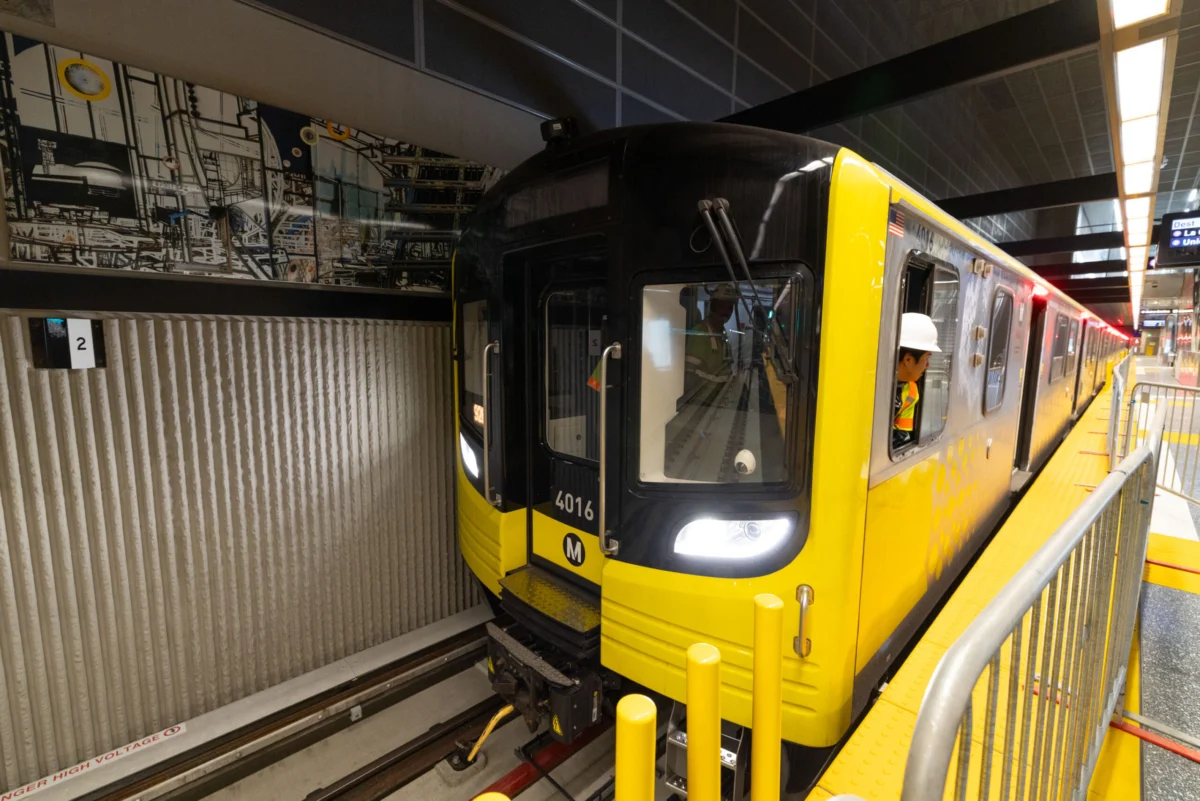
Los Angeles, a metropolis inextricably linked with the automobile, is taking a significant stride towards reclaiming its urban transit past with the imminent opening of a four-mile subway extension along Wilshire Boulevard. This ambitious project, set to debut in May, introduces three new state-of-the-art subway stations, promising to drastically alter the commute for millions and redefine a key east-west corridor that stretches from the bustling downtown core to the sun-drenched Pacific Ocean. What was once a grueling, hours-long drive through a vibrant, museum-rich stretch of the city will soon be a swift 25-minute train ride, marking a pivotal moment in Los Angeles’s decades-long effort to rebuild a world-class rail transit system.
A Triumph Over Tarry Ground and Methane Menace
The very existence of these new subway stops in the historically significant Miracle Mile district represents a remarkable technological and engineering feat, a testament to overcoming formidable geographical and geological challenges. The ground beneath this area is notoriously treacherous, characterized by its tarry composition and a significant presence of methane gas deposits. This volatile subterranean environment has posed a significant threat to development for decades. The most dramatic manifestation of this danger occurred in 1985 when a methane deposit ignited, triggering a devastating explosion that leveled a prominent department store in the neighborhood. The tragic incident forced city planners to reroute earlier transit initiatives to less hazardous areas, delaying the realization of a comprehensive subway network through this vital artery.

Technological Advancements Pave the Way for Progress
Today, the once-insurmountable obstacle of flammable goo-laden earth has been effectively neutralized by cutting-edge engineering. James Cohen, a senior manager for LA Metro’s engineering department who has overseen this segment of the subway’s development, articulated the shift: “The technology finally caught up with the concerns.” The linchpin of this progress is the earth-pressure-balance tunnel-boring machine (EPB TBM). This sophisticated, automated excavator is specifically engineered to navigate and excavate ground saturated with explosive gases. The EPB TBM meticulously chews through the earth, simultaneously conveying excavated material to the surface via conveyor belts. As it advances, it installs precast concrete liner segments, which are then sealed with gaskets to create a robust, gas- and waterproof tunnel. This advanced methodology enabled the TBM to achieve an impressive rate of approximately 50 feet of excavation per day, steadily pushing the subterranean line forward despite the inherent risks.
Station Construction: A Delicate Dance with Urban Life
While the tunnels were carved from below, the construction of the subway stations presented its own unique set of logistical hurdles. Engineers meticulously excavated the station sites from street level downwards. To minimize disruption to the daily lives of Angelenos, who are accustomed to navigating the city by car, much of this work was strategically scheduled for weekends. During these periods, vast excavations were undertaken, followed by the rapid installation of concrete decking. This allowed for continuous subterranean construction to proceed unimpeded while traffic flow on the surface remained largely uninterrupted, a delicate balancing act in a city renowned for its car-centric culture.
A Look at the Numbers: Investment and Impact
The realization of this four-mile Wilshire Boulevard subway extension represents a colossal investment in the future of Los Angeles transit. The project’s price tag approached a staggering $4 billion for this segment alone, underscoring the immense scale and complexity of the undertaking. While the project, like many large-scale infrastructure endeavors, did not meet its original timeline nor adhere to its initial budget, the tangible benefits it promises are undeniable. The extension is poised to connect communities, reduce traffic congestion, and offer a more sustainable and efficient mode of transportation for a city grappling with the environmental and economic costs of gridlock.

Supporting Data and Context: LA Metro’s Evolving Network
The Wilshire Boulevard extension is part of a larger, multi-decade effort by LA Metro to revitalize and expand its public transportation network. This initiative includes several major projects aimed at increasing rail accessibility across the sprawling county.
- Purple Line Extension: The Wilshire Boulevard segment is the first phase of the larger Purple Line Extension project, which aims to extend subway service further west into the San Fernando Valley. This massive undertaking is being delivered in multiple sections.
- Section 1 (Wilshire/Highland to Wilshire/La Cienega): This is the segment opening in May, spanning four miles with three new stations: Wilshire/La Brea, Wilshire/Fairfax, and Wilshire/La Cienega.
- Section 2 (Wilshire/La Cienega to Century City): This next phase will extend the Purple Line an additional 2.6 miles, adding two more stations. Construction is underway, with an expected opening in the coming years.
- Section 3 (Century City to Westwood/VA Hospital): The final section will extend the Purple Line an additional 2.5 miles, including two more stations. This phase is also in development.
- Overall Network Growth: LA Metro operates a vast network of rail lines, including the Red, Purple, Blue, Green, Gold, and Expo lines. The Wilshire extension will integrate seamlessly with the existing Purple Line, significantly enhancing east-west connectivity.
- Ridership Projections: While specific ridership figures for the new Wilshire segment are still being finalized, projections for the broader Purple Line Extension suggest millions of annual boardings, alleviating pressure on congested freeways like the I-10.
- Economic Impact: The development of new transit hubs often spurs economic growth in surrounding areas, encouraging the development of mixed-use housing, retail, and commercial spaces, and fostering more walkable communities.
Official Responses and Community Reactions (Inferred)
While direct quotes from city officials and community leaders regarding the opening are not provided in the original text, the sentiment of progress and transformation is palpable. One can infer a sense of cautious optimism from LA Metro officials, acknowledging the project’s challenges but emphasizing the significant advancements in transit accessibility. Community leaders, particularly those in neighborhoods along Wilshire Boulevard, are likely anticipating a significant boost in local economic activity and a reduction in traffic-related frustrations. Residents who have long advocated for improved public transportation are undoubtedly celebrating this milestone as a victory for a more sustainable and livable Los Angeles. The inclusion of public art at stations like Fairfax and La Brea, featuring works by artists such as Susan Silton and Eamon Ore-Giron, suggests a conscious effort to integrate transit infrastructure with the cultural fabric of the city, enhancing the passenger experience and reflecting the vibrant artistic community of Los Angeles.
Broader Implications: Reshaping the Urban Landscape
The opening of the Wilshire Boulevard subway extension is more than just a new transit line; it is a symbol of Los Angeles’s evolving identity. For decades, the city’s urban planning has been dominated by the automobile, leading to sprawling development and significant traffic congestion. This new subway segment represents a deliberate shift towards a more transit-oriented future.

- Reduced Congestion and Environmental Benefits: By offering a viable alternative to driving, the subway extension has the potential to significantly alleviate traffic on Wilshire Boulevard and surrounding arteries, leading to reduced commute times and lower carbon emissions. This aligns with broader goals of improving air quality and combating climate change.
- Economic Development and Urban Revitalization: The accessibility provided by the new stations is expected to spur economic development in the Miracle Mile and surrounding areas. Increased foot traffic and easier access for commuters and visitors can revitalize local businesses and encourage new development, potentially leading to more mixed-use and walkable neighborhoods.
- Enhanced Quality of Life: For residents, the subway offers a more convenient, less stressful, and potentially more affordable way to travel. It opens up access to cultural institutions, employment centers, and recreational areas, improving the overall quality of life for Angelenos.
- A Model for Future Transit Projects: The successful navigation of the complex geological challenges along Wilshire Boulevard provides valuable lessons and validates advanced tunneling technologies that can be applied to future transit projects in similarly challenging environments. It demonstrates that even seemingly insurmountable obstacles can be overcome with innovation and sustained investment.
Despite the project’s considerable cost and lengthy development timeline, the new Wilshire Boulevard subway extension stands as a transformative addition to Los Angeles’s public transportation network. It signifies a commitment to a future where urban mobility is not solely dictated by the private automobile, but by a robust, integrated, and technologically advanced transit system that enhances the lives of its residents and shapes a more sustainable and accessible city. The train, it appears, has finally arrived for Los Angeles, ushering in a new era of urban connectivity and possibility.