
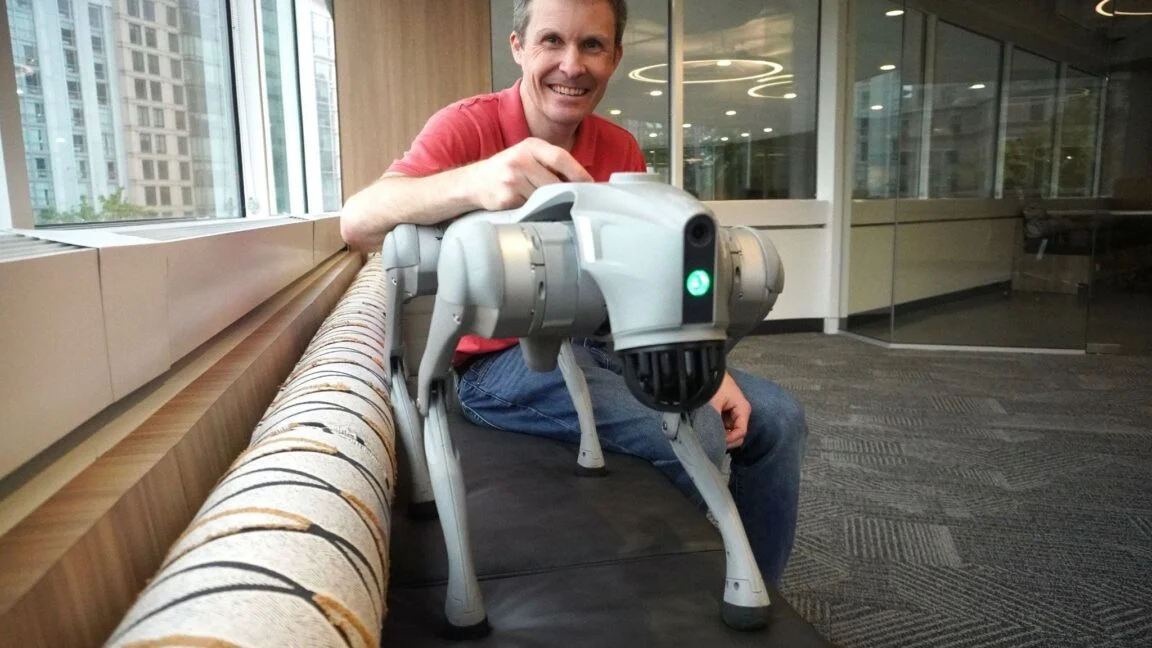
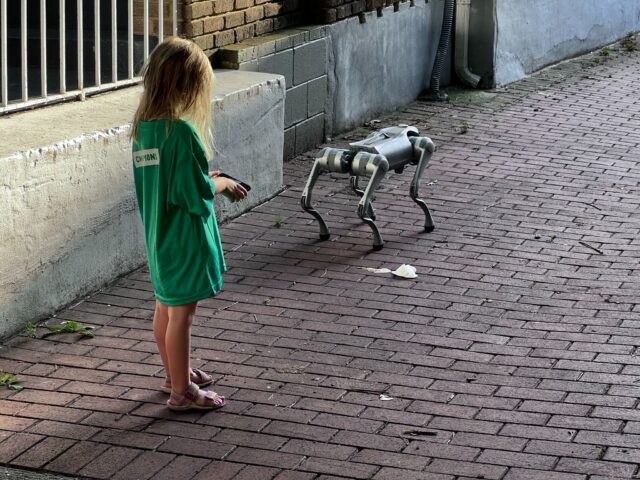
While biological dogs in the neighborhood maintained a wary distance, often expressing their skepticism through growls and barks, children were visibly enchanted by the machine’s ability to perform parlor tricks. On command, the robot executed handstands and leaps, demonstrating a level of agility that was, until recently, confined to high-end research laboratories or military-funded prototypes. However, this demonstration of technical prowess masked a deeper, more sobering reality: the rapid commercialization of robotics is outstripping the current practical utility of the hardware.
The Limits of Mechanical Companionship
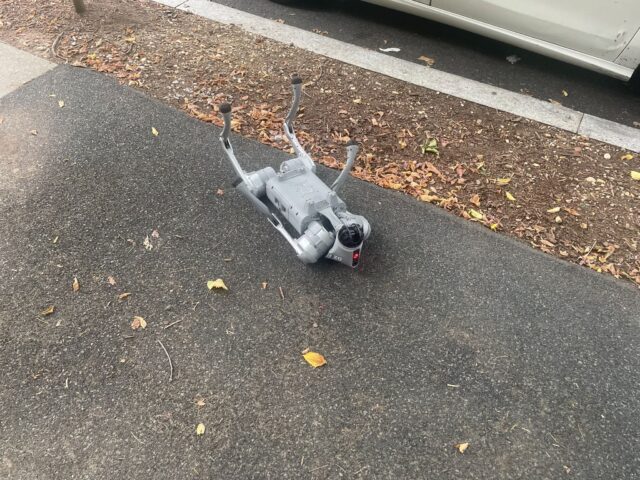
The journey back home in the late afternoon provided a harsh lesson in the limitations of current battery and thermal management systems. With the ambient temperature reaching 87°F (30°C) and the route characterized by an incline, the robot’s performance deteriorated rapidly. Monitoring the telemetry via a smartphone app, the operator observed the system hit critical thresholds—5 percent battery life and an internal temperature of 84°C (183°F). Moments from the front door, the robot collapsed, rolling onto its back—a stark reminder that despite their sleek design and advanced motion-control software, these machines remain delicate, specialized tools rather than reliable household assistants.
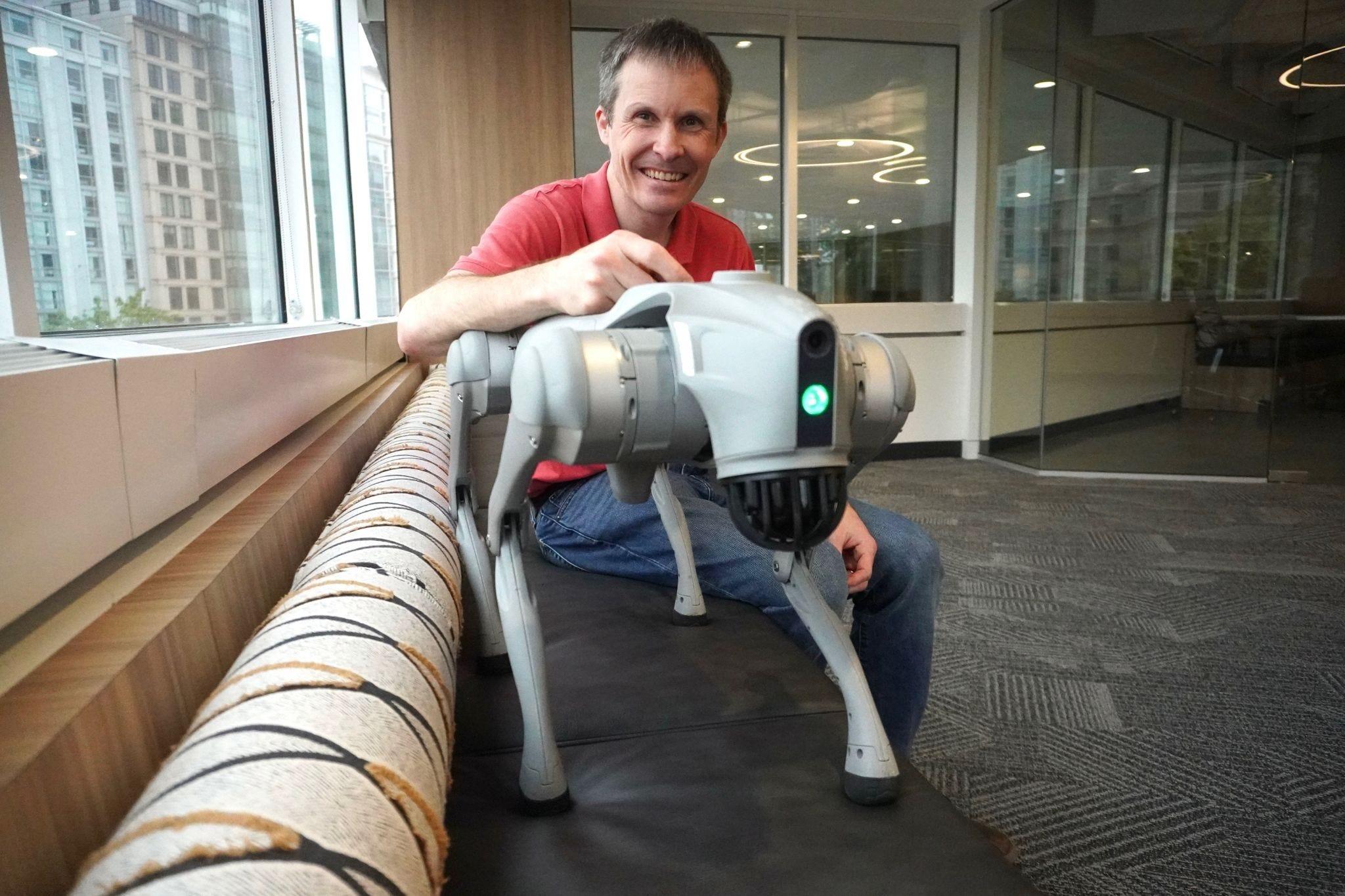
This incident highlights the "utility gap" currently facing the consumer robotics sector. While wheeled robots excel at logistics and drones have mastered surveillance and inspection, the quadruped remains a "solution in search of a problem." Lacking manipulators, arms, or hands, the current generation of robot dogs serves more as a research platform or a novelty than a functional domestic aid. Yet, the significance of the Unitree Go2 Pro does not lie in its lack of utility, but in its price point. At approximately $4,000, it represents a radical democratization of technology that was previously locked behind a $75,000 paywall.
A History of Democratized Locomotion
The evolution of legged robots is a story of transition from the massive, noisy, and inefficient machines of the early 2000s to the sleek, electric, and affordable models of today. In 2016, Boston Dynamics unveiled Spot, an electric quadruped that redefined the industry. However, the commercial rollout of Spot was slow and prohibitively expensive for all but the most well-funded industrial and academic institutions.
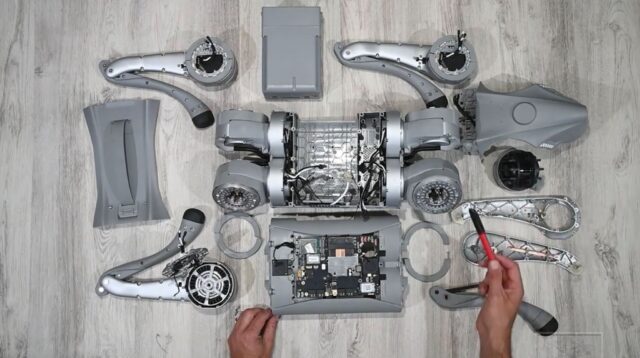
Unitree, founded by Wang Xingxing in 2016, took a different approach. Inspired by the work of Boston Dynamics founder Marc Raibert, Wang sought to strip away the industrial complexity that made earlier robots inaccessible. By prioritizing mass-produced, identical components—specifically using three uniform motors per leg to achieve a dynamic range of motion—Unitree drastically reduced both the complexity and the manufacturing cost of its units.
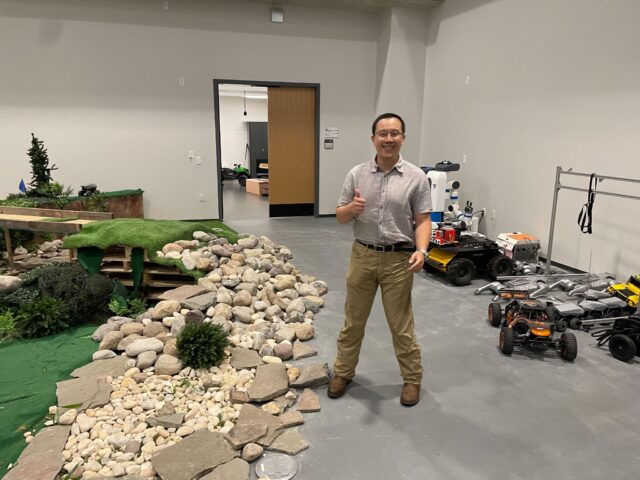
Professor Xuesu Xiao, a robotics expert at George Mason University, notes that this shift fundamentally altered the landscape of academic research. "Ten years ago, only a very small set of research groups were working on quadruped locomotion," Xiao explains. "Unitree effectively democratized the entire world of quadruped locomotion research." By providing affordable hardware, the company allowed labs to scale their experiments, testing algorithms for navigation and stability that were previously restricted by a lack of accessible robots.
The Engineering Strategy Behind the Price Tag
The secret to Unitree’s market disruption lies in a calculated trade-off between precision and cost. Industrial robots typically rely on high-ratio gear reducers—often 51:1 or higher—to ensure extreme movement accuracy. While this precision is vital for manufacturing, it introduces rigidity, high costs, and a lack of "backdriveability," or the ability for the robot to yield gracefully to external forces.
Unitree opted for a simpler 6.33-to-1 gearbox paired with more powerful motors. This design is inherently more flexible and cost-effective. While it sacrifices some of the surgical precision of industrial-grade machinery, it excels in environments where the robot must interact with uneven, unpredictable terrain. Because modern control software is increasingly capable of making millisecond-level corrections, the hardware does not need to be perfect to be functional. This "software-first" approach to hardware design is a cornerstone of the modern Chinese robotics manufacturing model, drawing clear parallels to the rise of DJI in the global drone market.
From Quadruped to Humanoid
The success of the Go2 series has provided Unitree with the capital and engineering experience to pivot toward the most ambitious frontier in robotics: humanoids. In 2023, the company launched the H1, followed quickly by the more capable G1. With a consumer price starting at $13,500, the G1 is positioned to disrupt the humanoid market in the same way the Go2 disrupted the quadruped space.
The economic data supports this shift. According to financial filings associated with the company’s 2026 Shanghai stock market debut, humanoid revenue has grown exponentially, with an eightfold increase recorded between 2024 and 2025. Humanoids now account for over 50 percent of the company’s total revenue. This pivot is supported by a sophisticated supply chain and a supportive regulatory environment in China, where the government has long utilized public-private partnerships to foster technological leadership in high-growth sectors.
Implications and Global Tensions
The rapid ascent of Unitree has not gone unnoticed by Western policymakers. The intersection of artificial intelligence, high-end hardware, and potential dual-use applications (civilian and military) has triggered a security-first response. In mid-2026, a bipartisan group in the U.S. House of Representatives introduced legislation to restrict the importation of Chinese-manufactured robots, specifically naming Unitree. This was followed by sweeping FCC regulations aimed at foreign-made robotics, designed to prevent the integration of potentially vulnerable hardware into U.S. infrastructure.
The broader implication of these policies remains a subject of intense debate. Proponents of the restrictions argue that the potential for data harvesting and infrastructure vulnerability outweighs the benefits of affordable robotics. Critics, however, warn that such bans may inadvertently create a "robotics backwater" in the West. If domestic startups like Tesla, Figure, and 1X cannot match the price-to-performance ratio of their Chinese counterparts, and if Chinese firms are barred from the market, Western industries and researchers may find themselves falling behind in the global race for automation.
The Future of the Robotics Flywheel
The "flywheel effect" observed in the drone industry—where increased sales volume drives down component costs, which in turn fuels further innovation and sales—appears to be repeating in the legged robotics sector. As companies like Unitree continue to internalize the production of motors, sensors, and gearboxes, the cost of entry for sophisticated robotics will continue to drop.
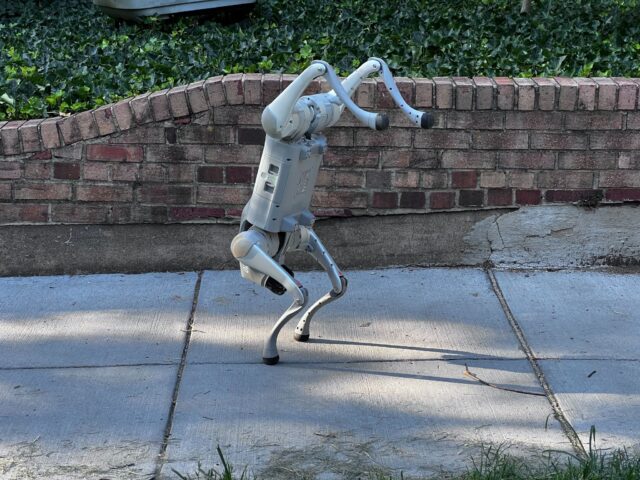
While the current reality involves buggy software, unreliable batteries, and the occasional embarrassing collapse on a suburban sidewalk, these are the growing pains of a nascent industry. The history of technology suggests that the "rough edges" of early products are rarely a barrier to long-term adoption. As long as the trajectory of cost reduction holds, the question is no longer whether robots will become a ubiquitous presence in the workplace and the home, but how society will adapt to a world where high-mobility machines are as common and as affordable as the personal computer was in the 1990s. The challenge for the next decade will be balancing the economic and innovative potential of these machines with the security and ethical complexities they inevitably bring.