
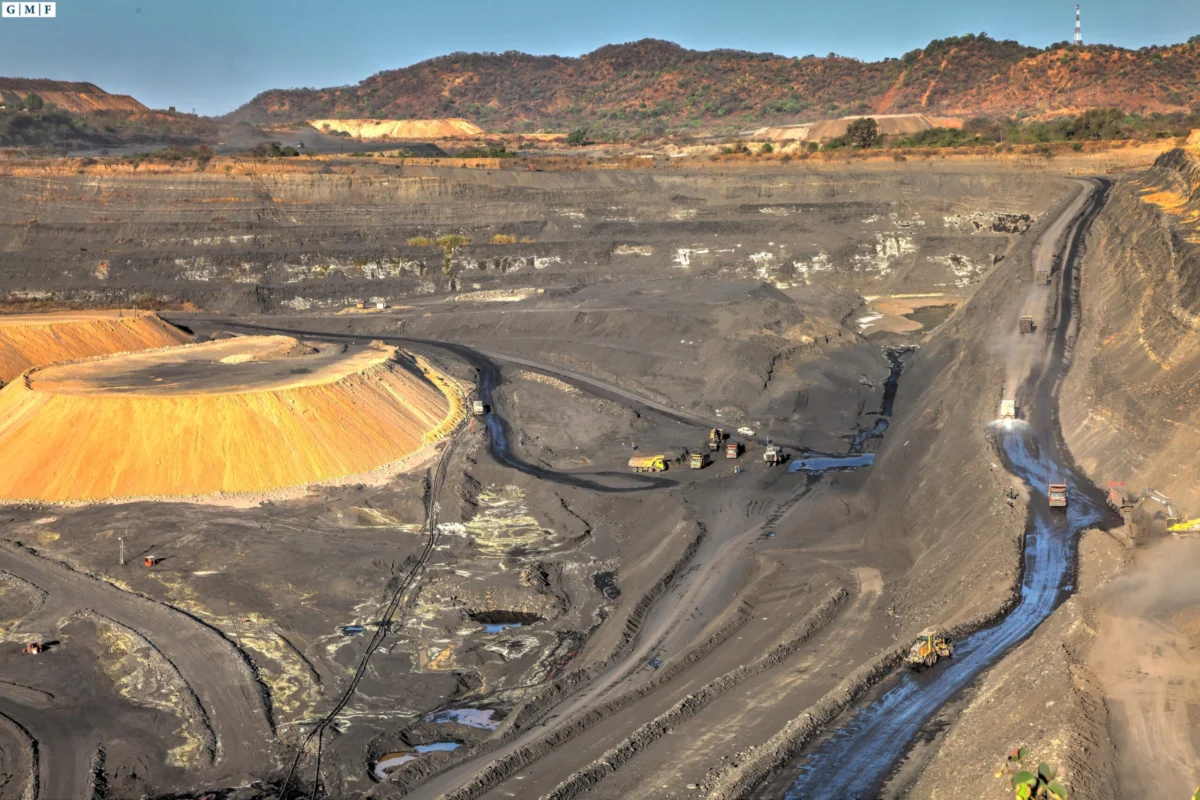
Copper serves as the primary nervous system for the modern global economy. From the high-voltage grids required for the green energy transition to the sprawling server farms powering artificial intelligence, the demand for refined copper is projected to skyrocket over the next decade. Yet, as the United States and the European Union intensify their efforts to "de-risk" their supply chains from Chinese influence, a strategic miscalculation has emerged: Western powers are focusing on the mouth of the mine, while China has already secured the heart of the refinery.
This imbalance is nowhere more apparent than in Zambia, a nation that holds some of the world’s most significant copper reserves and has become the primary theater for a sophisticated competition over mineral sovereignty. While Washington and Brussels treat the race for copper as a binary struggle for extraction rights, the reality is that the control of the global supply chain has migrated to the refining stage—the process of turning raw concentrate into usable metal.
The Geography of Refining Dominance
Current global trade data underscores a stark reality: China absorbs approximately 60% of the world’s unrefined copper and commands roughly 50% of its global refined output. This dominance is not accidental; it is the result of decades of systematic investment in smelting, refining, and logistics infrastructure. For the West, the vulnerability is not the lack of access to rock in the ground, but the lack of capacity to process that rock once it is extracted.
In Zambia, this has created a complex dynamic. The TAZARA railway, originally financed by China in the 1970s after Western lenders shied away, remains the artery through which Zambian copper flows to international markets. With Chinese firms recently committing to a $1.4 billion upgrade of this line, the physical path of the metal remains firmly aligned with Chinese manufacturing centers.
In response, the United States and the EU have championed the Lobito Corridor—a logistics project designed to link the copper-rich regions of the Democratic Republic of the Congo and Zambia to the Angolan coast. While Western leaders frequently characterize the Lobito Corridor as a definitive geopolitical counterweight to Chinese influence, analysts point to a more nuanced reality. A railway, no matter how modern, does not solve the upstream problem of refining. If the copper traveling along the Lobito line is destined for Chinese-owned smelters or is processed in facilities that remain tied to Chinese capital, the strategic objective of de-risking remains unfulfilled.
Chronology of a Strategic Shift
The tension between Western ambitions and African industrialization has evolved significantly over the last three years:
- 2023: The European Union signs a Strategic Partnership Memorandum of Understanding (MoU) with Zambia, signaling a desire for closer cooperation on raw materials.
- August 2025: Zambia waives a 10% export duty on unrefined copper concentrate, acknowledging that its domestic smelters require urgent repairs and that it lacks the immediate capacity to process all its output locally.
- December 2025: The U.S. government’s development finance agencies finalize a $553 million loan for the Lobito Corridor, marking a major milestone in Western infrastructure investment.
- August 2026: President Hakainde Hichilema is re-elected, solidifying his mandate to transform Zambia from a raw-material exporter into an industrial player.
- October 2026: Zambia and the United States engage in high-stakes negotiations over a critical minerals agreement, following the decoupling of this economic dialogue from previous, controversial attempts to link aid packages to mining concessions.
The Industrialization Imperative
For Zambia, mining is not merely a revenue stream; it is the backbone of the national economy. With mining accounting for roughly 72% of foreign export earnings and 9% of GDP, the government in Lusaka is under intense pressure to move up the value chain. President Hichilema’s administration has made it clear: Zambia is no longer interested in being a mere quarry for the global north.
The Zambian government’s "National Critical Minerals Strategy" (NCMS) emphasizes "co-industrialization." This shift is part of a broader continental trend. Zimbabwe, for instance, has successfully implemented raw mineral export restrictions that have led to the first domestic lithium sulphate exports. While these facilities are often still backed by Chinese capital, the shift demonstrates that African nations are successfully forcing foreign partners to choose: either invest in domestic value-addition or lose access to the raw resource.
The Energy Bottleneck
The primary obstacle to Zambia’s ambition is energy. Refining copper is an intensely power-hungry process, with the International Energy Agency (IEA) noting that energy costs account for nearly 44% of total production expenses in the African context. Recent climate-induced droughts have forced Zambia into debilitating load-shedding cycles, which have directly halted smelting operations.
To reach their production targets, industry experts estimate that Zambia requires an additional 2,000 megawatts of generation capacity. This necessity creates a unique opportunity for Western investors. Unlike China, which has historically focused on traditional infrastructure, the U.S. and EU could distinguish themselves by investing in the energy infrastructure—specifically renewable grids—that would allow Zambia to power its own smelters.
Implications for Western De-risking
The failure of the "One Big Beautiful Bill Act" (OBBBA) in the United States, which saw the retraction of key electric vehicle tax credits, has further muddied the waters. By weakening the domestic demand signal for refined minerals, Washington has signaled to private investors that the transition to a localized supply chain is not as well-supported as once thought.
For the West to succeed, its policy must pivot from "access" to "integration." A successful strategy would involve:
- Redefining Friend-Shoring: Critical mineral agreements should define eligibility for incentives based on the stage of transformation rather than the mine of origin. If copper is refined into cathode or battery-precursor chemicals within Zambia or a regional economic zone, it should be treated as an "eligible input" under Western trade frameworks.
- Supporting Co-Industrialization: Backing the African Green Minerals Strategy (AGMS) is essential. By providing technical expertise and capital for smelting and precursor manufacturing, Western powers can align their supply chain security with the economic growth of the producer nation.
- Decoupling Aid and Trade: The experience of 2026, where Zambia pushed back against an attempt to link health aid to mineral access, provides a blueprint for future engagement. Transparent, standalone economic agreements that respect national sovereignty are more likely to yield long-term, stable partnerships than "quid-pro-quo" diplomacy.
The Path Forward
The competition for the future of copper is entering a new phase. The "Great Power" rivalry is no longer just about who controls the dirt; it is about who provides the capital and technology to transform that dirt into the building blocks of the modern world.
If Washington and Brussels continue to view Africa through a narrow lens of extraction, they risk financing supply chains that will ultimately flow through the same Chinese-controlled refineries they are trying to avoid. Conversely, by embracing the role of a partner in industrialization—by funding energy, refining facilities, and value-added manufacturing—the West can secure a reliable, ethical, and strategically integrated source of critical minerals.
Zambia is effectively offering a choice to the world: it will trade with those who enable its industrial evolution. The nations that recognize this, and move beyond the archaic model of raw-material extraction, will be the ones that define the next century of global trade. The challenge for the West is to prove that it can be a partner in this transition, rather than a competitor for the remains of a past era.