
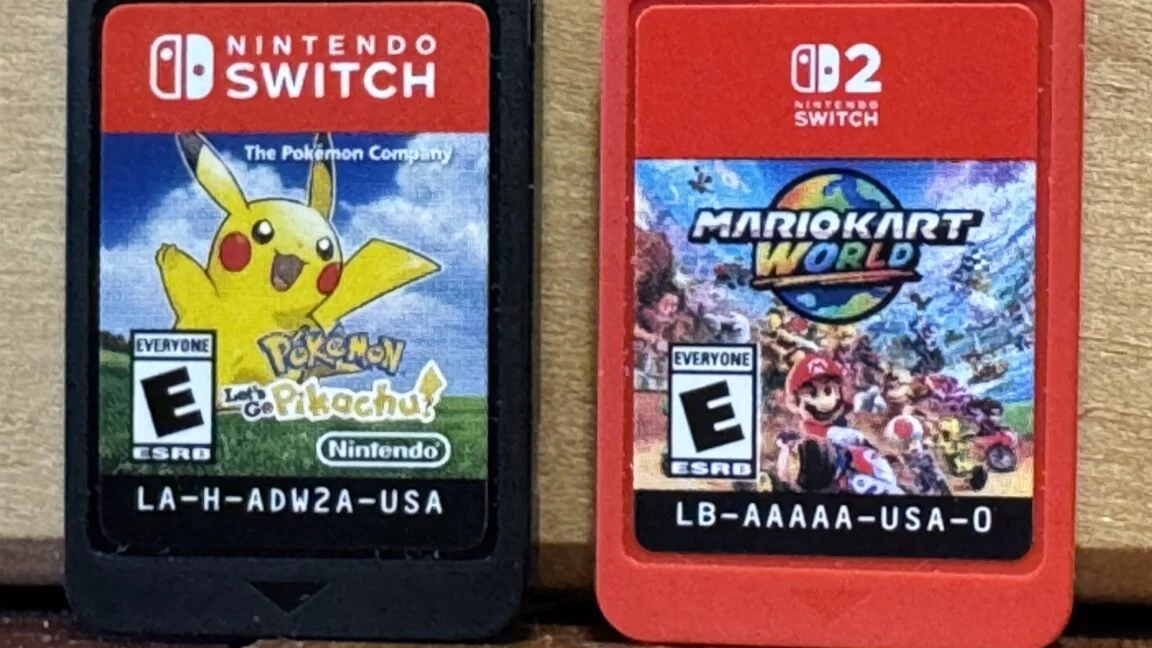
The landscape of physical media in the video game industry is undergoing a profound transformation, characterized by shifting consumer habits, volatile supply chains, and a strategic pivot toward digital-first distribution. While Sony has recently moved to curtail its physical game production, Nintendo continues to navigate a different path, reaffirming its commitment to the cartridge format even as logistical and economic pressures mount. This divergence highlights a critical juncture for the industry: how legacy hardware manufacturers balance the nostalgia and collector-friendly nature of physical media against the undeniable efficiency and rising dominance of digital storefronts.
The Strategic Commitment to Physical Media
Nintendo’s stance remains distinct within the modern gaming console market. As of mid-2026, the company has explicitly stated that it has no immediate plans to abandon physical cartridges, a decision grounded in consumer feedback and the unique demographic profile of the Nintendo Switch user base. Executives have frequently noted that a significant portion of their audience values the tangible ownership of game cards, particularly for gift-giving and secondary market trading.
However, this commitment does not come without complications. The production of proprietary ROM chips—the technological heart of the Nintendo Switch cartridge—has become increasingly precarious. Nintendo currently relies on a specialized network of suppliers, most notably Rohm and Lapis Semiconductor, to produce the storage media required for its software. As these suppliers face their own market pressures and aging production lines, the cost-to-benefit ratio of manufacturing physical media has begun to skew upward.
A Chronology of the Physical Shift
The trajectory of physical media over the last two years reveals a clear, if gradual, erosion of its traditional dominance.
- Late 2025: The industry saw early warning signs of cost-cutting measures. Publishers, specifically those working with smaller budgets, began lobbying for more granular options in cartridge storage capacities. Japanese publisher Inin, for instance, openly discussed the necessity of smaller-capacity cartridges for the then-upcoming Switch 2 to ensure the financial viability of a physical release for the title R-Type Dimensions III.
- Early 2026: Nintendo implemented a controversial pricing strategy, effectively decoupling the price of physical media from digital downloads. By charging a premium for physical copies, Nintendo sought to offset the rising manufacturing and logistics costs associated with shipping physical inventory.
- Mid-2026: The release of second-quarter fiscal data indicated that digital sales had captured 61.5 percent of the total business volume, marking a steady increase from the previous year. This pivot confirms that while Nintendo supports physical collectors, the market itself is voting overwhelmingly for digital convenience.
Supply Chain Constraints and Economic Implications
The primary challenge facing the physical game format is the reliance on legacy manufacturing processes. Unlike digital data, which is effectively infinite in supply once the server architecture is in place, physical cartridges require raw materials, silicon wafer fabrication, and complex logistics chains.
Industry analysts, such as David Gibson, have pointed out that as the total volume of physical units produced decreases, the per-unit cost increases. This creates a "death spiral" scenario where publishers must charge more to recoup manufacturing costs, which in turn drives consumers toward cheaper, more accessible digital downloads, further reducing demand for physical media and driving prices even higher.
The dependency on Rohm and Lapis Semiconductor is particularly noteworthy. These firms operate in a space where high-volume, low-cost commodity production is increasingly rare. As the semiconductor industry prioritizes AI-driven chips and high-performance automotive components, the "mature" nodes used for Nintendo’s ROM chips become less of a priority, potentially leading to capacity shortages and increased volatility in production costs.
The Digital-Physical Price Gap
The decision by Nintendo to charge more for physical games than for their digital counterparts is a watershed moment for the industry. Historically, physical media was considered the "standard" price, with digital sales often discounted or price-matched. By reversing this, Nintendo is explicitly passing the manufacturing and distribution costs directly to the consumer.
This policy reflects a broader realization: physical games are no longer a mass-market necessity but a premium, boutique product. This shift has significant implications for retail partners. Major retailers, who rely on the foot traffic generated by new game releases, are finding that the inventory turnover for physical games is slowing. If physical games become a luxury item, the footprint of game sections in major retail chains is likely to continue its steady contraction.
Market Data and Consumer Trends
Current data suggests that the transition to digital is not just a technological shift but a demographic one. Younger consumers, who have grown up with subscription services and mobile app stores, display less attachment to physical discs or cartridges.
Supporting data from the second quarter of 2026 shows that digital growth is compounding. With 61.5 percent of revenue now derived from digital storefronts, the tipping point has already been passed. Analysts suggest that if this trend maintains its current trajectory, digital sales could account for 75 percent of the market by 2028. This evolution naturally balances the cost equation; as physical demand wanes, the industry-wide infrastructure for manufacturing ROMs will eventually shrink, theoretically allowing the remaining production to stabilize at a higher, niche-market price point.
Official Responses and Industry Outlook
While Nintendo has not issued a formal "end-of-life" roadmap for its physical media, the messaging from corporate leadership emphasizes "flexibility." By maintaining supply chains with partners like Lapis Semiconductor, they are buying time. However, industry insiders suggest that behind closed doors, publishers are already preparing for a future where physical copies are limited to "Collector’s Editions" or high-profile first-party releases, while standard, budget, and indie titles migrate entirely to digital distribution.
The broader implications are clear: the era of the physical game as the primary medium of exchange is drawing to a close. For the consumer, this means the eventual loss of the "used game" market and the ability to lend or trade titles, features that have defined the console experience for decades. For Nintendo, the challenge will be managing this transition without alienating the core user base that has kept the company profitable through previous market fluctuations.
Analysis: The Future of Media Ownership
The current state of the game industry suggests that we are entering a phase of "managed decline" for physical media. By acknowledging that digital demand is balancing out the manufacturing costs of physical media, Nintendo is essentially accepting a smaller, more expensive physical market as a permanent fixture.
This is not necessarily a failure of strategy, but a realistic adaptation to a post-physical world. The cost of manufacturing is a reflection of the reality of global supply chains. As long as Nintendo continues to provide a physical option, they retain a competitive advantage over rivals who have already exited the space. Yet, the price of that advantage is being paid by the consumer in the form of higher price tags for physical software.
In the long term, the survival of the physical cartridge will likely depend on its evolution into a premium, collector-oriented asset. Just as the vinyl record market survived the transition to digital streaming by repositioning itself as a high-fidelity, tangible experience, the gaming industry may see physical cartridges become objects of art and memorabilia rather than mere vessels for data.
Ultimately, the "limping" state of physical media is a symptom of a transition toward a more efficient, digital-centric future. While the industry may continue to support physical formats for the foreseeable future, the economic reality is undeniable. The convenience of digital distribution, combined with the rising costs of physical manufacturing, ensures that the cartridge will eventually cease to be the primary gateway to gaming, becoming instead a legacy format for those who refuse to let the tactile experience of play vanish entirely.