
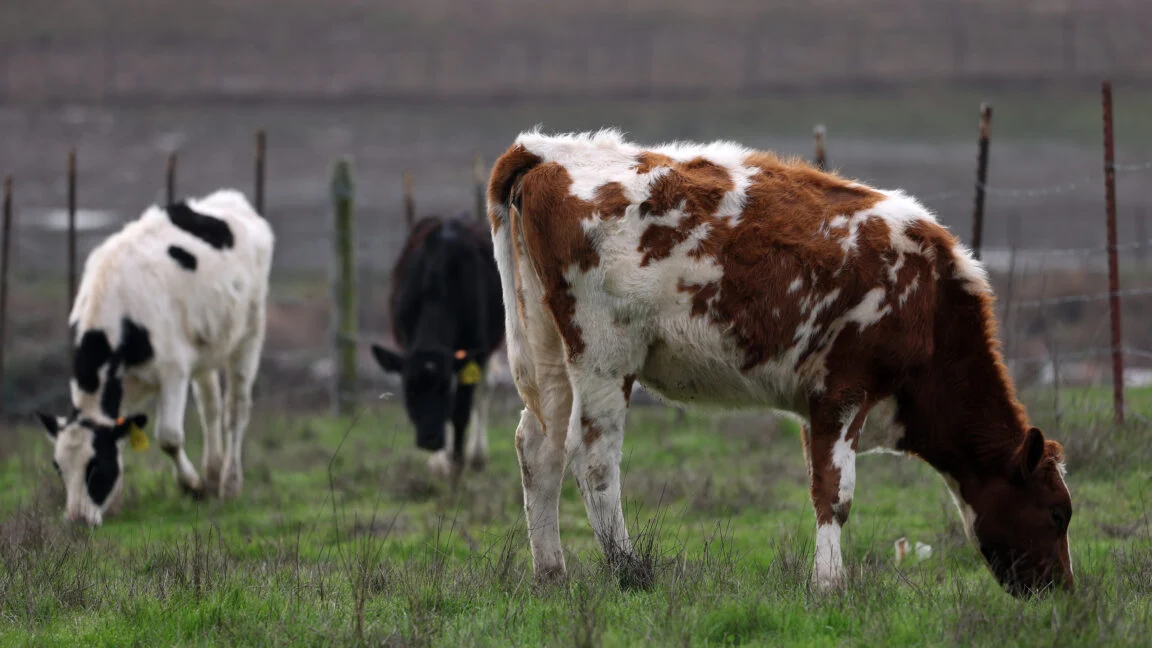
Washington state health officials confirmed on Sunday that a resident of Yakima County has died from a bird flu infection, marking the third human fatality associated with the current outbreak of highly pathogenic avian influenza (HPAI) in the United States. The individual, who had known underlying health conditions, contracted the virus following direct exposure to an infected dairy herd. This tragic development underscores the evolving nature of the H5 strain, which has shifted from its historical prevalence in wild migratory birds to a persistent presence within domestic livestock populations across the nation.
The death of the Yakima County resident represents a significant milestone in the ongoing monitoring of the H5N1 virus. While state and federal health agencies have maintained that the risk to the general public remains low, the transition of the virus into dairy operations has prompted heightened surveillance and rigorous safety protocols for agricultural workers. Out of respect for the grieving family, officials from the Yakima Health District have withheld specific details regarding the deceased, including age, gender, and the exact nature of their underlying health complications.
A Growing Chronology of the H5 Outbreak
The emergence of the H5 virus within the United States dairy industry was first identified in March 2024, when cattle in Texas and Kansas tested positive for the pathogen. This marked a historic and unprecedented leap for the virus, which had previously been confined largely to avian species. Since that discovery, the United States Department of Agriculture (USDA) and the Centers for Disease Control and Prevention (CDC) have tracked the spread of the virus across numerous states, documenting cases in poultry, dairy cattle, and, sporadically, human workers.
In Washington, the situation took a definitive turn on October 8, 2024, when the USDA confirmed the presence of HPAI in dairy herds within the state. This announcement triggered immediate containment efforts by the Washington State Department of Agriculture and local health authorities. Following the initial report of infected herds, Yakima County became the focal point of the state’s response.
Since the October 8 confirmation, three human cases of bird flu have been documented in Washington. All three individuals were associated with exposure to the same infected dairy operations in Yakima County. The most recent case was confirmed simultaneously with the report of the fatality on Sunday. Unlike the deceased individual, the two other confirmed cases in Washington reportedly experienced only mild symptoms and did not require hospitalization. These cases reflect a broader trend observed nationally, where human infections linked to dairy cattle have often presented as mild, manifesting as conjunctivitis or minor respiratory irritation, though the potential for severe outcomes—as demonstrated by the recent fatality—remains a critical concern for those with compromised immune systems.
Epidemiological Context and Risk Assessment
The H5N1 strain currently circulating is classified as Highly Pathogenic Avian Influenza. In veterinary and medical circles, "highly pathogenic" refers to the virus’s ability to cause severe disease and high mortality rates in poultry, though its impact on humans has been variable.
Epidemiologists note that the virus typically spreads through contact with infected animals, their secretions, or contaminated environments. In the context of dairy farms, the milking process, which creates aerosols and involves close proximity to cattle, is believed to be the primary route of transmission to workers. Because the virus is not known to transmit easily from human to human, the current risk profile is primarily restricted to those with direct animal contact.
However, the medical community remains vigilant. The fact that the deceased individual possessed underlying health vulnerabilities is a key variable in the current clinical analysis. Health officials have repeatedly emphasized that while the general public is at minimal risk, individuals working in agriculture—specifically those dealing with poultry or dairy cattle—must adhere to stringent personal protective equipment (PPE) guidelines, including the use of gloves, masks, and eye protection, to minimize the risk of viral transmission.
Official Responses and Public Health Messaging
Dave Atteberry, the health officer for the Yakima Health District, addressed the incident with a tone of solemnity and professional caution. "Our hearts go out to the individual’s family and loved ones during this difficult time," Atteberry stated. He reinforced the reality that, while avian influenza is a significant agricultural challenge, its potential to cause severe illness is often amplified by a person’s baseline health status.
State health authorities are currently working in tandem with the CDC to conduct genetic sequencing of the virus isolated from the Washington cases. This sequencing is vital to determine if the virus has undergone any mutations that might increase its transmissibility or virulence in humans. As of the latest reporting, there is no evidence of sustained human-to-human transmission, which remains the primary threshold that would trigger a change in the national pandemic response strategy.
The USDA has also been actively coordinating with state agricultural departments to provide testing resources and guidance on bio-security. Dairy farmers are being encouraged to limit visitor access to facilities, implement rigorous sanitation procedures, and report any signs of illness in cattle—such as decreased milk production, lethargy, or loss of appetite—immediately.
Broader Implications for Agriculture and Biosecurity
The integration of the H5 virus into the domestic dairy sector has created lasting implications for the American agricultural economy. Dairy operations across the country have had to navigate the economic fallout of herd infections, which can result in reduced milk yields and the necessity of quarantining livestock.
The scientific community is also grappling with the long-term questions surrounding the virus’s host adaptation. The ability of the H5 strain to jump from wild migratory birds to dairy cattle, and subsequently to human workers, suggests a level of evolutionary plasticity that requires ongoing genomic surveillance. This situation has necessitated a "One Health" approach, a collaborative strategy that recognizes the interconnection between the health of people, animals, and the shared environment.
Beyond the immediate tragedy in Yakima County, the incident serves as a stark reminder of the limitations of current agricultural safety standards. Industry groups are beginning to examine how to better protect workers, who are the first line of defense against zoonotic diseases. Proposals for increased training, subsidized access to PPE, and enhanced medical screening for farm workers are likely to gain traction in the coming months as the agricultural sector seeks to mitigate the risks associated with an endemic H5 virus.
Future Surveillance and Monitoring
As the United States enters the winter months, migratory bird patterns will once again shift, potentially introducing new viral loads into local ecosystems. The Washington state health department has indicated that it will continue to provide regular updates as the investigation into the Yakima County cases concludes.
The state’s approach to this outbreak is focused on three pillars: rapid detection, containment, and public education. By prioritizing the identification of infected herds and ensuring that symptomatic workers are tested and treated promptly, authorities hope to prevent further fatalities. However, the unpredictability of viral evolution means that this remains an active and evolving situation.
For the general public, the primary advice remains unchanged: avoid contact with sick or dead wildlife and maintain basic hygiene practices. For the agricultural community, however, the threshold for concern is higher. The tragedy in Washington is not merely an isolated event but a sentinel moment in the national response to the H5N1 outbreak. It serves to highlight the necessity of robust public health infrastructure, transparent reporting by local agencies, and the critical importance of supporting those whose work puts them on the front lines of zoonotic disease management.
As the investigation continues, the focus will remain on whether this fatality represents an outlier due to the victim’s underlying health conditions or if it signals a potential shift in the clinical severity of the current H5N1 strain. The collaboration between local, state, and federal agencies will be essential in the weeks ahead to ensure that lessons learned from the Yakima County cases are translated into actionable policies that protect both the agricultural workforce and the broader population. The death of the Yakima resident is a sobering reminder that the intersection of animal health and human medicine requires constant, unwavering vigilance.