
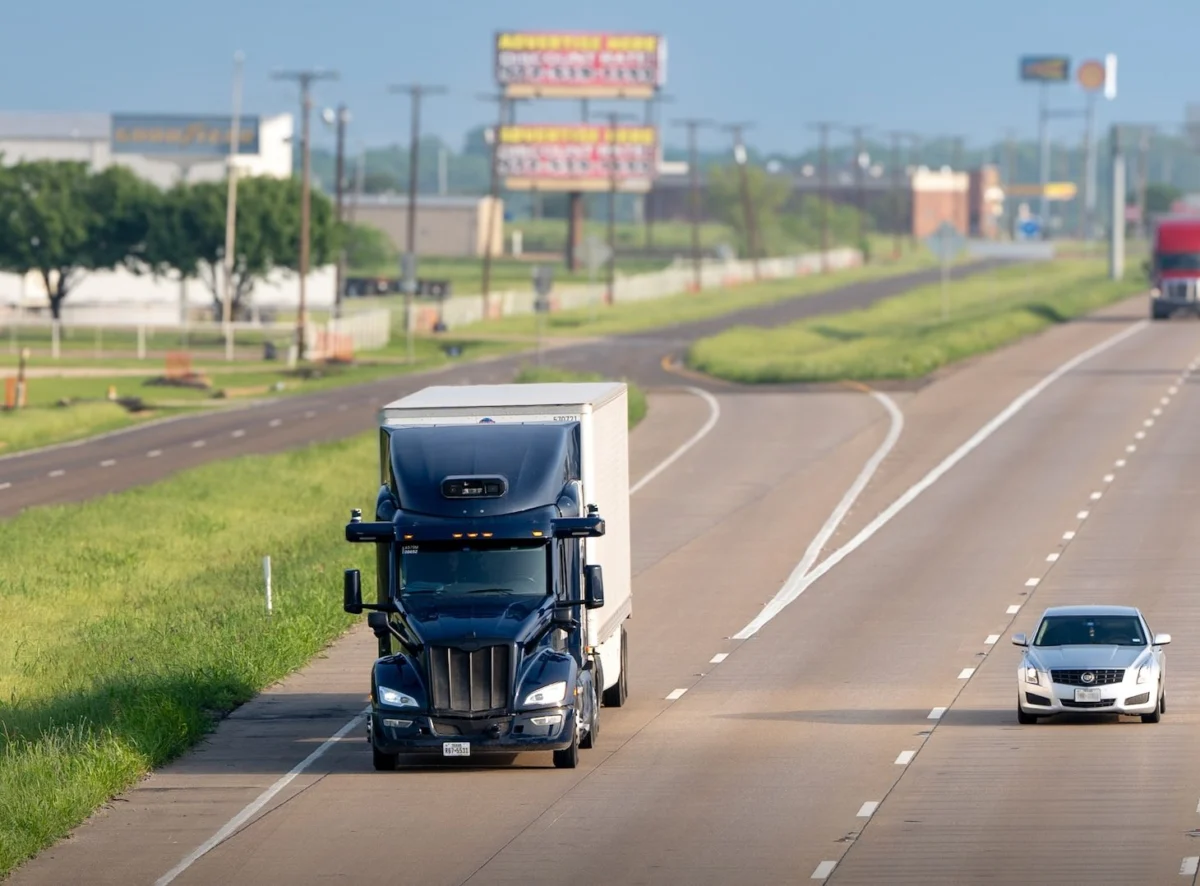
Autonomous vehicle technology developer Aurora Innovation is charting an aggressive path toward commercial scale, telling investors during its recent annual analyst and investor day that it projects managing more than 30,000 self-driving trucks generating $5 billion in annual revenue by the conclusion of 2030. This ambitious roadmap represents a staggering leap from the company’s near-term projections, which estimate closing out 2026 with a modest fleet of 200 driverless trucks and an $80 million revenue run rate.
While market analysts and Wall Street have responded to the high-growth targets with caution—evidenced by a notable slide in the company’s stock price—Aurora’s executive leadership insists that the trajectory is not only achievable but grounded in the pragmatic realities of the heavy-duty logistics and trucking industry.
Context and Market Realities
During a post-presentation interview, Aurora Chief Financial Officer David Maday addressed the skepticism head-on, acknowledging that while a fleet of 30,000 autonomous vehicles sounds remarkably large within the nascent self-driving sector, it represents only a fraction of the broader commercial trucking landscape.
"While 30,000 kind of feels like a lot—and it does in the autonomy space for sure—in terms of trucks relative to the overall market, it’s kind of pretty small," Maday noted. He pointed out that the four major commercial truck manufacturing giants collectively produce between 250,000 and 300,000 new vehicles annually in the United States alone. "I don’t think it’s aspirational; I think we can do it."
Despite these assurances, public markets have yet to fully embrace Aurora’s long-term vision. Investor sentiment has trended downward following the September 23 investor day event, culminating in a 12.42% share price drop to close at $5.29 on the subsequent Monday. Financial analysts attribute the market hesitation to the steep cash burn traditionally associated with hardware-heavy autonomous deployments and the execution risk inherent in scaling a nascent technology over a five-year horizon.
The Strategic Shift: From Transportation-as-a-Service to Driver-as-a-Service
To understand how Aurora plans to bridge the gap between its 2026 baseline and its 2030 objectives, financial observers must examine the company’s evolving business model.
At present, Aurora operates a "transportation-as-a-service" (TaaS) proof-of-concept framework capped at approximately 500 vehicles. Under this arrangement, Aurora owns and operates the self-driving trucks directly, servicing enterprise logistics partners such as Detmar Logistics, Hirschbach, McLane, and Werner. The company currently charges roughly $2 per mile—a rate that incorporates a fuel surcharge—aligning closely with conventional human-driven carrier pricing.
However, the foundational pivot for Aurora’s financial acceleration is scheduled to begin in 2027. The company intends to transition from TaaS to a "driver-as-a-service" (DaaS) operational model. Under the DaaS structure, Aurora will no longer carry the heavy capital expenditure of purchasing and maintaining the physical trucks. Instead, commercial fleet customers will purchase the autonomous-capable vehicles directly and pay Aurora a per-mile subscription fee for its proprietary self-driving software and hardware integration, projected to be around $0.85 per mile.
This structural shift offloads the physical vehicle assets from Aurora’s balance sheet, mitigating depreciation risks and preserving capital. According to Maday, this transition is the primary catalyst that will allow the company to achieve breakeven gross margins on a run-rate basis by the first half of 2027, operating approximately 500 trucks under the new model.
Manufacturing Partnerships and the 2027 Hardware Leap
A critical component of Aurora’s scaling strategy relies on its manufacturing and supply chain partnerships, most notably with global automotive supplier Aumovio (formerly known as Continental).
By the end of 2027, Aurora plans to introduce its third-generation hardware suite—the specialized sensors, compute units, and redundancy systems that enable fully driverless operations. Unlike earlier iterations built in smaller volumes, this generation will consist of mass-produced autonomous hardware engineered and manufactured by Aumovio.
Crucially, Aumovio’s involvement extends beyond contract manufacturing. The supplier is also providing financial backing for the hardware kits, significantly easing the capital expenditure burden on Aurora during its critical growth phase. Furthermore, Aumovio will handle the servicing and repair of the hardware kits for end customers, creating a reliable, distributed support network essential for commercial fleet uptime.
Projected Chronology and Scaling Milestones
Aurora’s corporate timeline outlines a carefully sequenced progression from localized proof-of-concept trials to nationwide commercial ubiquity:
- Present to Late 2026: Aurora operates its initial fleet of up to 500 vehicles under the transportation-as-a-service model, targeting an exit run rate of $80 million with roughly 200 active driverless trucks.
- First Half of 2027: The company anticipates reaching breakeven gross margins, wherein incoming revenue successfully covers the direct operational costs of running the deployed trucks.
- Late 2027: Aurora plans to scale past 1,000 driverless trucks annually while introducing its third-generation, mass-produced Aumovio hardware kits.
- 2028: Management projects that optimized cost structures will trigger rapid gross margin expansion, opening the door for broader strategic considerations.
- 2029 to 2030: Aurora plans to expand its operational footprint from initial southern shipping lanes to cover the vast majority of the continental United States, culminating in a 30,000-vehicle fleet generating $5 billion in annual revenue.
Beyond the long-haul freight sector, executive leadership has confirmed that success in the heavy-duty trucking market will lay the groundwork for future diversification. Maday noted that once cost structures normalize around 2028 and beyond, the company remains open to entering the passenger ride-hailing and robotaxi markets.
Fact-Based Analysis of Implications
Aurora’s aggressive 2030 targets present a classic high-risk, high-reward scenario typical of the deep-tech and autonomous systems industries. On one hand, the shift toward a software-centric, asset-light driver-as-a-service model addresses the primary historical bottleneck of hardware capital intensity. By leveraging manufacturing powerhouses like Aumovio to shoulder production and financing burdens, Aurora is positioning itself to capture high-margin software revenues without suffocating under vehicle depreciation costs.
On the other hand, the company faces substantial execution hurdles. Transitioning from 200 vehicles in late 2026 to more than 30,000 vehicles by the close of 2030 requires a compound annual growth rate in fleet size that leaves little room for regulatory setbacks, safety incidents, or macroeconomic downturns in the logistics sector. Furthermore, while the per-mile software subscription model is theoretically lucrative, widespread fleet adoption depends entirely on proving long-term reliability, fuel efficiency, and seamless maintenance support to risk-averse trucking fleets.
As the industry watches to see whether Aurora can meet its 2027 inflection point, the company’s ability to restore investor confidence will hinge on consistent execution, regulatory approvals, and proving that its financial projections can withstand the realities of commercial deployment at scale.