The United States Department of Defense is seeking an investment of $30.3 million over the next five fiscal years to develop and deploy an advanced iteration of the traditional lie detector. According to budget documentation released by the Pentagon, the initiative—formally designated as Polygraph+ or Polygraph Next—aims to overhaul federal credibility assessment frameworks through the integration of artificial intelligence, machine learning algorithms, and contactless physiological monitoring techniques known as standoff sensing.
The funding request surfaces during a period of acute internal scrutiny within the Department of Defense. Under the leadership of Defense Secretary Pete Hegseth, the Pentagon has increasingly relied on polygraph testing to trace the origins of unauthorized disclosures to the press. This push for technological modernization reflects broader institutional anxieties regarding information security, workforce loyalty, and the efficacy of legacy screening protocols that have remained largely unchanged for a century.
Chronology of Institutional Tension and Leak Investigations
The accelerated push toward enhanced lie detection is closely tied to recent high-profile intelligence leaks that have rattled the defense establishment. In September, investigative reports revealed that approximately 50 military officers assigned to the Joint Staff were subjected to polygraph examinations following media coverage detailing the depletion of United States weapons stockpiles amid ongoing geopolitical tensions involving Iran.
This aggressive use of internal security screenings is part of a broader historical trajectory within federal agencies. While the Department of Defense routinely conducts tens of thousands of polygraph evaluations annually for prospective employee vetting and ongoing security clearances, the current administration has amplified these measures to address perceived vulnerabilities in internal loyalty.
The Defense Counterintelligence and Security Agency (DCSA), which oversees federal background investigations and insider threat detection, is slated to manage the Polygraph+ program. Although the budget request remains subject to congressional approval, the DCSA has initiated preparations to transition federal screening processes from human-driven interpretations to automated, algorithmic models.
Technological Evolution: From Analog Sensors to Standoff Sensing
Traditional polygraph instruments evaluate deception by monitoring autonomic nervous system responses—specifically blood pressure, pulse, respiration, and electrodermal activity (sweat). Examiners establish a physiological baseline by asking innocuous control questions, such as whether the sky is blue, and compare those readings against target inquiries regarding past criminal behavior or security infractions.
Invented in the 1920s, the underlying technology of the conventional polygraph has experienced minimal fundamental evolution. However, the Department of Defense has spent recent years actively scouting commercial innovations to replace or supplement legacy hardware.
In 2023, the Defense Innovation Unit (DIU), an organization tasked with integrating commercial dual-use technology into the military, launched an open solicitation process for modern deception-detection prototypes. The DIU subsequently selected two private entities to develop advanced systems:
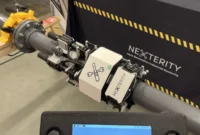
- Presage Technologies: A firm specializing in remote measurement of heart and breathing rates through standard optical cameras.
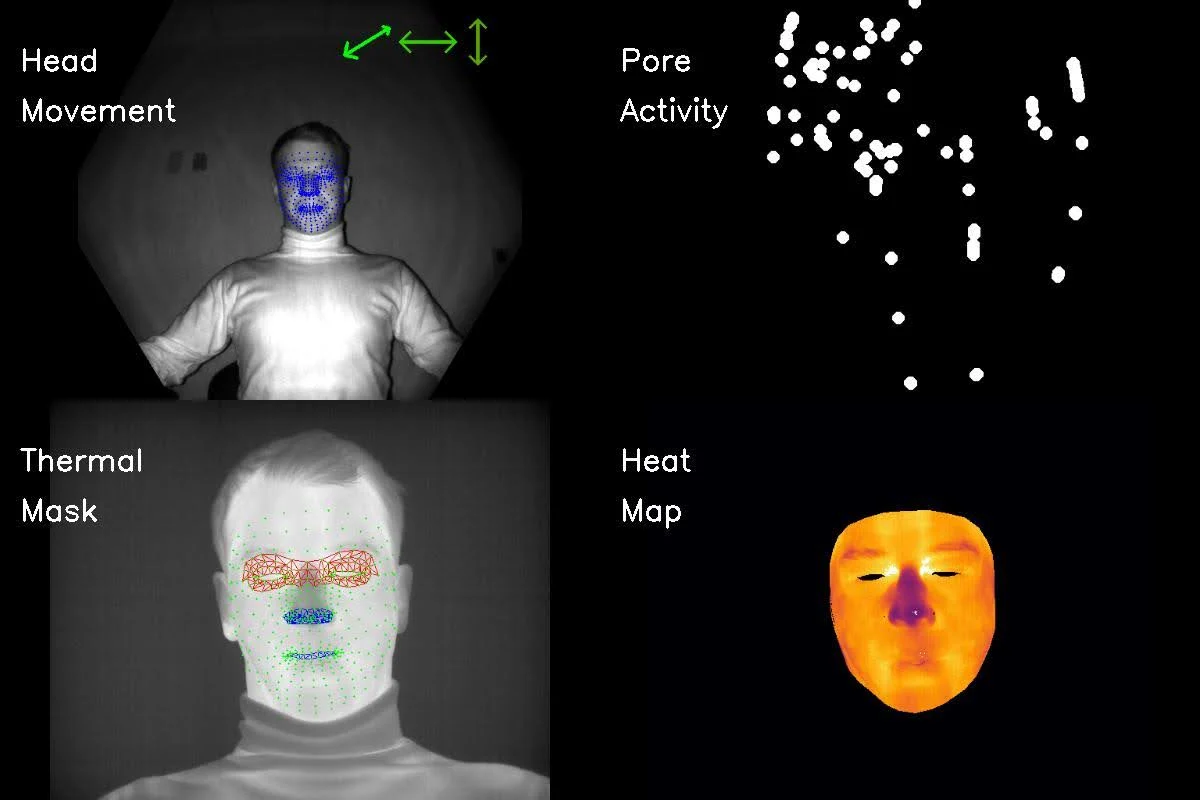
- Altec Research: A medical sensor enterprise developing non-contact sensing capabilities designed to track head movement, facial skin temperature fluctuations, and pore activity.
While these prototypes represent a significant departure from wired physiological attachments, industry experts note that non-contact sensing remains largely unproven in high-stakes operational environments.
Scientific Skepticism and the Reliability Debate
The introduction of Polygraph+ has reignited long-standing debates among legal scholars, psychologists, and security experts regarding the scientific validity of lie detection technologies. Critics argue that despite millions of dollars in federal investment, the underlying premise of automated deception detection remains flawed.
Kyri Kotsoglou, a professor at Northumbria Law School in the United Kingdom who specializes in the application of polygraphs within legal and judicial systems, characterizes the federal initiative as a fundamentally flawed endeavor.
"It’s a misguided effort to reduce the complex to something that is tangible," Kotsoglou notes, pointing to the inherent danger of treating subjective psychological and physiological responses as empirical proof of dishonesty.
Scientific consensus regarding the polygraph has historically been skeptical. In 1983, the United States Congress Office of Technology Assessment concluded that empirical support for the polygraph’s use in employee screening was remarkably limited. Two decades later, a 2003 report by the National Research Council (NRC) echoed these findings, classifying the scientific evidence supporting polygraph efficacy as weak at best.

Statistical evaluations further complicate the deployment of these technologies at scale. While the American Polygraph Association asserts that traditional polygraphs maintain an accuracy rate between 80% and 94%, independent researchers caution that even high statistical reliability can yield catastrophic failure rates within large populations. Given that the Department of Defense employs approximately 2.8 million personnel, the application of an imperfect screening system at this magnitude risks producing thousands of false-positive accusations against innocent service members and civilian employees.
Furthermore, human behavioral research indicates that untrained individuals can successfully detect deception slightly more than half the time without technical assistance. Yet, polygraph interpretations remain vulnerable to subjective examiner bias, with studies indicating that individuals from specific minority demographics may experience disproportionately higher rates of false-positive determinations of deception.
Countermeasures and the Psychology of Deterrence
A well-documented vulnerability of polygraph examinations is the susceptibility of subjects to artificial countermeasures. Individuals undergoing screening can deliberately manipulate their baseline physiological responses—often by subtly altering breathing patterns or employing physical triggers, such as concealing a small tack inside a shoe to induce pain during control questions—to distort test outcomes.
"If you know how it works, you can beat it," observes Sophie van der Zee, an associate professor studying deception and behavioral analysis at Erasmus University in Rotterdam.
According to van der Zee, the primary utility of the polygraph has historically been psychological deterrence rather than forensic accuracy. Many subjects offer confessions prior to or during the examination simply due to the perceived infallibility of the apparatus. However, she emphasizes that this deterrent effect relies entirely on public and institutional belief in the technology’s effectiveness.
The Intersection of Artificial Intelligence and Multi-Modal Detection
Proponents of the Department of Defense’s Polygraph+ initiative suggest that artificial intelligence could theoretically overcome the limitations of legacy polygraphs by identifying complex, multi-variable patterns in physiological data that human examiners are incapable of recognizing.
Researchers in behavioral psychology note that human deception typically manifests across three distinct internal dimensions:
- Physiological stress responses
- Cognitive load
- Conscious behavioral concealment efforts
Traditional polygraphs primarily measure autonomic physiological stress. Modern multi-modal proposals seek to synthesize optical, acoustic, and thermal data to generate a comprehensive deception score.
This concept is not unprecedented. During the 2000s, academic institutions and security agencies explored similar integrated frameworks. Manchester Metropolitan University developed "Silent Talker," a system designed to calculate deception scores from facial video footage, which was subsequently integrated into the European Union’s iBorderCtrl pilot program. Similarly, the United States developed the Automated Virtual Agent for Truth Assessments in Real-time (AVATAR) project, which combined eye-tracking, vocal analysis, and micro-movement detection for border security applications. Ultimately, these precursor programs failed to achieve widespread operational deployment and were quietly discontinued.
Broader Implications and Legal Concerns
Legal and academic experts warn that combining artificial intelligence with legacy polygraph methodologies creates a compounding layer of uncertainty. Marion Oswald, a professor of law who has collaborated with Kotsoglou on research examining credibility assessment technologies in justice systems, argues that automated systems inherit the foundational flaws of the data used to train them.
"Even if you have all the records in the world from polygraph tests, you don’t know whether those polygraph tests are right or not," Oswald states.
Critics contend that the federal government’s continued investment in deception technology serves an administrative and punitive function rather than a scientific one. By framing advanced lie detection as a countermeasure against leaks and institutional disloyalty, the Department of Defense risks institutionalizing intimidation tactics.
"It seems very much a response to the concern of the current administration to leaks and perceived lack of loyalty," Oswald adds. "It is being used as a threat, to intimidate and force people to confess to things, as opposed to anything that’s actually getting valid information."
As the $30.3 million budget request proceeds through congressional review, lawmakers and defense oversight committees will face the task of balancing the Pentagon’s urgent demands for internal security against longstanding scientific warnings regarding the reliability, ethics, and civil liberties implications of automated lie detection.