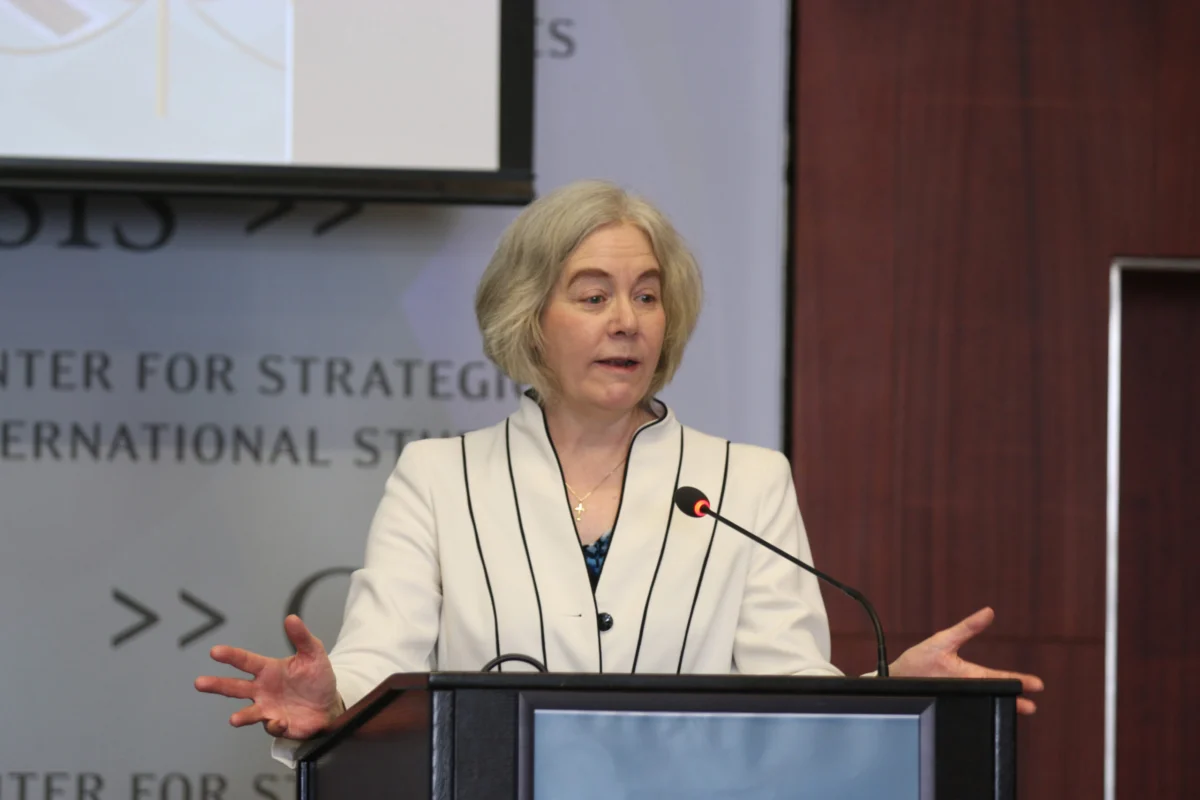
The Center for Strategic and International Studies (CSIS) hosted a pivotal discussion on March 10, 2016, featuring Dr. Ellen Williams, Director of the Advanced Research Projects Agency-Energy (ARPA-E) within the U.S. Department of Energy. The event, held from 10:00 to 11:30 a.m. EST, focused on the critical intersections of energy technology, national security, and market deployment, with a particular emphasis on the modernization of the electric grid and next-generation energy storage solutions.
The session was introduced by Sarah Ladislaw, then Director and Senior Fellow of the CSIS Energy and National Security Program, and moderated by Frank O’Sullivan, Senior Associate at CSIS and Director of Research and Analysis at the MIT Energy Initiative. As the energy sector faced mounting pressures to decarbonize while maintaining grid reliability, the dialogue provided a comprehensive look at how federal funding and high-risk, high-reward research initiatives were shaping the future of American power infrastructure.
Background Context: The Urgency of Grid Modernization
By 2016, the American electrical grid—largely constructed in the mid-20th century—was facing unprecedented stress. The integration of intermittent renewable energy sources, such as wind and solar, required a paradigm shift in how power systems were managed, balanced, and secured. Traditional grid infrastructure was not designed to handle two-way power flows, localized generation, or the massive data loads required for real-time grid optimization.
In this climate, ARPA-E occupied a unique and vital niche. Established under the America COMPETES Act of 2007 and modeled after the Defense Advanced Research Projects Agency (DARPA), ARPA-E was tasked with funding breakthrough energy technologies that industry was reluctant to back due to high technical and financial risks.
During the CSIS event, Dr. Williams emphasized that while laboratory breakthroughs were essential, the ultimate metric of success for ARPA-E projects was their ability to transition from the benchtop to the commercial market. The electric grid represented one of the most stubborn bottlenecks in this transition, requiring simultaneous advancements in hardware, software, regulatory frameworks, and market design.
Core Focus Areas for ARPA-E in 2016
Dr. Williams outlined several strategic priorities for ARPA-E during her address, centering heavily on grid management, grid-scale storage, and international commitments under new federal initiatives.
Grid Management and Resiliency
Modernizing the grid required moving beyond manual controls and reactive maintenance toward predictive, automated management systems. Dr. Williams discussed ARPA-E’s investments in software and algorithmic tools capable of managing the immense complexity of a decentralized grid. These tools were designed to give grid operators real-time visibility into system stress points, enabling them to reroute power dynamically and prevent cascading blackouts. Furthermore, cybersecurity emerged as a critical sub-focus, as an increasingly digitized grid presented a broader attack surface for malicious actors seeking to disrupt critical national infrastructure.
Grid-Scale Energy Storage
A central theme of Dr. Williams’s presentation was the imperative for cost-effective, long-duration energy storage. While lithium-ion batteries were making significant inroads in consumer electronics and electric vehicles, grid-scale applications demanded storage solutions with vastly different cost, lifespan, and capacity profiles. ARPA-E portfolios at the time included funding for novel flow batteries, compressed air energy storage, thermal storage systems, and advanced materials designed to store electricity for days or even weeks. Solving the storage puzzle was widely viewed as the holy grail of renewable integration, allowing wind and solar power to provide baseload reliability regardless of weather conditions.
The Launch of Mission Innovation
The event also touched upon the broader geopolitical and policy landscape, notably the recently launched "Mission Innovation" initiative. Announced at the 2015 United Nations Climate Change Conference (COP21) in Paris, Mission Innovation was a global commitment by 22 countries and the European Union to dramatically accelerate public clean energy innovation. As part of this international pact, participating nations aimed to double their respective clean energy research and development budgets over five years. Dr. Williams highlighted how ARPA-E would serve as a primary vehicle for executing these goals within the United States, driving domestic technological leadership while contributing to global climate stabilization efforts.
Opening Remarks and Moderated Discussion
The event commenced with introductory remarks by Sarah Ladislaw, who contextualized the discussion within the broader framework of national security and economic competitiveness. Ladislaw noted that energy security in the 21st century was inextricably linked to technological innovation and infrastructural resilience.

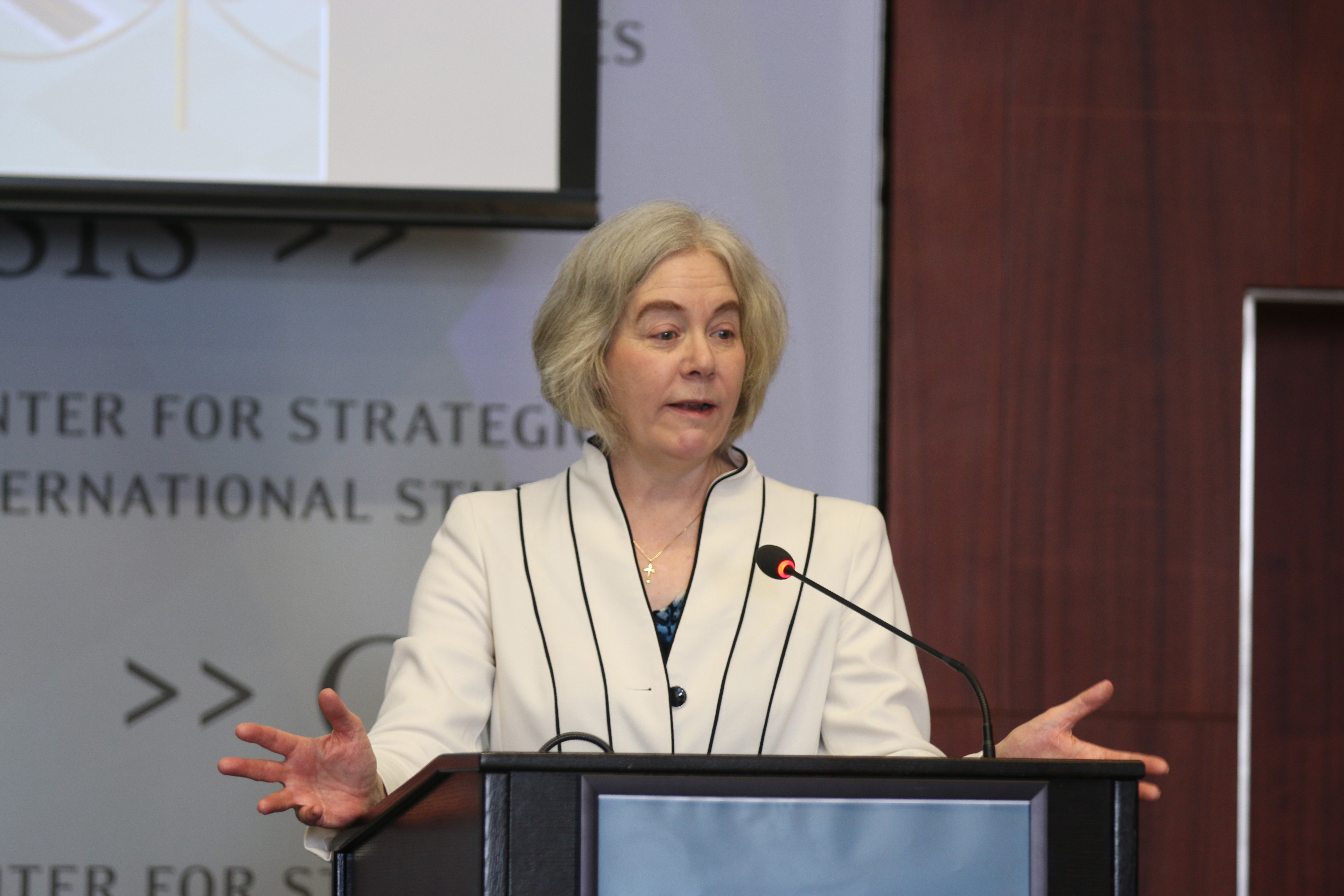
Following the introduction, Dr. Williams delivered her keynote presentation, utilizing data from ongoing ARPA-E projects to illustrate how targeted federal investments could catalyze private-sector innovation. She underscored the agency’s rigorous milestone-based project management approach, which ensured that underperforming research teams were systematically phased out while promising technologies received scaled funding.
The moderated discussion, led by Frank O’Sullivan, probed deeper into the commercialization hurdles facing energy startups. O’Sullivan drew upon his expertise at the MIT Energy Initiative to question how policy incentives, regulatory compliance at the state and federal levels, and incumbent utility structures impacted the adoption of novel grid technologies.
Dr. Williams acknowledged that utilities operate under stringent risk-aversion mandates due to their obligation to provide reliable, low-cost power. Consequently, convincing risk-averse utility regulators to approve capital expenditures for unproven technologies remained a formidable challenge. She pointed to ARPA-E’s OPEN programs and technology-specific cohorts—such as MONITOR (Methane Observation Networks with Innovative Technology to Obtain Reductions) and NODES (Network Optimized Distributed Energy Systems)—as models designed to bridge the valley of death between early-stage R&D and commercial deployment.
Implications and Broader Impact on the U.S. Energy Sector
The insights shared by Dr. Williams at CSIS in March 2016 offered a prophetic look at the trajectory of the U.S. power sector. The emphasis on grid flexibility, advanced storage, and public-private partnerships laid foundational groundwork that influenced energy policy and venture capital investment for the remainder of the decade and into the 2020s.
From a policy perspective, the event underscored the bipartisan recognition that technological superiority in energy was vital for maintaining American economic competitiveness. While debates over energy subsidies and regulatory frameworks frequently divided Washington, agencies like ARPA-E maintained a reputation for merit-based, cutting-edge scientific funding that transcended immediate partisan friction.
Ultimately, the dialogue highlighted that transforming the electric grid was not merely an engineering challenge, but an institutional one. Achieving a resilient, low-carbon energy system required close collaboration among federal research agencies, academic institutions like MIT, policy think tanks like CSIS, and private-sector utilities. The frameworks discussed during the 2016 forum continue to resonate as modern power systems worldwide grapple with the accelerating demands of the energy transition, extreme weather events, and digital connectivity.