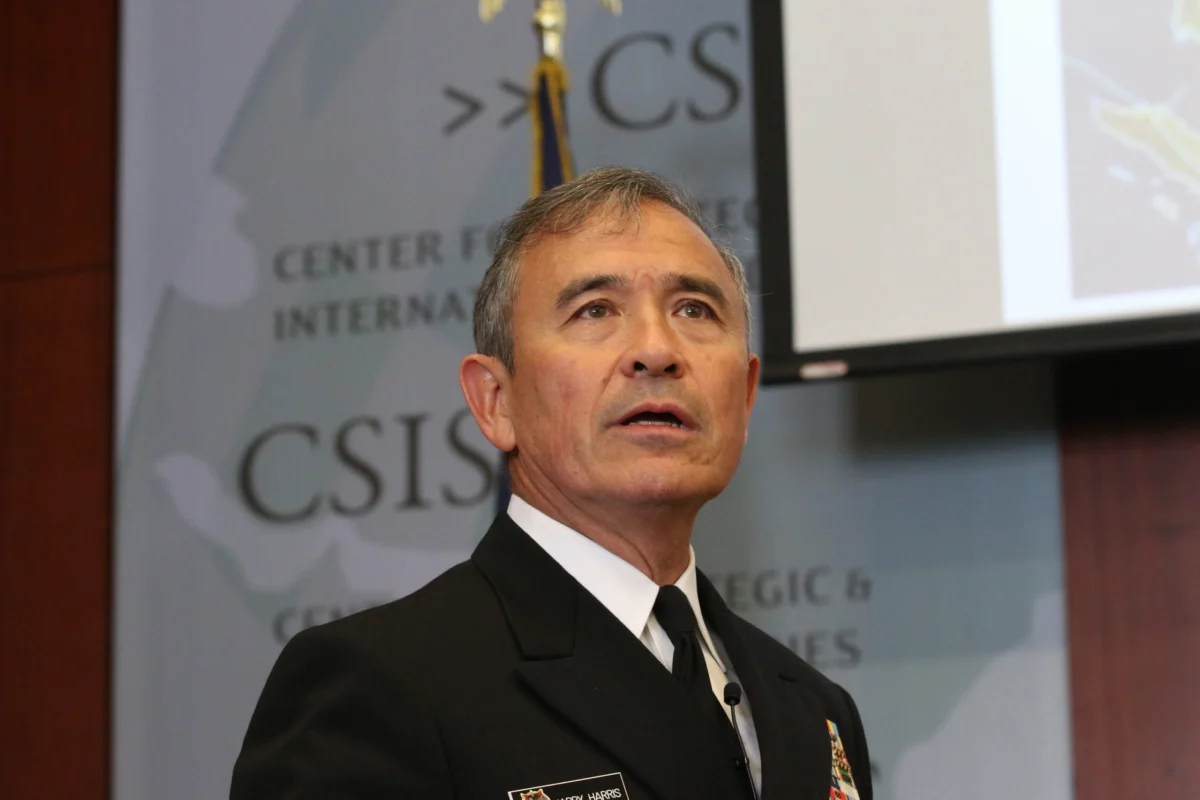
The Center for Strategic and International Studies (CSIS) hosted a high-profile Military Strategy Forum event on January 27, 2016, bringing together top defense officials and geopolitical experts to examine the evolving security landscape in the Indo-Asia-Pacific region. The one-hour evening session, running from 6:00 to 7:00 PM EST, featured Admiral Harry B. Harris, then-Commander of U.S. Pacific Command (PACOM), who delivered keynote remarks focusing on defense strategy, geopolitical stability, and emerging opportunities for cooperation among allied nations.
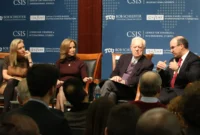
The event underscored the rising significance of the Indo-Asia-Pacific theater in Washington’s broader grand strategy during a period marked by rapid military modernization, territorial disputes, and shifting regional alliances. With introductory remarks delivered by CSIS President and CEO Dr. John J. Hamre and a subsequent discussion moderated by Dr. Kathleen H. Hicks—then Senior Vice President, Henry A. Kissinger Chair, and Director of the International Security Program at CSIS—the forum provided a comprehensive platform for dissecting the complexities of contemporary security management in the world’s most economically dynamic region.
Background Context of the Indo-Asia-Pacific Security Architecture
During the mid-2010s, the Indo-Asia-Pacific region was undergoing a profound strategic transition. Long established as a primary engine of global economic growth, the theater simultaneously emerged as a critical friction point for international security. The emergence of competing territorial claims—particularly in the South China Sea and the East China Sea—alongside North Korea’s advancing nuclear and ballistic missile programs, created an urgent imperative for the United States and its regional partners to recalibrate their defense postures.
U.S. Pacific Command, later redesignated as the U.S. Indo-Pacific Command (INDOPACOM) in 2018 to explicitly recognize the inseparable linkage between the Indian and Pacific Oceans, faced the monumental task of safeguarding American interests across a vast area stretching from the waters off the western shores of the United States to the western border of India, and from the Arctic to the Antarctic. Within this vast operational environment, military planners sought to balance forward presence, bilateral and multilateral exercises, and technological innovation to deter potential adversaries while reassuring key allies such as Japan, South Korea, Australia, and India.
The Military Strategy Forum, made possible through the generous support of Rolls-Royce North America, served as an essential venue for senior military leadership to communicate these strategic priorities directly to the policy community, defense analysts, and the public.

Key Addresses and Moderated Discussion
The evening commenced with opening remarks by Dr. John J. Hamre, who emphasized the indispensable role of robust American leadership and enduring alliances in maintaining regional stability. Dr. Hamre noted that as economic centers of gravity shifted eastward, the security architecture underpinning international trade and sovereign independence required sustained intellectual and material investment.
Following the introduction, Admiral Harry B. Harris took the floor to outline the strategic opportunities present in the Indo-Asia-Pacific. Admiral Harris, a career naval flight officer who assumed command of PACOM in May 2015, brought decades of operational experience to the forum. His address focused not merely on traditional security challenges, but proactively highlighted avenues for cooperative engagement, capacity building, and economic integration that could reinforce a rules-based international order.
Admiral Harris emphasized that while friction points garnered considerable media attention, the underlying strength of the region lay in its network of democratic allies and partners who shared a commitment to freedom of navigation, the peaceful resolution of disputes, and adherence to international law. He pointed to deepening defense ties with India, robust trilateral cooperation between the United States, Japan, and Australia, and enhanced interoperability with Southeast Asian partners as critical pillars of regional stability.
The keynote address was followed by an in-depth, moderated conversation led by Dr. Kathleen H. Hicks. The dialogue probed deeper into the operational realities facing PACOM commanders, addressing resource allocation, force posture adjustments under shifting defense budgets, and the integration of advanced military technologies to maintain a decisive qualitative edge. Dr. Hicks presseding inquiries regarding how the command intended to manage gray-zone conflicts—actions that fall below the threshold of traditional armed conflict—which were increasingly characterizing great power competition in the maritime domain.
Chronology and Strategic Timeline
To contextualize Admiral Harris’s remarks at CSIS, it is instructive to examine the chronological evolution of U.S. strategic focus in the region surrounding January 2016:
- Late 2011 to 2012: The Obama administration formally announces the strategic "Rebalance to Asia" (often termed the Asia Pivot), signaling a long-term prioritization of diplomatic, economic, and military resources toward the Indo-Pacific.
- May 2015: Admiral Harry B. Harris assumes command of U.S. Pacific Command, succeeding Admiral Samuel J. Locklear III.
- January 2016: Admiral Harris delivers his address on strategic opportunities in the Indo-Asia-Pacific at the CSIS Military Strategy Forum in Washington, D.C.
- Late 2016 to 2017: Regional tensions continue to evolve following the Permanent Court of Arbitration ruling on the South China Sea in July 2016, prompting increased allied focus on maritime domain awareness and freedom of navigation operations.
- May 2018: U.S. Pacific Command is officially renamed the U.S. Indo-Pacific Command (INDOPACOM), institutionalizing the strategic integration of the Indian and Pacific Ocean theaters.
Supporting Data and Regional Metrics
The Indo-Asia-Pacific region encompasses geographic and demographic scales that dwarf other operational theaters, underpinning its status as the primary focal point of twenty-first-century geopolitics:

- Demographics: The theater is home to more than half of the world’s population, including the world’s two most populous nations, China and India.
- Economic Significance: By 2016, the region generated over 60 percent of global gross domestic product (GDP) and accounted for half of all global trade. Key maritime choke points, such as the Strait of Malacca, facilitate trillions of dollars in commercial shipping annually.
- Military Personnel: INDOPACOM’s area of responsibility involves coordination with tens of thousands of forward-deployed and rotational U.S. military personnel across air, land, sea, cyber, and space domains.
- Allied Contributions: The theater features critical bilateral treaty allies—including Japan, South Korea, Australia, the Philippines, and Thailand—alongside expanding strategic partnerships with nations such as India, Singapore, Vietnam, and Indonesia.
Official Responses and Reactions
While the forum itself was a platform for exposition rather than policy negotiation, the themes articulated by Admiral Harris resonated widely across defense and diplomatic circles. International relations scholars and defense commentators noted that the emphasis on "strategic opportunities" marked a deliberate effort to frame Indo-Pacific policy beyond a purely reactive, threat-based posture.
Defense analysts observed that highlighting partnership potential with India and Southeast Asian nations signaled a maturing U.S. strategy aimed at fostering a multi-polar balance of power. By encouraging indigenous defense capabilities and regional multilateralism, the U.S. military sought to construct a resilient security network capable of withstanding coercive unilateralism.
Concurrently, regional actors closely monitored the dialogue in Washington for signals regarding American steadfastness. For allies in East Asia and Oceania, reaffirmations of security commitments by senior combatant commanders served as vital reassurance amid growing concerns over rapid military buildups and contested maritime claims.
Broader Impact and Long-Term Implications
The discussions held during the January 2016 Military Strategy Forum contributed meaningfully to the intellectual framework guiding U.S. defense policy throughout the remainder of the decade. The imperatives outlined by Admiral Harris—enhanced force posture flexibility, deepened technological integration, and the cultivation of an inclusive network of allies—laid foundational principles that survived administrative transitions and shaped subsequent National Defense Strategies.
As great power competition re-emerged as the central organizing principle of U.S. national security policy in the late 2010s and 2020s, the insights shared at CSIS regarding the Indo-Asia-Pacific proved prescient. The transition from the Asia Pivot to a fully realized Indo-Pacific strategy reflected an acknowledgment that global stability and economic prosperity in the twenty-first century would be decisively shaped by developments in this critical maritime and continental crossroads.