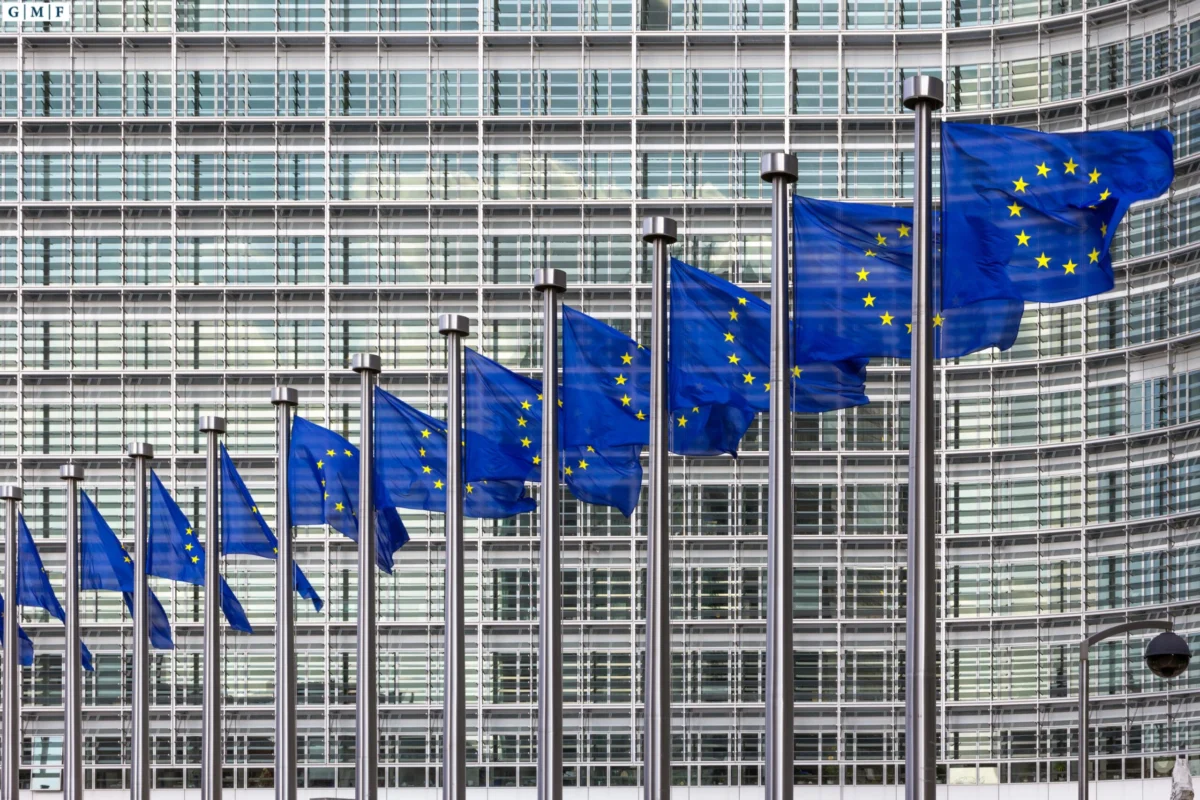
European Commission President Ursula von der Leyen’s 2026 State of the Union (SOTU) address served as a watershed moment for the European Union, signaling a profound shift in the bloc’s geopolitical orientation. In a speech that spanned the breadth of European security, economic competitiveness, and democratic resilience, the most striking element was the conspicuous absence of the United States. While Washington has traditionally been the primary anchor of European foreign policy, von der Leyen’s omission suggested a calculated pivot toward “strategic autonomy” in an era characterized by transatlantic uncertainty and shifting global alliances.
A Geopolitical Pivot: The Search for New Geometries
The address was structured around the theme of European independence in the face of both internal and external threats. From the challenges posed by unfettered social media to the existential crisis of climate change and the erosion of democratic institutions, von der Leyen painted a picture of a continent that must now rely on its own agency.
Central to this new vision was the invitation to Canadian Prime Minister Mark Carney and the extraordinary proposal to elevate Canada to the status of the EU’s first "associate member." This move, unprecedented in EU legal history, serves as a clear hedging strategy against the current volatility of US-Canada relations and the broader unpredictability of the transatlantic partnership. Carney, who has emerged as a vocal critic of current US economic policy, symbolizes a move toward a new international geometry—one that looks beyond the traditional Atlanticist framework to prioritize middle-power cooperation.
Chronology of Shifting Alliances
The current trajectory of EU policy can be traced back to the onset of the 2020s, a period marked by rapid geopolitical realignment:
- 2022–2023: The Russian invasion of Ukraine forces a sudden, urgent build-up of European defense capabilities and an energy transition away from Russian hydrocarbons.
- 2024: Mounting trade tensions between Brussels and Washington, combined with domestic political volatility in the US, lead European leaders to seek "de-risking" strategies.
- 2025: A reported 5% drop in Foreign Direct Investment (FDI) inflows into the EU, according to OECD data, underscores the vulnerability of the European market.
- 2026: Von der Leyen’s SOTU address formalizes the pivot, emphasizing internal market consolidation and the expansion of trade networks with India, Mercosur, Indonesia, and Australia.
The "China Shock 2.0" and Economic Realities
Economic competitiveness dominated a significant portion of the address, with von der Leyen explicitly naming the "China shock 2.0" as a source of de-industrialization and social instability within the EU. The data supports this concern: the EU currently faces a massive €360 billion trade surplus in China’s favor.
While the Commission president offered the prospect of dialogue, she simultaneously signaled a more aggressive posture, promising to use all available tools to "rebalance" the relationship. However, analysts point out that Brussels faces a "competitiveness gap." Despite the ambition to lead in sectors like health, transport, and advanced manufacturing, the EU lacks the significant new public-private funding initiatives required to challenge the dominance of Silicon Valley or Chinese industrial scale. The reliance on existing frameworks, rather than radical new investment, has left some stakeholders questioning whether the EU can realistically close the gap in AI and computing power without a more robust fiscal union.
Security and the "Prewar" Era
The security landscape remains dominated by Russia. Von der Leyen’s rhetoric reflected a sobering acknowledgement of a "prewar" environment, citing specific acts of sabotage—such as the attempted drone attack in Leipzig—as evidence that Russian hybrid threats are escalating into kinetic warfare.
The proposal for "Europe’s own Article 4"—a mechanism modeled after NATO to coordinate responses to hybrid attacks—demonstrates that Brussels is moving toward a more militarized internal security posture. Yet, there remains a disconnect in how these threats are perceived. While kinetic attacks are treated as security matters, the "cognitive warfare" of disinformation and foreign interference remains siloed within the democracy agenda. This separation, according to security experts, fails to account for the integrated nature of modern hybrid threats, where digital subversion is often a precursor to physical sabotage.
The Ukraine Dilemma
Despite the existential stakes, Ukraine was framed as a peripheral, rather than central, element of the address. By failing to provide a clear, accelerated roadmap for EU accession, the Commission has maintained a "business-as-usual" approach that critics argue is insufficient for a nation currently defending the borders of Europe. The potential offer of associate membership to Canada has raised concerns in Kyiv that the EU may be testing "limited integration" models that could eventually be used as an alternative to full membership for Ukraine.
Furthermore, the issue of the €210 billion in frozen Russian sovereign assets remains unresolved. Despite being a critical resource for both Ukraine’s defense and European security, the lack of consensus on its use reflects a broader hesitation to fully commit to the radical measures required by the current global climate.
Critical Mineral Dependencies and African Partnerships
The goal of achieving strategic autonomy is currently hampered by an ongoing reliance on foreign processing capacity, particularly regarding critical raw materials. China currently controls between 60% and 80% of global processing capacity for key minerals.
While von der Leyen announced an "EU Corporation on Critical Raw Materials," the strategy currently leans heavily on domestic extraction and procurement. Notably, the address overlooked the potential of deeper, value-added partnerships with African nations. Currently, of the 14 bilateral mineral partnerships between the EU and African states, only one involves joint co-financing. Without a transition from simple extraction agreements to co-investment in processing facilities on the continent, Europe risks merely replacing one dependency—Russia—with another—China.
Implications and Future Outlook
The overarching takeaway from the 2026 SOTU is a European Commission that is beginning to grasp the severity of the global threats it faces, but one that remains caught between the desire for independence and the lack of unified resources to achieve it.
The parliamentary debate that followed the address revealed a deep fracture. Traditional Atlanticism is, by all accounts, wearing thin. As Europe looks toward a more polarized future, the moderate message of "hedging" presented by von der Leyen will be tested by domestic political pressures from both the hard right and the hard left. If these Euroskeptic movements continue to gain traction in major economies like France and Germany, the entire project of EU integration—and the defense of its democratic values—could be placed in jeopardy.
The "silence" regarding the United States is perhaps the most defining feature of this new era. It represents a continent that has decided to build its own future, not necessarily in opposition to Washington, but in recognition that it can no longer afford to be a passive bystander in a world where the rules-based international order is being rewritten by the loudest and the strongest. Whether this ambition can be backed by the necessary funding, political consensus, and strategic clarity will determine the survival of the European model in the coming decade.