
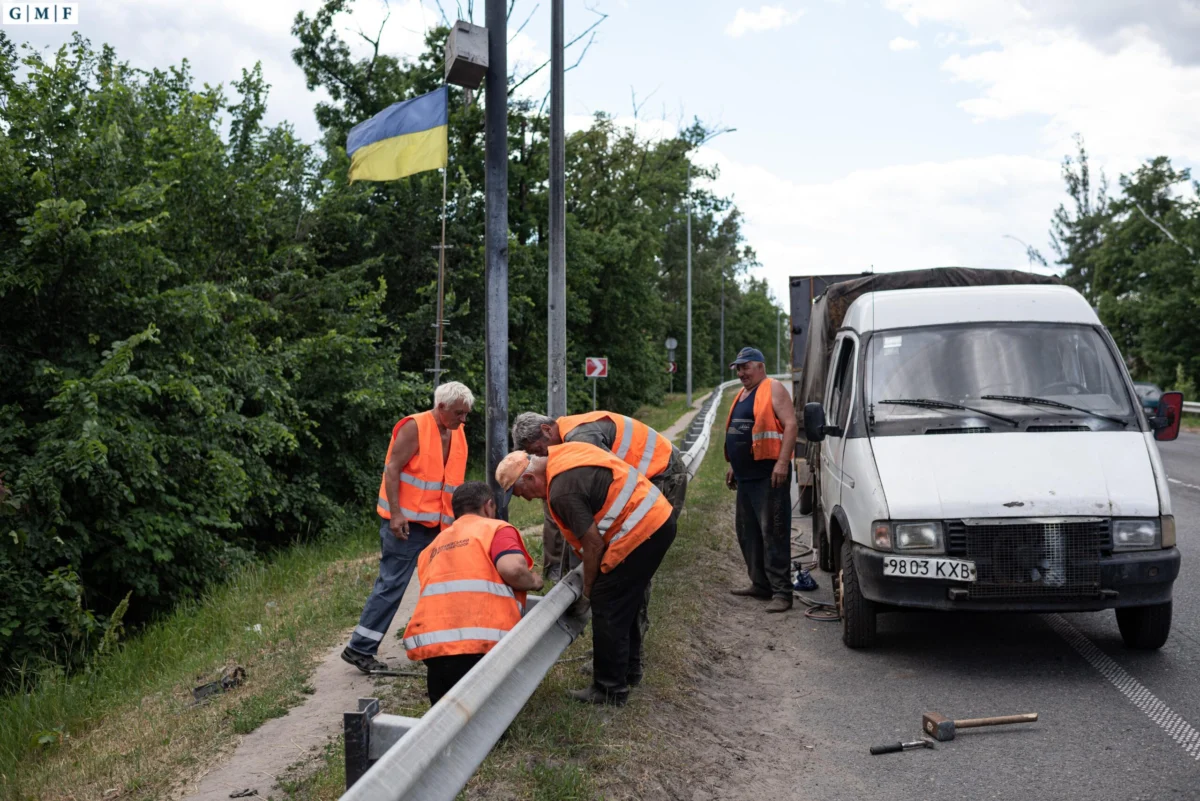
The fundamental architecture of a nation’s survival during a major crisis is often determined not by the strength of its central ministries, but by the agility of its local administrative units. When a crisis strikes—be it a natural disaster or an armed conflict—local governments possess the granular, real-time knowledge necessary to save lives: they know which residents are immobile, which buildings have backup power, and which local businesses can provide the machinery required to clear arterial roads. While modern defense doctrine frequently prioritizes a unified-command structure, the experience of recent global conflicts suggests that a move toward polycentricity—a system where multiple decision-making centers operate under a shared set of rules—may offer a superior path to national resilience.
The Ukrainian Model: Decentralization as a Defensive Asset
Ukraine’s ability to withstand the initial onslaught of the 2022 Russian invasion and the subsequent systematic targeting of its energy grid was not merely a result of military prowess; it was the direct outcome of a decade-long governance reform. Between 2014 and 2020, Ukraine underwent a significant decentralization process, shifting power, tax revenue, and responsibility from the national government in Kyiv to local communities, known as "hromadas."
This reform was predicated on the 2012 Code of Civil Protection, which assigned local governments the primary responsibility for protecting their populations. However, for years, this responsibility remained nominal. The shift occurred in 2014, when the Ukrainian government amended the Budget Code, allocating 60% of personal income tax revenues directly to local budgets. Shortly thereafter, the Law on Voluntary Amalgamation empowered villages and towns to merge into hromadas with elected councils and executive bodies.
By the time Russian forces began targeting civilian infrastructure in late 2022, this infrastructure was already in place. The most prominent example of this localized response was the creation of "Points of Invincibility"—heated, fortified hubs equipped with generators, satellite internet, and medical supplies. By the time the Cabinet of Ministers moved to standardize these facilities via Resolution No. 1401 in December 2022, thousands were already operating. The central government provided only a baseline of minimum standards, leaving the critical decisions regarding location, staffing, and specific resource allocation to local officials. Without this decentralized capacity, it is estimated that the network, which eventually grew to encompass over 10,000 points, would have failed to manifest at the speed required to prevent a humanitarian catastrophe.
Taiwan at the Crossroads: The Challenge of Institutional Inertia
The lessons from the Ukrainian experience are currently being scrutinized by policymakers in Taiwan, a region that faces a distinct but equally pressing existential threat. As tensions in the Taiwan Strait continue to fluctuate, the question of whether to adopt a centralized or decentralized approach to civil defense has moved to the forefront of national security debates.
Unlike Ukraine, Taiwan’s institutional framework for emergency management is sharply bifurcated. The island has robust mechanisms for disaster response, governed by the Disaster Prevention and Protection Act of 2000. This act creates a clear, multi-tiered hierarchy of disaster councils that empower local governments to draft regional plans tailored to their specific risks—such as typhoons, earthquakes, or landslides—and to implement those plans with local authority.
However, civil defense—defined as the protection of the population during armed conflict—operates under an entirely different, more rigid, and centralized set of statutes. The Civil Defense Act of 2001, though amended in 2021, fails to grant local governments the same latitude to plan for war that they enjoy for natural disasters. While the Local Government Act nominally assigns civil defense duties to localities, the Civil Defense Act provides no corresponding mechanism for these units to develop, approve, or execute their own locally informed strategies. This creates a dangerous "decision-making gap": if conflict were to erupt, local leaders in Taiwan’s 368 townships and districts might find themselves waiting for directives from Taipei, rather than acting on their intimate knowledge of local vulnerabilities.
Chronology of Reform and Response
The divergence between these two approaches is rooted in distinct timelines of governance evolution:
- 1995: Taiwan formalizes its current institutional approach to disaster management, separating civil defense from disaster prevention.
- 2000-2001: Taiwan enacts the Disaster Prevention and Protection Act (2000) and the Civil Defense Act (2001), cementing the current centralized, siloed structure.
- 2012: Ukraine passes the Code of Civil Protection, formalizing local government roles in emergency management.
- 2014-2015: Ukraine implements fiscal decentralization, granting hromadas control over 60% of income tax and initiating the amalgamation of local governments.
- 2022 (February): Full-scale Russian invasion of Ukraine tests the decentralized model; local hromadas lead the initial humanitarian and evacuation response.
- 2022 (December): Ukraine’s Cabinet of Ministers formalizes the "Points of Invincibility" via Resolution No. 1401, relying on local implementation to scale the network to 10,000+ units.
Analysis: The Perils of Copying Versus Adapting
There is a natural impulse among security analysts to "copy-paste" successful models. Ukrainian initiatives, such as the localized energy hubs, are frequently cited in Taiwanese defense literature as essential templates. However, institutional experts warn that a program detached from its original context often fails.
Ukraine’s success was highly contingent on its open land border with the European Union, which served as a constant lifeline for generators, Starlink terminals, and medical supplies. Taiwan, by contrast, faces a "closed-sea" scenario. Any conflict involving the People’s Republic of China would likely begin with a blockade, meaning that the logistical assumptions underpinning the Ukrainian response would not hold in the Taiwan Strait.
The true lesson from Ukraine is not the "Point of Invincibility" itself, but the polycentric capacity that allowed it to exist. A truly resilient civil defense policy must satisfy three criteria:
- Specificity: It must address the unique biophysical and demographic risks of the locality.
- Material Alignment: It must be achievable with the resources accessible within the local region, assuming a potential interruption of external supply chains.
- Institutional Continuity: It must build upon existing rules and administrative arrangements rather than requiring the creation of new, untested bureaucracies during a crisis.
The Implication for National Security
Taiwan’s current focus on top-down civil defense reform risks missing the window of opportunity to build the grassroots resilience necessary for long-term survival. If Taipei continues to prioritize context-bound, centrally directed measures, it may find itself unable to adapt to the fluid, chaotic environment of a modern conflict.
By empowering Taiwan’s 368 townships to take ownership of their own civil defense plans—similar to how they currently manage flood and seismic risks—the government could transform every district into a self-sustaining node of resistance. This would not only provide a safeguard in the event of a blockade but would also improve the island’s day-to-day preparedness for natural disasters.
Ultimately, the goal of polycentric governance is to ensure that the loss of a central node does not mean the failure of the entire system. In a world where global security architectures are becoming increasingly strained, the ability of a society to act on the knowledge of its own streets may be the final, deciding factor in its survival. Taiwan currently possesses the administrative infrastructure to initiate this shift; the question remains whether the political will exists to devolve the power required to make it a reality.