
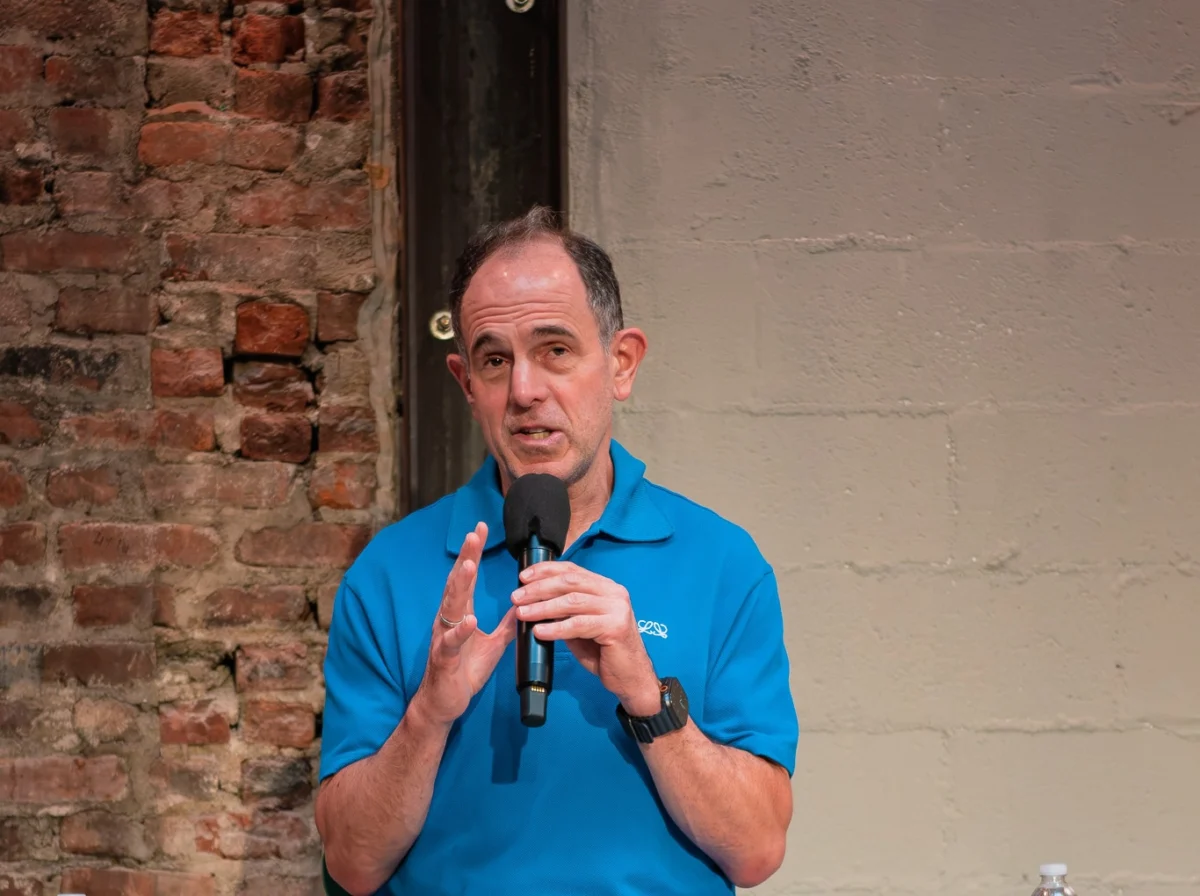
Venture capital heavyweight Khosla Ventures is officially breaking away from its historic roots on Sand Hill Road. After thirteen years of anchoring itself primarily in Menlo Park, California, the prominent investment firm is expanding its geographic footprint by establishing its first-ever office outside the San Francisco Bay Area. Speaking at TechCrunch’s StrictlyVC event in New York City’s West Village, veteran venture capitalist Keith Rabois confirmed that the firm’s new East Coast outpost will be situated on 14th Street in Manhattan, with an anticipated opening slated for the fall.
The strategic shift marks a notable milestone for Khosla Ventures, a firm renowned for its traditional Silicon Valley pedigree. Despite managing multi-billion-dollar portfolios and funding some of the most influential technology companies of the past two decades, the firm has historically maintained a tightly centralized operational structure. "We don’t even have an SF office, so this is a very big step for us," Rabois remarked during the event, highlighting the magnitude of the relocation.
While construction on the Manhattan facility is currently underway, Rabois offered a characteristically pragmatic assessment of the timeline, noting that the projected autumn launch remains fluid based on ongoing contractor schedules.
Inside the New York Outpost: The Executive Briefing Center
The upcoming New York office is designed to function as more than just a satellite workspace for a handful of relocated partners, including Rabois himself. Beyond housing localized investment personnel, the 14th Street facility will introduce an innovative operational model that Khosla terms an "executive briefing center."
This specialized space is engineered to bridge the gap between early-stage innovation and established enterprise. Under the proposed framework, Khosla will bring batches of 10 to 12 portfolio companies into the Manhattan facility four days a week to pitch, network, and secure partnerships directly with Fortune 500 executives.
According to leadership, the model addresses a primary pain point for startups: customer acquisition and commercial validation. By serving as an intermediary hub in the heart of the nation’s commercial capital, Khosla aims to accelerate enterprise adoption for its portfolio. "The portfolio companies love this," Rabois explained to the audience. "They get pilots and customers, and so it’s going to be a very vibrant office because of that."
The Personal Catalyst and the East Coast Migration
The establishment of the Manhattan office also coincides with a significant personal transition for Rabois, who relocated to the East Coast earlier this year. The move brings him closer to his husband, Jacob Helberg, who serves as the Under Secretary of State for Economic Growth, Energy, and the Environment, as well as their children, who are primarily based in Washington, D.C.
Rabois’s physical transition to the Eastern Seaboard mirrors a broader, gradual dispersion of tech and venture capital leadership away from Northern California. However, his relocation to the New York metropolitan area immediately sparked industry-wide discussions regarding talent density, executive recruitment, and whether the East Coast can rival the legendary tech-creation machinery of the San Francisco Bay Area.
Evaluating the Talent Landscape: Juniors vs. Seniors
Addressing the nuances of talent availability between the two coasts, Rabois offered a bifurcated perspective shaped by years of operational experience scaling companies like Square, PayPal, and Ramp.
When evaluating junior talent and individual contributors emerging directly from undergraduate institutions, Rabois expressed absolute confidence in the New York market. He pointed to fintech unicorn Ramp—a company he has repeatedly backed—as a prime illustration of successful regional scaling. "Individual contributor level, right out of school, absolutely," Rabois stated, emphasizing that the firm has successfully cultivated a robust pipeline of engineering and operational talent beginning at the internship level in New York.
However, the outlook changes dramatically when recruiting senior technical talent and executive leadership. According to Rabois, senior engineers and architect-level professionals remain scarce in the immediate urban center, forcing companies to adapt. "Senior engineers, architect-level — no, I think that’s a challenge," he observed, though he added that modern software development practices may ultimately require fewer personnel at that tier than historical paradigms demanded.
The Executive Commute Dilemma
The most formidable operational hurdle for New York-based technology companies, however, is the recruitment of seasoned C-suite executives. Rabois pointed to geography, real estate economics, and commuting patterns as primary barriers to establishing rigid, five-day in-office cultures for high-level leadership.
Drawing from his own upbringing in a New York commuter suburb, Rabois noted that while regional transit lines connect outlying areas to the city core, many experienced executives with established families live far beyond the 30-minute express train radius. Consequently, demanding a traditional in-office schedule creates immense friction.
"If you have an in-office culture, most of the more senior people that live and reside in the New York area live outside the city, and the commute in and out of the city for an office environment can be very painful," Rabois explained. He noted that unless senior candidates possess independent wealth that allows them to purchase prime residential real estate in the heart of Manhattan, daily urban commuting becomes a major deterrent.
To circumvent this challenge, companies like Ramp have deliberately bypassed senior-level lateral hiring in favor of organic internal growth. "We don’t hire senior people. We just build from the bottom up, ground up. It’s been a very conscious strategy, very intentionally, for the last three years," Rabois said. "That can work. But if you need a CFO, a SVP of sales, someone who’s got a lot of gravitas and experience, it’s really hard to have them in the office five days a week."
Shifting Tides: Silicon Valley Giants and the New York Tech Surge
Khosla Ventures’ strategic expansion places the firm inside an exclusive, though steadily expanding, group of elite Silicon Valley venture capital institutions establishing official outposts in New York. While firms like Sequoia Capital and Andreessen Horowitz have maintained localized partners on the East Coast for years, their footprints have historically remained modest compared to their Bay Area headquarters.
The timing of Khosla’s announcement aligns with a broader structural shift in the American technology and financial sectors. Data published by commercial real estate services firm CBRE revealed that New York has narrowly surpassed the San Francisco Bay Area in total tech talent headcount for the first time in the 13 years the firm has tracked the metric.
This historic convergence has been heavily propelled by traditional New York financial institutions aggressively recruiting artificial intelligence and engineering talent, even as West Coast technology companies underwent extensive workforce reductions and cost-cutting measures throughout recent cycles.
Despite empirical data pointing toward New York’s rising prominence as a technology hub, the cultural rivalry between the two coasts remains palpable. Audience reactions at the StrictlyVC gathering demonstrated lingering skepticism among local veterans regarding whether Manhattan has truly usurped Silicon Valley’s crown. "I heard about that study," one attendee noted during the event. "I don’t buy it."
Broader Implications for Venture Capital
As Khosla Ventures prepares to open its 14th Street facility this autumn, the move signals a maturation of the venture capital landscape. The rigid geographic boundaries that once defined the industry are increasingly giving way to multi-hub operational strategies designed to capture localized enterprise demand and top-tier talent.
By positioning itself directly at the intersection of venture-backed innovation and Fortune 500 commerce, Khosla is betting that proximity to traditional corporate buyers will outweigh the traditional comforts of Sand Hill Road. Whether other prominent Silicon Valley funds follow suit will depend largely on the success of the executive briefing center model and the ongoing evolution of bi-coastal tech talent dynamics.