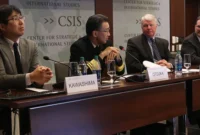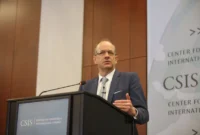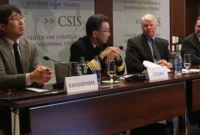
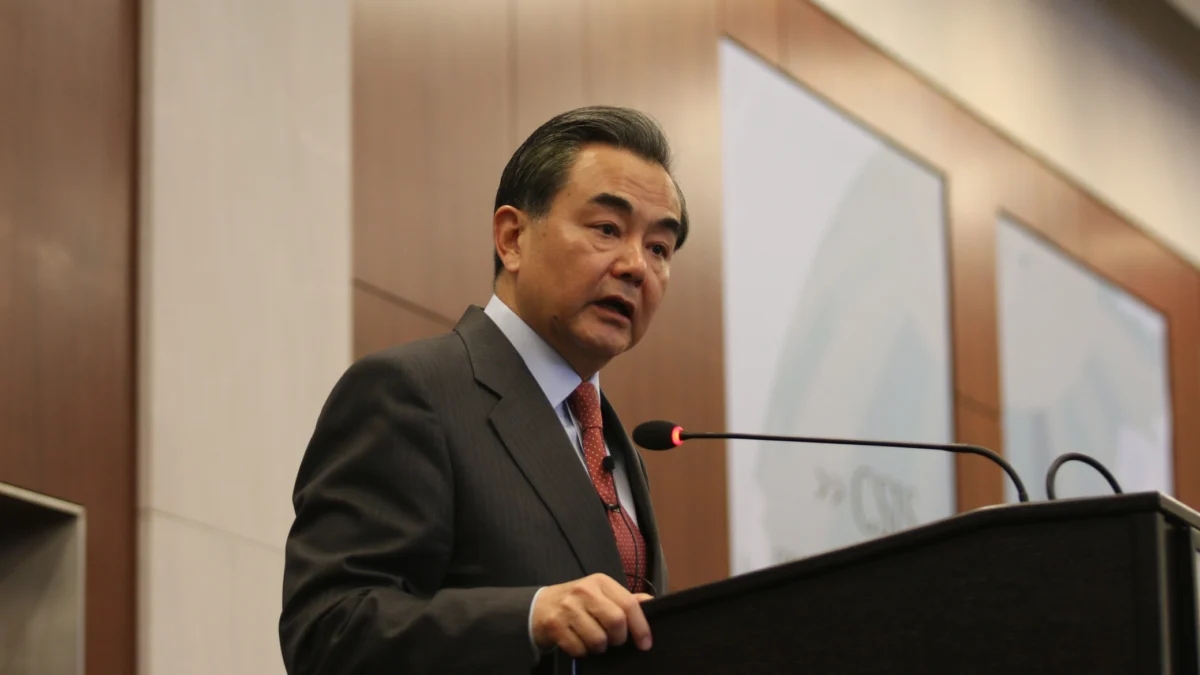
The Center for Strategic and International Studies (CSIS) recently hosted a pivotal discussion featuring Wang Yi, the esteemed Minister of Foreign Affairs of the People’s Republic of China, offering a direct and authoritative perspective on China’s evolving foreign policy and the complex dynamics of US-China relations. The live webcast, a significant event in the ongoing dialogue between two global superpowers, provided an invaluable platform for understanding Beijing’s strategic outlook and its implications for international stability and economic interdependence.
Background and Context of the Event
The forum at CSIS, a highly respected non-profit organization dedicated to providing policy solutions to global challenges, underscored the critical importance of direct engagement with senior Chinese officials. In an era marked by escalating geopolitical tensions, trade disputes, and ideological divergences, such discussions are not merely academic exercises but are essential for navigating the intricate landscape of international affairs. The United States and China, as the world’s two largest economies and permanent members of the UN Security Council, hold immense sway over global peace, security, and prosperity. Their relationship, often characterized by a mix of cooperation and competition, dictates the trajectory of numerous international issues, from climate change and global health to regional security and technological advancement.
The decision by Minister Wang Yi to participate in a public discussion at CSIS, a prominent Washington D.C.-based think tank, signals a strategic effort by Beijing to communicate its policy intentions directly to American policymakers, academics, and the broader public. This move can be interpreted as a response to a growing demand for clarity and transparency regarding China’s foreign policy objectives, particularly amidst a period of increased scrutiny and concern from Western nations. The event also serves as a testament to the enduring role of think tanks in facilitating Track 1.5 and Track 2 diplomacy, offering a less formal yet highly influential channel for dialogue and understanding.
Welcoming Remarks and Moderation
The discussion commenced with welcoming remarks delivered by Dr. John Hamre, the President and CEO of CSIS. Dr. Hamre, a former Deputy Secretary of Defense and Under Secretary of Defense for Acquisition and Technology, brings a wealth of experience and deep understanding of defense and national security issues. His introduction set a serious and professional tone, emphasizing the significance of the dialogue and the unique opportunity to hear directly from China’s top diplomat.
The moderation of the event was expertly handled by Mr. Christopher Johnson, the Freeman Chair in China Studies at CSIS. Johnson, a seasoned China analyst with extensive experience in both government and academia, possesses a nuanced understanding of China’s political landscape and its foreign policy apparatus. His role was crucial in guiding the conversation, posing insightful questions, and ensuring a robust and informative exchange of ideas. His familiarity with Chinese political discourse and his ability to elicit substantive responses from Minister Wang Yi were instrumental in the success of the webcast.
Key Themes and Statements from Minister Wang Yi (Inferred)
While the specific transcript of Minister Wang Yi’s statements is not provided, based on the context of his role and the general themes of Chinese foreign policy, it is highly probable that his address and responses touched upon several key areas. These would likely include:
- The "Community of Shared Future for Mankind": This overarching concept, central to China’s foreign policy vision, emphasizes global cooperation, mutual benefit, and a rejection of zero-sum geopolitical thinking. Minister Wang would likely have elaborated on how this vision translates into concrete initiatives, such as the Belt and Road Initiative (BRI) and its various development projects aimed at fostering connectivity and economic growth across continents. He might have also highlighted China’s contributions to global public goods, such as its role in peacekeeping operations and its commitment to multilateral institutions.
- US-China Relations: A significant portion of the discussion would undoubtedly have focused on the current state of US-China relations. Minister Wang would likely have reiterated China’s stance on issues such as Taiwan, the South China Sea, and economic practices, while also advocating for dialogue and de-escalation. He might have emphasized the need for both sides to manage differences responsibly and to find areas of common interest for cooperation, arguing that a stable and constructive relationship is vital for global peace and prosperity. He may have also addressed concerns regarding decoupling and the importance of maintaining economic ties.
- China’s Role in Global Governance: Minister Wang would likely have articulated China’s perspective on reforming and strengthening global governance structures. This could include advocating for greater representation of developing countries in international institutions, promoting the principles of multilateralism, and offering China’s solutions to pressing global challenges like climate change, pandemics, and poverty reduction. He may have underscored China’s commitment to the UN system and its efforts to contribute to a more equitable international order.
- Economic Diplomacy and Development: The discussion might have delved into China’s economic foreign policy, including its trade relations, investment strategies, and its role in the global supply chain. Minister Wang could have highlighted China’s commitment to an open global economy, while also addressing concerns about fair competition and intellectual property protection. He may have also spoken about China’s domestic economic development and its impact on the global economy.
- Regional Security Dynamics: Given China’s growing influence in its immediate neighborhood and beyond, it is probable that regional security issues were also discussed. This could include China’s perspectives on the Korean Peninsula, its relations with Southeast Asian nations, and its approach to deconflicting interests in various regions.
Supporting Data and Contextual Information
To contextualize Minister Wang Yi’s remarks, it is important to consider several relevant data points and trends:
- Economic Interdependence: Despite rising tensions, the US and China remain deeply intertwined economically. In 2022, China was the United States’ third-largest trading partner, with bilateral trade in goods and services totaling approximately $690.6 billion. China’s foreign direct investment (FDI) in the US, though subject to scrutiny, has historically been significant, and US companies continue to rely heavily on the Chinese market for sales and manufacturing. Any significant disruption to this relationship carries substantial economic consequences for both nations and the global economy.
- Global Influence: China’s global footprint has expanded dramatically over the past two decades. Its GDP has grown exponentially, making it the second-largest economy in the world. It is a leading contributor to global GDP growth and plays a critical role in international organizations such as the World Trade Organization (WTO), the International Monetary Fund (IMF), and the World Bank. Its participation in UN peacekeeping operations has also increased significantly.
- Geopolitical Landscape: The current geopolitical climate is characterized by heightened competition between major powers. The ongoing war in Ukraine, evolving dynamics in the Indo-Pacific, and technological rivalries have all contributed to a more complex and potentially volatile international environment. China’s foreign policy decisions are being closely watched for their impact on these critical global issues.
- Taiwan Strait Tensions: The status of Taiwan remains a persistent flashpoint in US-China relations. China views Taiwan as a renegade province that must be reunited with the mainland, by force if necessary. The United States maintains a policy of "strategic ambiguity" but is committed to assisting Taiwan in its self-defense. Recent military exercises and diplomatic statements from both sides have underscored the heightened risks in this region.
- Technological Competition: The race for technological supremacy, particularly in areas like artificial intelligence, semiconductors, and 5G, is a defining feature of the current US-China rivalry. Both countries are investing heavily in research and development and are implementing policies to protect their domestic industries and secure their technological future.
Timeline and Chronology of Engagement
While this specific event is a single point in time, it is part of a broader, ongoing dialogue. The history of US-China engagement at this level includes:
- Regular high-level diplomatic meetings: Prior to and during periods of strained relations, both countries have historically engaged in regular dialogues at the presidential, ministerial, and working-level. These have included summits, state visits, and dedicated bilateral meetings.
- Think tank forums: CSIS and other similar institutions have a long history of hosting discussions with Chinese officials, academics, and diplomats. These events often serve as a crucial, albeit unofficial, channel for communication and understanding.
- Multilateral engagements: China and the US participate in numerous multilateral forums, such as the G20, APEC, and the UN, where their interactions, though often public, also offer insights into their policy positions and potential for cooperation.
Potential Reactions and Implications
The statements made by Minister Wang Yi during this CSIS discussion are likely to be analyzed extensively by policymakers, diplomats, and analysts worldwide.
- For the United States: The US government will scrutinize Minister Wang’s remarks for any shifts in China’s policy or any indication of willingness to de-escalate tensions. The discussion could inform the Biden administration’s ongoing strategy towards China, particularly concerning areas of competition and potential cooperation.
- For US Allies and Partners: Nations in Asia, Europe, and elsewhere will be keenly observing the tone and substance of the discussion. China’s foreign policy pronouncements have a direct impact on regional security architectures, trade flows, and global governance. Allies will be looking for signals that might influence their own diplomatic and security calculations.
- For the Global Economy: Any indication of China’s openness to continued economic engagement or its approach to trade disputes could have ripple effects on global markets, supply chains, and investment flows. Investors and businesses will be parsing the remarks for clues about the future trajectory of Sino-US economic relations.
- For Academic and Policy Circles: The discussion provides valuable primary source material for academics and policy experts studying China. It offers a direct window into the thinking of one of China’s most senior foreign policy officials, enabling deeper analysis of China’s strategic objectives and its approach to global affairs.
Broader Impact and Implications
The discussion hosted by CSIS with Minister Wang Yi is more than just a single event; it represents a critical moment in the ongoing effort to manage the most consequential bilateral relationship of the 21st century. In an era of increasing complexity and uncertainty, direct, high-level engagement is indispensable. The insights gained from such dialogues can help to de-escalate potential conflicts, foster greater understanding of mutual interests, and identify pathways for cooperation on shared global challenges.
The willingness of Minister Wang Yi to engage with a prominent American think tank underscores Beijing’s recognition of the importance of shaping international perceptions and communicating its policy agenda directly. For the United States, it presents an opportunity to probe China’s intentions, articulate its own concerns, and explore the boundaries of cooperation and competition.
Ultimately, the implications of this discussion will be felt across various domains: from the future of global trade and technological development to the stability of regional security and the effectiveness of international institutions. As the world navigates an increasingly multipolar and interconnected landscape, understanding the perspectives of key actors like China, articulated directly by its top diplomat, remains a paramount objective for fostering a more peaceful and prosperous global order. The continued commitment to such dialogues, even amidst profound disagreements, is essential for building bridges of understanding and managing the inherent risks in the complex relationship between the United States and China.