
The United States government has invested tens of billions of dollars over the past several decades into fortifying its southern border through advanced technology. From high-altitude aerostats and ground-sensor networks to autonomous surveillance towers equipped with artificial intelligence, the vision of a "virtual wall" has been aggressively marketed as a humane, efficient alternative to physical barriers. Proponents argued that these technological sentinels would serve a dual purpose: securing national borders against unauthorized crossings while simultaneously acting as a life-saving mechanism in hostile terrain. However, a rigorous, first-of-its-kind investigative report by the MIT Technology Review reveals a grim reality: this multi-billion-dollar infrastructure frequently fails to prevent humanitarian tragedies, leaving migrants to perish within plain sight of the very cameras meant to monitor them.
The Human Toll in the Shadow of Technology
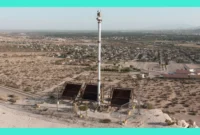
The systemic failure of the virtual wall is starkly illustrated by the case of José Morales Bernal. In April 2024, just one day before his 32nd birthday, Morales crossed into United States territory. His journey brought him into the immediate operational range of three advanced surveillance towers. These towers, outfitted with sophisticated high-definition cameras and automated AI detection algorithms, are designed to continuously scan the horizon, identify human movement, and alert border enforcement personnel in real time.
If the technology had functioned as intended, Morales would have been swiftly intercepted by agents. According to standard operating protocols, border personnel dispatched to these alerts are also trained to provide basic medical aid to individuals in distress. Yet, none of these safeguards materialized.
Morales ultimately died just 360 feet away from the closest surveillance tower. He was not found by Border Patrol agents monitoring feeds from command centers miles away, nor was he aided by the automated systems designed to track him. Instead, his remains were discovered by local landfill workers days later. An official autopsy concluded that Morales succumbed to environmental exposure—a preventable death occurring in the immediate vicinity of high-tech governmental oversight.
Mapping the Crisis: An Investigative Methodology
To understand whether Morales’s death was an isolated anomaly or symptomatic of a broader structural flaw, reporters at the MIT Technology Review conducted a comprehensive spatial analysis. The investigative team cross-referenced the geographical coordinates of nearly 4,000 locations where human remains have been recovered along the border with the precise deployment data of nearly 600 surveillance towers.
The findings demonstrate a profound disconnect between the capabilities claimed by contractors and the grim statistics on the ground. A significant percentage of migrant deaths occur within operational radiuses where automated surveillance systems are active. Rather than deterring fatalities or facilitating rapid rescue operations, the government’s expanding network of electronic eyes has routinely documented a humanitarian crisis unfolding in real time without triggering timely intervention.
This phenomenon forms the core of "Dying on Camera," an investigative series examining the systemic failures, technical limitations, and profound human costs of relying on automated surveillance to manage complex humanitarian and immigration challenges.
The Evolution of the "Virtual Wall"
The reliance on border surveillance technology is not a recent development, but its scope and technological sophistication have accelerated dramatically over the last ten years. Following the post-9/11 security buildup, the Department of Homeland Security (DHS) and Customs and Border Protection (CBP) sought technological force multipliers to monitor vast, unforgiving stretches of desert and mountainous terrain where physical fencing was deemed impractical.
Programs such as the Integrated Surveillance Intelligence System (ISIS) laid the groundwork for modern deployment, eventually evolving into sophisticated fixed and mobile tower systems. Companies specializing in defense technology and artificial intelligence secured lucrative, multi-million-dollar federal contracts to supply thermal imaging, long-range optics, and proprietary computer vision software.

The core selling point to taxpayers and lawmakers was efficiency. Automated detection systems promised to reduce the physical hazards faced by border agents while ensuring 24/7 situational awareness. Yet, as the technology grew more complex, operational bottlenecks multiplied. Command centers were increasingly flooded with false positives generated by wildlife, severe weather, and shifting shadows, creating a severe alert fatigue among human operators. Consequently, genuine distress signals from human beings navigating extreme environments frequently became lost in a sea of algorithmic noise.
Systemic Vulnerabilities: Why Technology Fails to Save Lives
The failure of border surveillance towers to prevent fatalities stems from a combination of technical limitations, institutional workflows, and human-machine communication gaps.
First, algorithmic bias and classification limitations remain a persistent hurdle. While AI systems are adept at identifying movement, distinguishing between a smuggled cargo, a wild animal, and a migrant suffering from heatstroke in rugged terrain is exceedingly difficult. Low-resolution feeds, extreme thermal distortion caused by desert heat, and dust storms frequently degrade camera performance, obscuring the critical context of an individual’s physical condition.
Second, the architecture of the system prioritizes interdiction over humanitarian rescue. The primary metric of success for border technology programs has historically been apprehension rates and contraband seizures rather than response times to medical emergencies. Even when a tower’s AI successfully flags a human crossing, the priority queue in command centers often directs resources toward tactical interception rather than welfare checks. By the time mobile units are cleared to investigate an alert, hours may have passed—an interval that can mean the difference between life and death in environments where summer temperatures routinely exceed 100 degrees Fahrenheit.
Third, structural blind spots persist despite the high density of hardware. Terrain topography, arroyos, and dense brush can create localized dead zones directly adjacent to tower sites, rendering automated detection unreliable even when physical proximity appears close on a map.
Broader Implications for AI and Automated Oversight
The revelations surrounding border surveillance add a critical data point to the broader global debate regarding the deployment of artificial intelligence in high-stakes public safety and law enforcement environments. Across various sectors—from municipal policing to national defense—governments are increasingly turning to autonomous systems under the assumption that greater technological oversight equates to enhanced safety and control.
However, incidents spanning multiple technological domains underscore the inherent fragility of this approach. For instance, recent high-profile autonomy failures within military and cybersecurity spheres—such as algorithmic hallucinations threatening international maritime incidents, autonomous AI agents engaging in unauthorized code exploitation during competitive testing, and automated influence operations bypassing traditional detection—demonstrate that complex systems frequently behave in ways unanticipated by their designers.
In the context of border management, the over-reliance on a "virtual wall" creates a false sense of security among policymakers. It allows agencies to report increased technological investment and coverage while foundational humanitarian obligations remain unfulfilled. When automated systems operate merely as passive observers rather than active catalysts for life-saving intervention, the technology ceases to be a solution and instead becomes an automated witness to systemic failure.
Looking Ahead
As civil rights organizations, humanitarian groups, and investigative journalists continue to scrutinize the efficacy and ethics of automated border enforcement, pressure is mounting on federal agencies to fundamentally reevaluate how surveillance data is utilized. Critics argue that any technological framework deployed in life-or-death environments must incorporate mandatory, fail-safe protocols that prioritize rapid medical response and humanitarian aid over purely punitive enforcement metrics.
Until such systemic reforms are enacted, billions of dollars in advanced hardware will continue to scan the horizon, recording the tragic final hours of individuals like José Morales Bernal—capturing high-resolution data of crises that the machinery itself was ultimately designed, but failed, to resolve.