
The rapid acceleration of artificial intelligence has moved beyond the realm of speculative technology, firmly establishing itself as a foundational pillar of modern global economies. As governments in the United States and the European Union pour billions of dollars into research, development, and infrastructure, the primary justification for this spending remains rooted in the pursuit of technological sovereignty and strategic competition, particularly in relation to China. However, a widening disconnect has emerged between high-level policy objectives and public sentiment. Citizens are increasingly skeptical of an AI-driven future they feel they have no agency in shaping, raising concerns about who ultimately reaps the rewards of these innovations and who is left to absorb the externalities.
The recent Transatlantic Tech Exchange (TTX), convened by the German Marshall Fund (GMF) in May 2026, served as a critical nexus for addressing this democratic deficit. Bringing together ten members of the European Parliament, US federal and state-level policymakers, industry leaders, and civil society representatives across Washington, DC, and Boston, the exchange highlighted that for AI to remain viable, it must be tethered to the public interest.
The Evolution of the Transatlantic AI Agenda
The momentum for this dialogue did not occur in a vacuum. The timeline of AI governance has evolved rapidly over the past several years, shifting from early-stage voluntary commitments to formalized legislative frameworks.
In 2023 and 2024, the focus was primarily on "guardrails"—establishing basic safety protocols and identifying existential risks. By 2025, as the focus shifted toward large-scale deployment in critical infrastructure, the limitations of self-regulation became apparent. The May 2026 TTX represented a maturation of this conversation, moving away from purely abstract safety debates and toward the tangible mechanics of the AI value chain.
During the exchange, participants identified three specific nodes where the tension between private profit and public interest is most acute: the energy-intensive nature of data centers, the monopolistic control of training data, and the direction of innovation policy.
Data Centers: The Physicality of the Digital Revolution
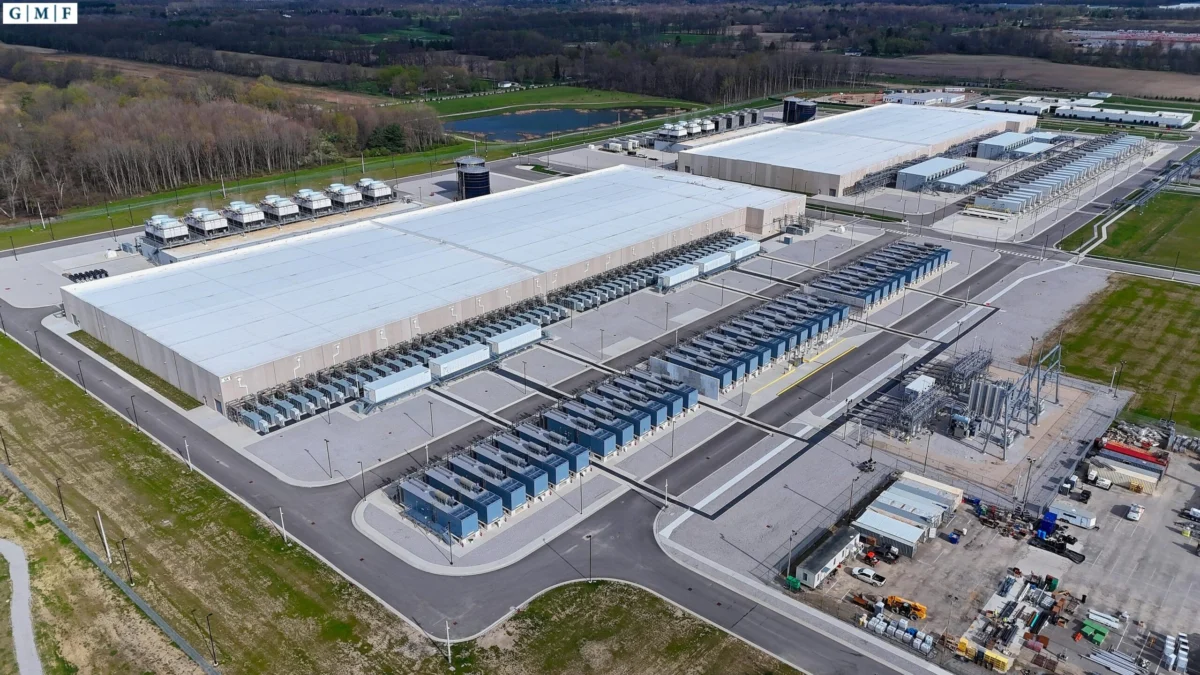
The most immediate physical impact of the AI boom is the unprecedented demand for data center infrastructure. The energy and water requirements of modern generative AI models have placed significant strain on local power grids and natural resources, creating a "not in my backyard" (NIMBY) sentiment that threatens to stall progress.
Data from the International Energy Agency (IEA) suggests that by 2026, global electricity consumption from data centers, AI, and the cryptocurrency sector could reach over 1,000 terawatt-hours—a figure roughly equivalent to the total electricity consumption of Japan. In the United States, states like Virginia and Arizona have already seen local municipalities push back against the approval of new data center campuses due to concerns over strained electrical grids and local water table depletion.
The TTX discussions underscored that policymakers can no longer treat data centers as private enterprise assets alone. Recommendations emerging from the report suggest that governments must incentivize "public-interest AI" by conditioning permits on sustainability targets. This includes mandates for carbon-neutral operations, the integration of waste heat recovery systems for local district heating, and transparency regarding resource usage. Without a clear alignment between physical infrastructure and local community needs, the political friction surrounding AI will likely intensify.
The Data Monopoly and the Democratic Deficit
The second pillar of the debate concerns the raw material of AI: data. Current models rely on the massive ingestion of public and private information, often without clear consent mechanisms or equitable compensation models. The centralization of this data within a handful of dominant tech conglomerates has raised concerns about the erosion of competition and the loss of individual autonomy.
During the Washington segment of the exchange, academics argued that the "public interest" is currently being cannibalized to train private, for-profit models. There is a growing consensus that a new regulatory framework is required to ensure that high-quality data—particularly data generated in the public sector or by public funding—is treated as a public good.
Proposed solutions discussed at the TTX include the development of "Data Trusts" and improved mechanisms for data sovereignty. By allowing citizens and institutions to retain ownership or at least gain meaningful oversight of how their data is used, governments could begin to bridge the trust gap. Furthermore, the push for open-source alternatives to proprietary models is seen as a way to decentralize power and ensure that innovation remains accessible to smaller players, including academic institutions and small-to-medium enterprises (SMEs).
Innovation Policy and Strategic Rivalry
The third node identified by the TTX involves the strategic redirection of innovation policy. For years, the transatlantic consensus has been driven by the "competitiveness" narrative, often framed as a race against Beijing. While this has galvanized funding, it has arguably sidelined the development of AI that serves social, health, or environmental outcomes.
Fact-based analysis of current innovation funding reveals that a disproportionate amount of capital is flowing into large-language model (LLM) scaling, rather than "niche" AI applications that could address climate change, medical diagnostics, or education. Industry leaders present at the TTX noted that while they are eager to innovate, the lack of a standardized transatlantic framework makes it difficult to scale solutions that are compliant with both EU regulatory standards—such as the AI Act—and US market expectations.
The report suggests that governments should pivot toward "mission-oriented" innovation. By setting clear public goals—such as decarbonizing heavy industry or improving the efficiency of public administrative services—policymakers can guide private investment toward outcomes that offer broad social benefits. This shift would satisfy both the need for technological leadership and the public demand for tangible improvements to everyday life.
Implications for the Future of Governance
The implications of the TTX report are clear: AI is no longer a technical challenge; it is a political one. As the technology migrates from digital interfaces into the backbone of physical infrastructure, hospitals, and transportation systems, the traditional hands-off approach to industrial policy will become increasingly untenable.
From the perspective of European parliamentarians, the message was clear: the public will only accept the rapid integration of AI if they perceive that the technology is serving the public interest rather than merely maximizing shareholder value. On the US side, the emphasis remains on fostering an environment where innovation can flourish while mitigating the risks of social instability caused by economic displacement and technological opacity.
The success of these initiatives will depend on the degree to which the US and EU can synchronize their efforts. If the two blocs continue to pursue divergent standards for data privacy, energy usage, and algorithmic transparency, they risk creating a fractured digital landscape that weakens their collective influence. Conversely, a coordinated approach to AI governance would set a global benchmark, forcing a move toward more transparent and equitable technology development.
Ultimately, the findings of the 2026 TTX highlight that the longevity of the AI revolution hinges on public legitimacy. Governments have the power to define the parameters of this development, but they must act with transparency and urgency. If policymakers continue to endorse public-interest AI in principle without embedding it into the structural incentives of the value chain, they risk a reactionary backlash that could stifle innovation far more effectively than any regulatory hurdle. The coming years will be decisive; the technology is moving at an exponential pace, and the mechanisms of democratic oversight must, at the very least, keep step.