
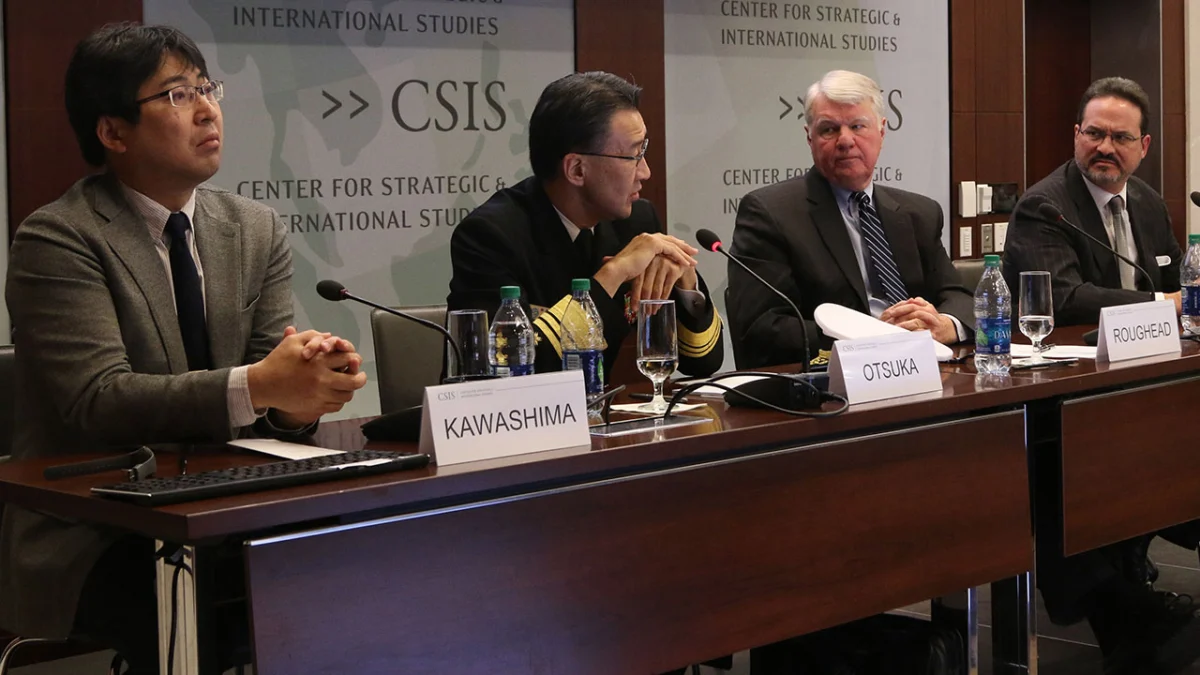
The bilateral partnership between the United States and Japan has long served as the cornerstone of geopolitical stability, security, and economic prosperity in the broader Indo-Pacific region. Against a backdrop of rising maritime disputes, shifting regional power dynamics, and evolving defense modernization programs, policymakers, military strategists, and academic leaders gathered in Washington, D.C., to evaluate the state of the bilateral relationship. The conference, officially designated as the 2016 U.S.-Japan Security Seminar, brought together prominent figures from both nations to dissect pressing strategic dilemmas, review the implementation of updated defense guidelines, and chart a collaborative path forward for maritime governance and deterrence in the Asia-Pacific.
The event, hosted by the Center for Strategic and International Studies (CSIS) on March 4, 2016, featured high-level dialogues, expert panels, and specialized discussions concerning regional flashpoints. With financial support generously provided by the Ministry of Foreign Affairs of Japan, the seminar served as a vital forum for public diplomacy and strategic alignment. The proceedings underscored a shared urgency: as conventional and asymmetric security challenges multiply across East Asian waters, the U.S.-Japan alliance must demonstrate enhanced agility, deep operational integration, and unwavering mutual commitment.
Background Context and Strategic Landscape
To fully understand the deliberations of the 2016 seminar, one must examine the geopolitical environment of the mid-2010s. The Asia-Pacific region was experiencing a profound structural transformation characterized by the rapid military modernization of the People’s Republic of China, ongoing territorial disputes in the South and East China Seas, and persistent security provocations emanating from the Democratic People’s Republic of Korea (DPRK).
During this period, Beijing’s assertive island-building campaigns and expanded naval patrols in the South China Sea challenged traditional norms of freedom of navigation and the UN Convention on the Law of the Sea (UNCLOS). Simultaneously, tensions in the East China Sea—particularly surrounding the administration and sovereignty of the Senkaku Islands (known as the Diaoyu Islands in China)—remained at an elevated pitch, drawing regular incursions by Chinese government vessels into Japanese territorial waters.
In response to these compounding pressures, Washington and Tokyo had spent the preceding years upgrading their security architecture. A milestone was reached in April 2015 with the issuance of the revised Guidelines for U.S.-Japan Defense Cooperation. These updated guidelines replaced the outdated 1997 framework, expanding the scope of Japan’s Self-Defense Forces (JSDF) to engage in collective self-defense under specific, constrained conditions, and facilitating seamless bilateral coordination across all domains, including cyberspace, outer space, and maritime security. The 2016 CSIS seminar thus functioned as a critical temperature check on how effectively these newly minted guidelines were being operationalized.
Chronology of the Seminar Proceedings
The afternoon conference commenced promptly at 3:00 p.m. EST with opening remarks delivered by prominent architects of the U.S.-Japan relationship. Michael J. Green, who at the time served as Senior Vice President for Asia and Japan Chair at CSIS alongside his academic appointment as Chair in Modern and Contemporary Japanese Politics and Foreign Policy at Georgetown University, took the stage alongside Yoshiji Nogami, President of the Japan Institute of International Affairs (JIIA). Both leaders emphasized the indispensable nature of the alliance, framing the bilateral bond not merely as a regional defense pact, but as a global partnership designed to uphold a rules-based international order.
Following the welcoming addresses, the seminar transitioned at 3:15 p.m. into its centerpiece panel discussion, titled "The U.S.-Japan Alliance and Maritime Security in the Asia-Pacific Region." Moderated by Dr. Green, the panel featured a distinguished trio of defense and academic experts: Vice Admiral Umio Otsuka, President of the Japan Maritime Self Defense Force (JMSDF) Command and Staff College; Professor Shin Kawashima of the Graduate School of Arts and Sciences at the University of Tokyo; and retired Admiral Gary Roughead, former Chief of Naval Operations for the United States Navy.
The panel addressed the operational realities of maintaining maritime domain awareness and deterrence in contested waters. Vice Admiral Otsuka provided valuable insights into the evolving capabilities and strategic doctrines of the JMSDF, highlighting Japan’s commitment to securing its maritime approaches and contributing to regional stability. Professor Kawashima offered a comprehensive historical and diplomatic analysis, contextualizing current territorial disputes within the broader framework of East Asian international relations and multilateral diplomacy. Admiral Roughead brought a commanding U.S. naval perspective to the discussion, emphasizing the necessity of joint exercises, interoperability, and coalition-building among like-minded democratic nations facing shared maritime security threats.

At 4:30 p.m., the floor was opened to attendees for a robust Q&A session, allowing journalists, policy researchers, and defense attachés to probe the panelists on specific operational scenarios, legal interpretations of collective self-defense, and the future of defense industrial cooperation. The formal seminar adjourned at 5:00 p.m., transitioning into an evening reception that fostered continued networking and informal dialogue among participants.
Supporting Data and Institutional Frameworks
The discussions at the 2016 seminar were underpinned by quantitative realities regarding defense expenditures, force structures, and geographic exposure. Throughout the 2010s, Japan maintained a consistent defense budget trajectory, historically hovering around 1 percent of its Gross Domestic Product (GDP), while steadily optimizing its qualitative military edge. Despite this constitutional self-constraint, Tokyo’s total defense outlays placed it among the top ten military spenders globally, enabling the acquisition of advanced platforms such as Aegis-equipped destroyers, P-1 maritime patrol aircraft, and early-warning intelligence assets designed to counter subsurface and surface threats.
On the American side, the rebalance to Asia—frequently termed the "Pivot to Asia"—sought to reallocate 60 percent of the U.S. Navy’s and Air Force’s operating forces to the Indo-Pacific theater by 2020. This strategic posture placed immense reliance on host-nation support and forward-deployed bases in Japan, particularly across Okinawa and Kanagawa prefectures. The interplay between the roughly 50,000 U.S. service members stationed in Japan and the roughly 250,000 active-duty personnel of the JSDF formed the backbone of regional deterrence, making forums like the CSIS seminar essential for evaluating burden-sharing, operational coordination, and community relations.
Official Responses and Diplomatic Posture
While the seminar was convened as an independent academic and policy dialogue, the viewpoints expressed by the participants heavily mirrored official governmental stances in Washington and Tokyo. Throughout 2016, leadership under Japanese Prime Minister Shinzō Abe and U.S. President Barack Obama consistently underscored that the U.S. security umbrella extended fully to all territories under the administration of Japan, including the Senkaku Islands, explicitly falling under Article V of the Treaty of Mutual Cooperation and Security.
Simultaneously, the Japanese Ministry of Foreign Affairs—the primary financial benefactor of the seminar—consistently utilized diplomatic channels to urge restraint in maritime disputes, advocate for adherence to international law, and promote multilateral security architectures such as trilateral cooperation involving the United States, Japan, and the Republic of Korea. Official readouts from Japanese and American defense ministers during this era routinely highlighted intelligence-sharing agreements, joint anti-submarine warfare exercises, and coordinated responses to North Korean ballistic missile tests as vital proof points of alliance readiness.
Broader Impact and Strategic Implications
The 2016 U.S.-Japan Security Seminar arrived at a critical juncture in modern strategic history, casting a long shadow over subsequent developments in Indo-Pacific security architecture. By facilitating a transparent, high-level exchange between retired and active military commanders, academic historians, and policy practitioners, the event helped solidify a shared intellectual consensus regarding the nature of modern deterrence.
The implications of the dialogues held at CSIS that March afternoon reverberated across several domains:
- Operational Integration: The emphasis placed by Admiral Roughead and Vice Admiral Otsuka on joint force interoperability accelerated the integration of U.S. and Japanese command structures, laying the groundwork for subsequent establishment of bilateral coordination mechanisms.
- Normative Defense of the Commons: By framing maritime security not merely as a territorial dispute, but as a defense of global commons and open sea lanes, the seminar reinforced the ideological framework used by Western allies to counter unilateral maritime expansionism.
- Institutional Resilience: The partnership between CSIS and the Japan Institute of International Affairs exemplified the vital role of Track 1.5 and Track 2 diplomacy in maintaining robust channels of communication when official government-to-government tensions ran high.
Ultimately, the 2016 U.S.-Japan Security Seminar transcended the boundaries of a routine academic conference. It functioned as an essential diagnostic tool for the premier alliance in East Asia, ensuring that both nations remained strategically synchronized, operationally capable, and resolutely committed to defending a peaceful, stable, and rules-based order in the Asia-Pacific region.