
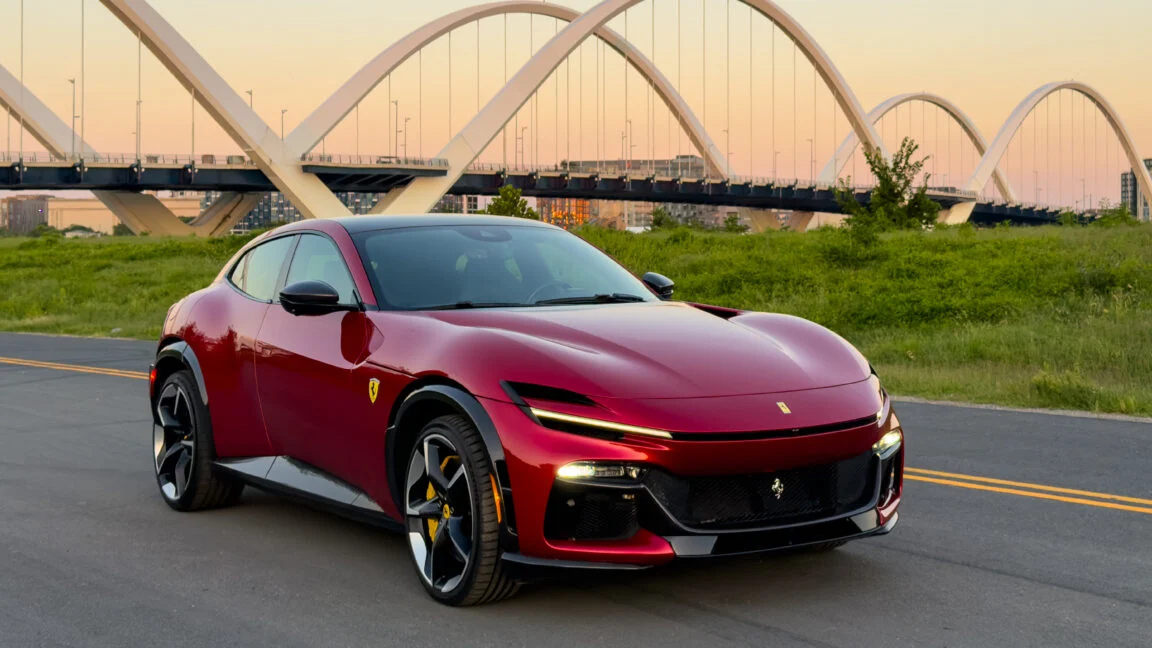
The automotive landscape has shifted dramatically over the past decade, forcing manufacturers of high-performance vehicles to reconcile their sporting heritage with the market’s insatiable demand for utility. At the forefront of this evolution is the Ferrari Purosangue, a vehicle that Maranello explicitly avoids labeling as an SUV. Instead, the company positions its first four-door, four-seat production model as a "Ferrari Utility Vehicle"—a unique entry into the ultra-luxury segment that attempts to bridge the gap between track-ready agility and long-distance touring comfort.
The Human-Machine Interface: A Mixed Legacy
One of the most immediate points of contention in modern vehicle design is the integration of digital interfaces. In the Purosangue, Ferrari has made a deliberate, if somewhat inconsistent, choice to move away from the near-unusable capacitive touch controls found in the 296 GTB. The multifunction steering wheel features actual physical buttons, a welcome return to tactile functionality that allows drivers to manage essential tasks—such as navigating Apple CarPlay—without diverting their eyes from the road.
However, the cabin experience becomes significantly more complex when occupants attempt to adjust secondary features, such as climate control or seat settings. These functions are managed via a rotating controller that physically rises from the dashboard. Users must swipe or tap the tiny integrated touchscreen to toggle between temperature, fan speed, and massage functions. While this system functions reasonably well when the vehicle is stationary, it presents significant ergonomic challenges at speed, as the touch targets are remarkably small, requiring a level of precision that is difficult to maintain while navigating traffic. A secondary, identical dial is positioned for rear-seat passengers, ensuring parity in user experience, though it suffers from the same inherent limitations regarding interface design.
Notably, the Purosangue eschews a traditional central infotainment screen. Instead, it provides a dedicated display for the front-seat passenger. This screen is engineered with a high degree of polarization, intentionally obscuring the view from the driver’s seat to prevent distraction. While the passenger can access native media applications, the system does not support the projection of Apple CarPlay to this specific display, reflecting a design philosophy that prioritizes the driver’s focus over the passenger’s connectivity options.
Aesthetic and Engineering Considerations
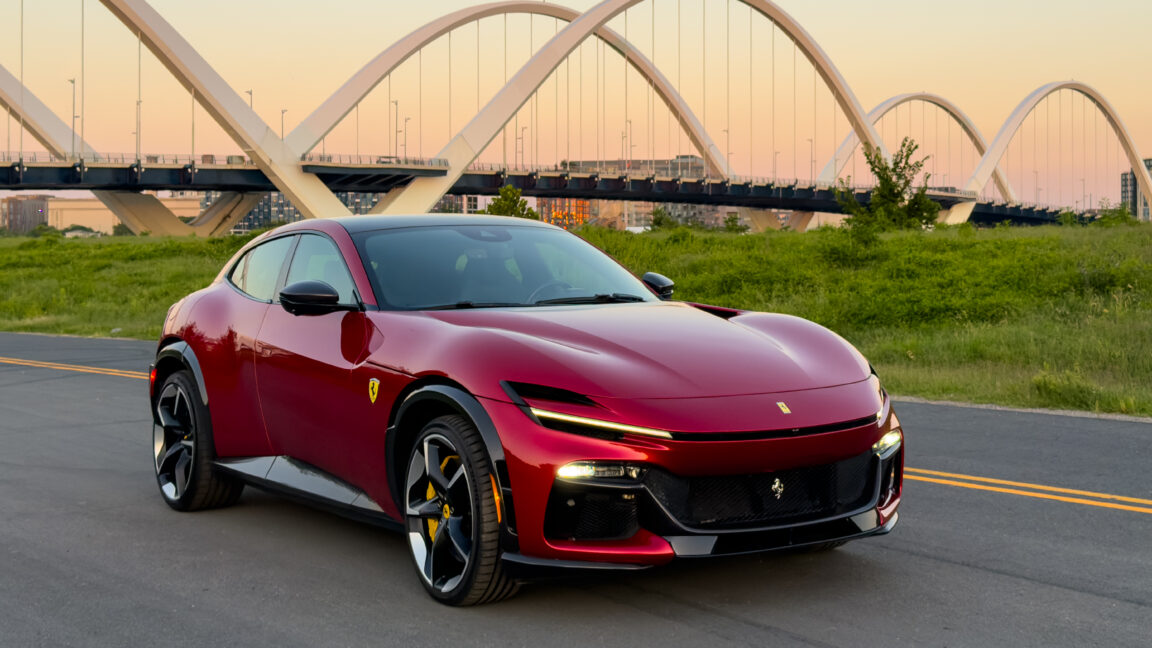
The Purosangue tested in this instance was finished in Rosso Portofino, a deep, lustrous paint that highlights the vehicle’s complex surfacing. This choice of finish provides a stark contrast to the more experimental colors seen on early prototypes, such as the yellowy-green metallic hues that appeared during initial test cycles in Rome.
The vehicle’s architecture is a testament to Ferrari’s commitment to its V12 legacy. By placing a naturally aspirated engine at the heart of a vehicle capable of carrying four adults, Ferrari has managed to create a practical car that retains the visceral character of a traditional grand tourer. The rear seats are as supportive as the front, a necessary design choice given the high levels of lateral G-force the Purosangue is capable of generating in cornering scenarios.
Financial Context and Market Positioning
The price point of the Purosangue serves as a clear indicator of its positioning within the high-performance market. With a starting MSRP of approximately $393,350, the vehicle is aimed at an exclusive demographic. However, the true cost of ownership often balloons due to the extensive customization options available through Ferrari’s Atelier and Tailor Made programs. Our test vehicle, equipped with various performance and aesthetic enhancements, reached a total price of $576,544.
This pricing strategy places the Purosangue in a distinct bracket compared to its closest rivals. The Aston Martin DBX and the Lamborghini Urus SE represent the primary competition in the high-performance SUV sector. Both vehicles offer significant power and luxury, yet the Purosangue occupies a unique space by refusing to sacrifice the mechanical purity of a large-displacement engine for the sake of mass-market SUV conventions.
Fuel Economy and Daily Usability
Despite its impressive performance metrics, the Purosangue is not designed for efficiency. With a combined fuel economy rating of approximately 12 mpg (19.6 L/100 km), it represents an uncompromising approach to automotive engineering. For those seeking daily-driver status with a focus on electrification, Ferrari’s upcoming battery-electric model, the Luce, is expected to address those requirements more directly.
Nevertheless, the Purosangue is arguably the most practical vehicle to emerge from Maranello to date. With the correct tire configuration—specifically, winter-rated rubber—the Purosangue is capable of handling diverse weather conditions, marking a significant departure from the historical perception of Ferraris as seasonal "fair-weather" cars.
A Chronology of the Purosangue Project
The development of the Purosangue reflects a long-term strategic pivot by Ferrari to address changing global automotive regulations and consumer preferences.
- 2017: Initial rumors regarding a "Ferrari SUV" begin to circulate as the company seeks to expand its footprint in the luxury segment.
- 2018: Ferrari officially confirms the development of a four-door model, codenamed "Purosangue," during its Capital Markets Day.
- 2021: Prototypes are spotted undergoing rigorous testing in various environments, including the streets of Rome and snowy regions in Northern Europe.
- 2022: The official global debut of the Purosangue takes place, confirming the presence of the 6.5L naturally aspirated V12 engine.
- 2023–2024: Initial deliveries commence, with global demand quickly outstripping production capacity.
- 2025–2026: Continued expansion of the model’s customization options and the integration of updated software interfaces.
Broader Industry Implications
The success of the Purosangue indicates a broader trend in the automotive industry: the "sports-utility" transformation of ultra-luxury brands. By successfully maintaining the identity of a sports car manufacturer while entering the utility vehicle space, Ferrari has provided a blueprint for others to follow.
Analysts suggest that the Purosangue serves two primary functions for the brand: it provides a high-margin product that sustains the company’s massive investment in R&D for future electric vehicles, and it allows Ferrari to retain its most loyal customers who, as they age, require the increased cabin space and ground clearance that a traditional two-door supercar cannot provide.
The Purosangue is not merely a vehicle; it is a strategic maneuver. It represents the intersection of the past—represented by the legendary naturally aspirated V12—and the future—represented by a high-tech, digital-heavy cabin experience. While the interface may present a learning curve for some owners, the mechanical excellence of the vehicle ensures that it remains, at its core, a Ferrari. For those capable of navigating the extensive options list and the premium price tag, it offers a rare combination of exclusivity, performance, and day-to-day usability that is currently unmatched in the industry. As the automotive world moves toward a more electrified future, the Purosangue serves as a potent reminder of the enduring appeal of traditional combustion engineering, wrapped in a package that finally accommodates the realities of modern life.