
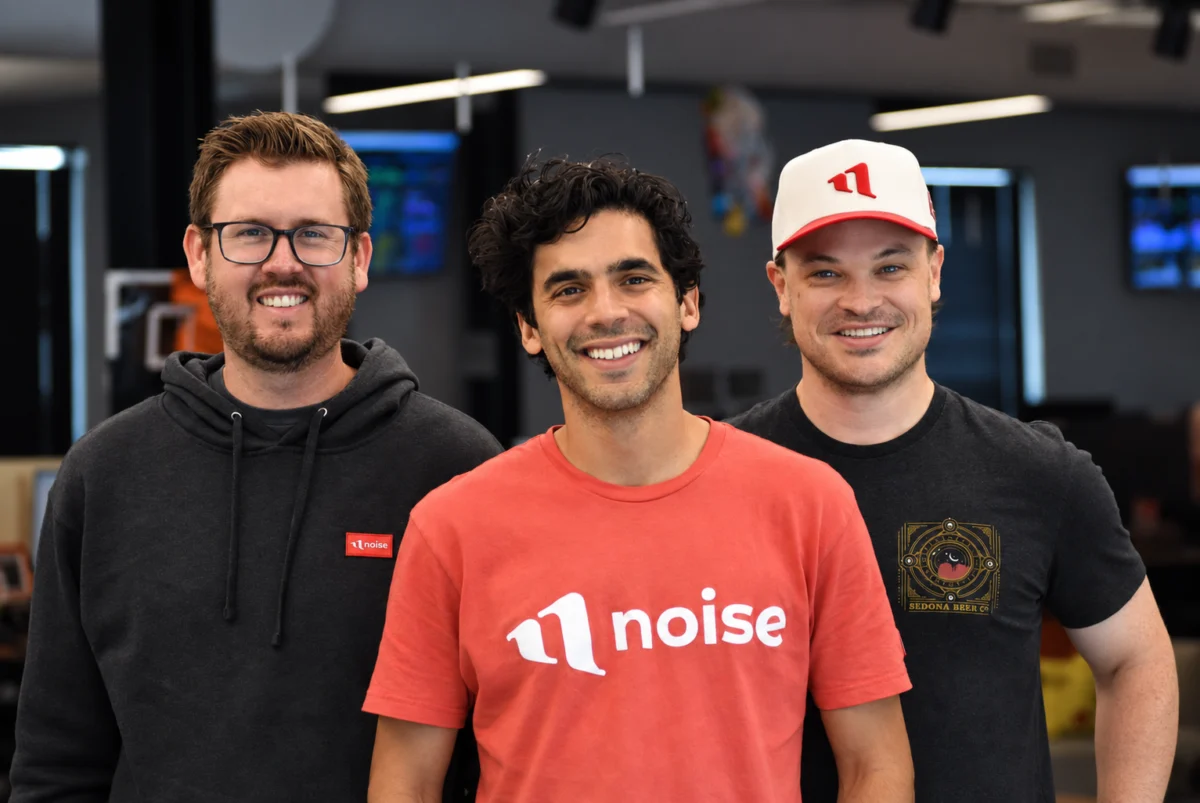
The modern digital marketing landscape is undergoing a profound structural shift as traditional high-cost influencer campaigns face diminishing returns and escalating budgets. Amid this evolving ecosystem, marketing platform Noise has officially announced a $5.5 million seed funding round. Led by Capital Midwest, M25, and Girshin Robotics, with additional participation from CapitalizeVC and prominent industry operators from companies like DoorDash, this latest financial infusion brings the startup’s total capital raised to $7.2 million.
The freshly secured capital will be strategically deployed to accelerate product development, expand the company’s engineering and operational teams, and scale its recently launched Organic-to-Ads program. This capability allows brands to repurpose user-generated content created on the Noise application and run them as paid advertisements across major social media networks such as Meta and TikTok.
As brands continuously search for cost-effective alternatives to traditional marketing playbooks, Noise has positioned itself at the intersection of the burgeoning creator economy and automated software-as-a-service infrastructure. By removing the traditional barriers to entry that typically plague influencer marketing, the startup aims to redefine how companies of all sizes approach digital advocacy and audience acquisition.
Bridging the Gap Between Brands and Everyday Creators
Unlike conventional influencer marketing agencies or platforms that prioritize individuals with massive, pre-existing follower counts, Noise operates on a fundamentally different premise. The platform allows anyone with a smartphone and an internet connection to download the application, undergo basic onboarding, and immediately begin participating in brand marketing campaigns, regardless of their current audience size.
The operational mechanism is designed to minimize administrative overhead for corporate clients while maximizing earning potential for everyday participants. Brands sign up for the platform to publish their specific content briefs, style guidelines, and marketing budgets. Noise’s automated infrastructure then distributes these briefs to thousands of eligible creators simultaneously, enabling brands to deploy massive, coordinated campaigns across platforms such as TikTok, Instagram, Facebook, and YouTube without the friction of individual outreach.
Instead of paying traditional flat-rate fees upfront—which can often run into thousands of dollars per post for established social media personalities—brands utilizing Noise compensate creators based on performance metrics, specifically per-view engagement. The platform handles the operational complexities of tracking deliverables, managing client relationships, and processing payments on an automated basis. According to company leadership, top-tier creators on the platform are already generating six-figure annual incomes, while the startup captures a percentage fee from the transaction volume generated between brands and creators.
The Origins of Noise: Lessons Learned from Mobile Gaming
The conceptual foundation of Noise did not emerge in a vacuum; rather, it was forged through the firsthand entrepreneurial experiences of its co-founders, Diego Kafie, Stu Feldt, and Nic Weber. Prior to launching Noise in 2025, the trio spent two years developing and scaling a mobile gaming application called Playbite.
During their tenure building Playbite, the founders encountered a classic startup dilemma: how to acquire users efficiently while operating under a constrained, early-stage marketing budget. Traditional digital advertising channels proved increasingly expensive and volatile, while established influencers demanded prohibitive rates that made sustained customer acquisition financially unviable for a scrappy startup.
Faced with these economic realities, the founders decided to experiment with a grassroots alternative. They began recruiting small cohorts of dedicated gamers from their own user base, teaching them from scratch how to conceptualize, film, and publish engaging short-form video content that promoted the mobile app across platforms like TikTok.
The experiment began incrementally, starting with just five users, quickly scaling to ten, twenty-five, and eventually one hundred active participants. The results exceeded expectations. As this small army of everyday users began posting daily content about mobile games and the Playbite application, software installs experienced a dramatic, upward trajectory. More importantly, this organic viral growth was achieved at a fraction of the cost of traditional marketing playbooks. This empirical success provided the blueprint for Noise: a scalable software platform designed to replicate that exact grassroots playbook for other brands seeking authentic, diversified reach.
Capitalizing on the Exponential Growth of the Creator Economy
The launch of Noise coincides with a massive cultural and economic shift toward digital content creation, particularly among younger demographics. Recent data highlights that more than half of Generation Z—approximately 57%—aspire to become professional influencers. Furthermore, slightly more than 40% of U.S. adults overall express a desire to participate in the creator economy.
However, transitioning from an aspiring enthusiast to a financially stable content creator has become increasingly difficult. High market saturation, algorithmic unpredictability, and the substantial time and financial investment required to build a personal brand from the ground up present formidable barriers for most individuals. Noise attempts to mitigate these friction points by providing structured educational modules. When users first join the application, they complete creator training modules that teach them the fundamentals of effective digital marketing content. Initial campaigns are curated to help beginners build foundational skills, while successful performance unlocks higher-tier, better-compensated opportunities over time.
By lowering the barrier to entry, Noise is tapping into an enormous, underutilized labor pool of everyday consumers who act as brand advocates. For corporate customers—particularly early-stage mobile applications and direct-to-consumer startups operating with lean budgets—this access to diverse, authentic content represents a strategic advantage.
Diego Kafie, CEO of Noise, emphasizes that the platform’s primary strength lies in its ability to generate unmatched content diversity. "Our top brands work with several thousand creators on autopilot," Kafie notes. "They are the most interested in reaching a really wide range of potential customers, making them the prime users for something like Noise, where they can easily recruit a small army of people to become their biggest users and advocates. This gives brands an unprecedented level of content diversity and reach at a fraction of the cost of other traditional marketing playbooks."
Navigating Industry Concerns and Future Market Implications
As platforms that mediate between casual creators and corporate budgets grow in popularity—joining ecosystem peers such as Billo and JoinBrands—they inevitably encounter scrutiny regarding fair compensation and labor dynamics within the digital economy.
When questioned about whether automated platforms risk underpaying individuals compared to direct, unmediated brand sponsorships, company leadership pushes back firmly on the notion of exploitation. Kafie clarifies that pricing is driven by market transparency: brands establish their rates for specific campaigns, and creators retain the autonomy to accept or decline offers based on their personal valuation of their time and effort. He reiterates that Noise’s core mission is not to underbid established elite influencers, but rather to specialize in onboarding everyday individuals and equipping them with the professional skills required to monetize their digital footprint.
The introduction of the Organic-to-Ads program marks a significant maturation of the platform’s business model. By granting brands the ability to amplify top-performing organic content through paid media spend on Meta and TikTok, Noise bridges the gap between authentic grassroots marketing and performance-driven customer acquisition. This dual capability allows brands to test thousands of content variations organically and instantly allocate capital to the creative assets that demonstrate the highest return on investment.
With 1.5 million creators already registered on the platform and fresh financial backing from institutional venture capital firms, Noise is well-positioned to scale its operations significantly throughout the coming years. The broader implications of this business model point toward a democratization of digital advertising. By bridging the divide between corporate marketing budgets and smartphone-wielding consumers, the startup is simultaneously driving down customer acquisition costs for brands while enabling millions of everyday internet users to earn their first online revenue stream.