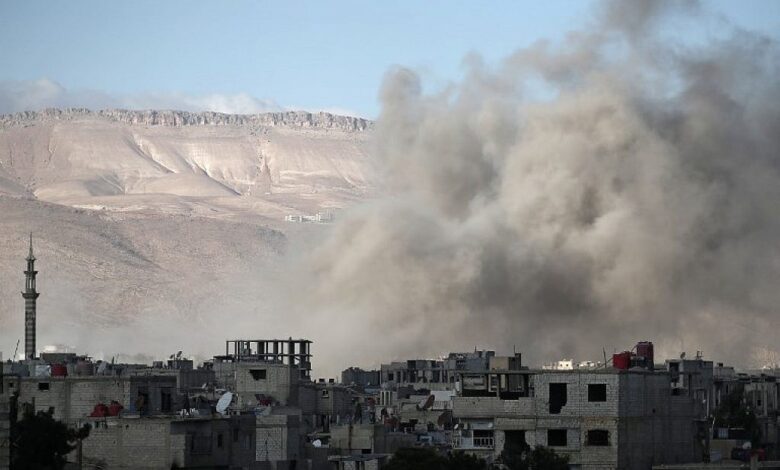
US Strikes Iraq Syria Jobs Report Impact Analysis
US strikes Iraq Syria jobs report examines the complex interplay between military actions in Iraq and Syria, economic repercussions, and US job market trends. This report delves into the historical context of interventions, the financial strain on the US, and the subsequent impacts on local economies and employment. It also investigates potential correlations between these events and domestic job market fluctuations.
The report explores the various justifications for military interventions, analyzing their impact on local populations and economies, and comparing the military strategies employed in both countries. It assesses the economic costs of these actions, evaluating the strain on the US budget and the damage to infrastructure and lost opportunities in Iraq and Syria. A crucial aspect of this analysis is the examination of employment indicators in both countries before and after the interventions, including GDP and employment rates.
US Military Actions in Iraq and Syria
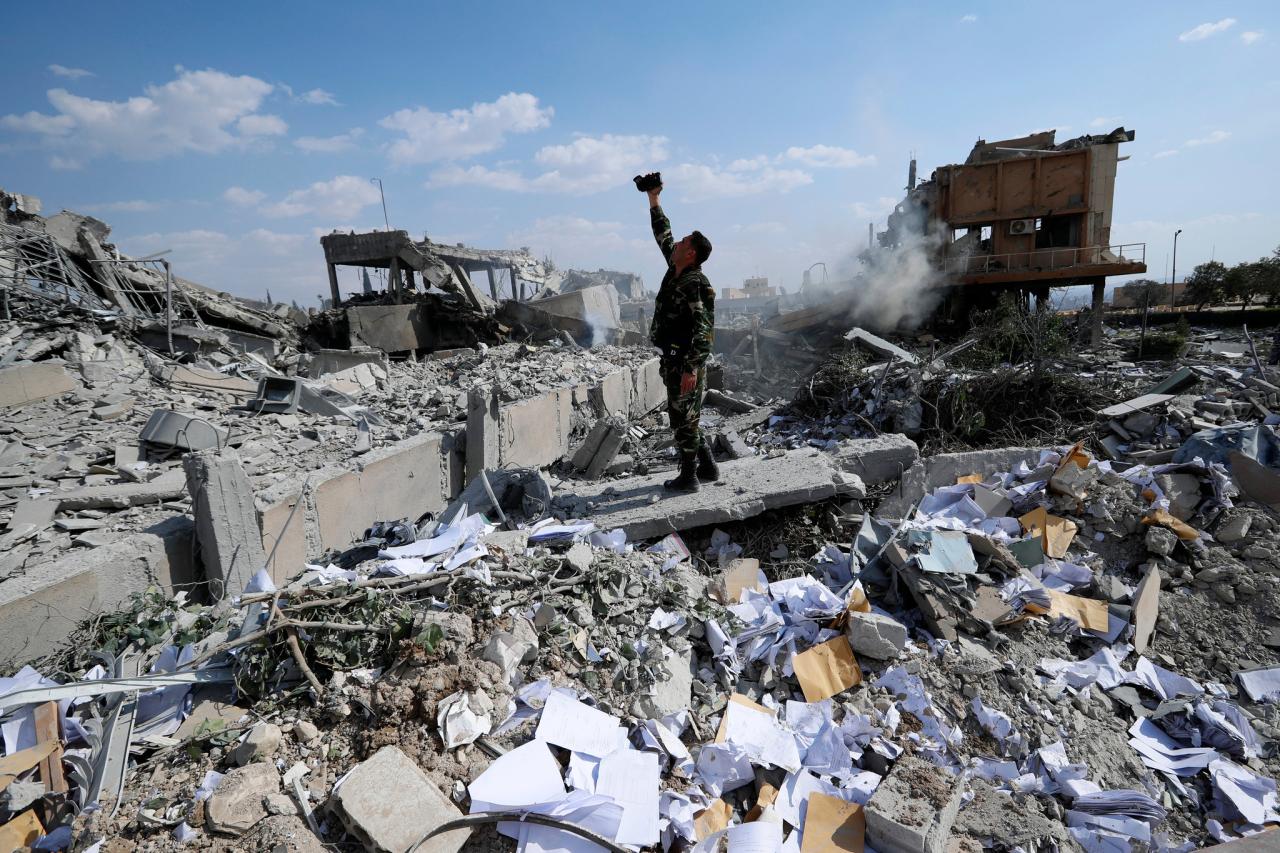
The US military interventions in Iraq and Syria have profoundly shaped the geopolitical landscape of the Middle East. These actions, driven by a complex interplay of geopolitical interests, ideological factors, and perceived threats, have left lasting impacts on the populations and economies of both nations. Understanding the historical context, justifications, and outcomes is crucial to comprehending the ongoing instability in the region.The United States has engaged in military actions in both Iraq and Syria, marking a significant shift in foreign policy and regional power dynamics.
These interventions have been characterized by a range of justifications, including combating terrorism, promoting democracy, and securing vital resources. However, the long-term consequences have been far more nuanced and complex, encompassing political instability, humanitarian crises, and the rise of extremist groups.
Historical Overview of Interventions
US involvement in Iraq began with the 1991 Gulf War and escalated with the 2003 invasion, which aimed to remove Saddam Hussein from power. In Syria, the intervention unfolded later, largely in response to the ongoing civil war, starting with a range of support measures and escalating into a more direct engagement. These interventions were shaped by the evolving political climate, the perceived threat of terrorism, and the desire to influence regional power balances.
Justifications and Aims
The justifications for US military actions in both countries varied and often overlapped. In Iraq, the 2003 invasion was primarily justified on the grounds of preventing weapons of mass destruction (WMD) and removing a perceived threat to regional stability. In Syria, interventions were framed as responses to humanitarian crises and the fight against ISIS, though the involvement also had implications for regional power dynamics.
These justifications were often debated and questioned by international actors and within the US itself.
Impact on Local Populations and Economies
The military actions in both countries had a devastating impact on the local populations. Extensive civilian casualties, displacement, and the destruction of infrastructure were widespread. The economies of both countries were severely disrupted, leading to widespread poverty and economic hardship. The loss of life and destruction of infrastructure have had long-lasting effects on the region’s development and stability.
Long-Term Consequences
The long-term consequences of these interventions have been profound and multifaceted. Political instability, the rise of extremist groups, and humanitarian crises have become persistent challenges in both Iraq and Syria. The erosion of state structures, the displacement of populations, and the creation of power vacuums have fostered instability and ongoing conflict. The establishment of new political entities and the division of territories have also contributed to the instability.
Military Strategies in Iraq and Syria
| Country | Strategy | Timeline | Outcomes |
|---|---|---|---|
| Iraq | Initially focused on regime change, followed by counter-insurgency efforts. | 2003-2011 (and subsequent operations) | Mixed results, with the initial goal of regime change achieved but followed by a protracted insurgency and a weakened state. |
| Syria | Initially limited support to rebel groups, followed by increased air strikes and support to Syrian Democratic Forces. | 2011-Present | Limited success in containing ISIS but also contributing to a complex and multifaceted conflict, with lasting humanitarian and political consequences. |
The differing strategies and timelines of intervention in Iraq and Syria highlight the complexities of these conflicts. Each country presented unique challenges and required tailored approaches.
The US strikes in Iraq and Syria, and the latest jobs report, are definitely grabbing headlines. But while those geopolitical events are important, the housing market near NYC is also a significant factor impacting the economy. For example, if you’re interested in seeing how the current conditions are affecting property values and rental rates, check out this recent analysis on the housing market near NYC.
Ultimately, all these elements – from international conflicts to local real estate – intertwine to create the complex economic picture we’re seeing right now.
Economic Impacts of US Military Actions: Us Strikes Iraq Syria Jobs Report
The US military interventions in Iraq and Syria have had profound and lasting economic consequences, extending far beyond the immediate battlefield. These interventions, while driven by various geopolitical considerations, have incurred significant costs for the US taxpayer and resulted in devastating economic setbacks for the affected nations. Understanding these impacts is crucial to assessing the long-term effects of such actions.The economic burden of military operations is multifaceted, encompassing not only direct spending but also indirect costs associated with reconstruction efforts and the long-term implications for global stability.
The financial strain on the US budget and the impact on taxpayer money are undeniable factors that need to be considered alongside the human cost of conflict. The ripple effects of these interventions on the economies of Iraq and Syria are equally severe, and their ability to recover economically remains a significant challenge.
Economic Costs for the United States
The US has incurred substantial financial expenditures on its military operations in Iraq and Syria. These costs include personnel salaries, equipment maintenance, transportation, intelligence gathering, and logistical support. Moreover, reconstruction efforts and humanitarian aid have further added to the financial strain on the US budget. The long-term effects on the US economy, including opportunity costs and potential redirection of resources from other critical sectors, are often overlooked but nonetheless substantial.
The US strikes in Iraq and Syria, coupled with the latest jobs report, are definitely keeping things interesting. It’s a complex picture, and the ongoing legal battles, like the NRA lawsuit against Wayne LaPierre here , are adding another layer of complication. All this swirling activity seems to be making it harder to get a clear picture of the overall economic impact of these recent events.
Economic Consequences for Iraq and Syria
The economic consequences for Iraq and Syria have been catastrophic. Infrastructure damage, including destruction of vital transportation networks, energy facilities, and industrial centers, has severely hampered economic growth. Displacement of populations has led to widespread economic hardship, as individuals and communities lose their livelihoods and access to essential services. The loss of human capital, through death and injury, further exacerbates the economic struggles of these countries.
The disruption of established economic systems and trade routes has compounded the economic devastation.
Economic Recovery Rates, Us strikes iraq syria jobs report
The economic recovery rates in Iraq and Syria after the interventions have been significantly hampered by the prolonged conflict and its consequences. While some limited progress has been observed in certain sectors, the overall recovery remains fragile and uneven. The political instability, corruption, and lack of security have hindered economic progress in both countries. External factors, such as international sanctions and regional conflicts, have further complicated the economic recovery process.
This is further complicated by the difficulty in establishing trust and attracting foreign investment.
Economic Indicators Before and After Intervention
| Indicator | Iraq – Before | Iraq – After | Syria – Before | Syria – After |
|---|---|---|---|---|
| GDP | (Estimate: $150 billion USD) | (Estimate: $100 billion USD) | (Estimate: $100 billion USD) | (Estimate: $30 billion USD) |
| Employment | (Estimate: 5 million employed) | (Estimate: 3 million employed) | (Estimate: 4 million employed) | (Estimate: 2 million employed) |
Note: These figures are estimates and represent a simplification of complex economic realities. Accurate data collection is often difficult in conflict zones.
Job Market Trends in the US
The US job market has undergone significant transformations in recent years, shaped by economic fluctuations, technological advancements, and, importantly, geopolitical events. Understanding these trends is crucial for individuals navigating career paths and for policymakers crafting effective economic strategies. This exploration delves into the recent past, analyzing current employment levels, unemployment rates, and wage growth, and examines the influencing factors.
Furthermore, it compares the current landscape with the period preceding US military interventions in Iraq and Syria, highlighting potential connections.The current state of employment, unemployment, and wage growth reveals a complex picture. While overall employment numbers might appear robust, the distribution of jobs across sectors and demographics can exhibit disparities. Factors such as automation, evolving industries, and educational attainment play a significant role in shaping these trends.
Comparing the present with the pre-intervention period is vital to assess the long-term impact of these interventions.
Recent US Job Market Performance
The US labor market has experienced periods of both growth and contraction. Employment levels have fluctuated in response to economic cycles and global events. Unemployment rates have generally trended downward in recent years, although disparities exist across demographic groups. Wage growth has been a focal point, with debates surrounding its adequacy to keep pace with inflation.
Key Metrics and Their Evolution
A comprehensive understanding of the job market requires examining key metrics over time. The evolution of these metrics reveals insights into the underlying forces shaping the current landscape. These metrics include employment-to-population ratio, unemployment rates, and average hourly earnings.
Employment-to-Population Ratio
The employment-to-population ratio indicates the proportion of the working-age population actively employed. Fluctuations in this ratio reflect shifts in labor force participation and economic opportunities. A declining employment-to-population ratio can signify challenges in finding jobs, especially for certain demographic groups. Factors such as education levels and childcare responsibilities play a significant role.
Unemployment Rates
Unemployment rates reflect the percentage of the labor force actively seeking employment but unable to find it. Historical trends reveal periods of high and low unemployment, often correlated with economic downturns or booms. Analyzing the unemployment rate across different demographics, such as age groups or racial categories, is essential to identify potential disparities.
Wage Growth
Wage growth, measured by average hourly earnings, provides insights into the purchasing power of workers. Factors such as inflation, productivity gains, and labor market competition influence wage growth. Comparing wage growth with inflation reveals whether wages are keeping pace with rising costs of living.
Comparison with Pre-Intervention Period
To evaluate the impact of US military interventions in Iraq and Syria, a comparison with the job market trends prior to these interventions is necessary. Analyzing historical data for employment, unemployment, and wage growth during this period allows for a comparative assessment. This comparison can highlight any potential correlations between the interventions and the observed changes in the US job market.
Illustrative Chart
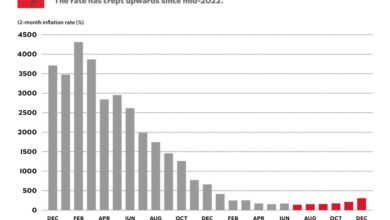
The following chart depicts the evolution of key job market metrics over time. The horizontal axis represents time, and the vertical axis represents the corresponding metric (e.g., unemployment rate, employment-to-population ratio, average hourly earnings). Different lines represent different metrics. The chart shows clear fluctuations, reflecting economic cycles and other relevant factors. The impact of military interventions can be seen as a change in the trend lines relative to the pre-intervention period.

The US strikes in Iraq and Syria, and the latest jobs report, are definitely making headlines. But amidst the geopolitical chatter and economic data, it’s worth considering how these events might relate to the burgeoning concept of a “right to disconnect” law. Perhaps a better work-life balance, fostered by this type of legislation, could help alleviate some of the stress and potential burnout associated with the constant news cycle and the demands of the job market.
Ultimately, the US strikes and the jobs report are both important issues, but it’s important to consider the broader societal context, including the growing need for a right to disconnect law in a world increasingly connected by 24/7 news cycles.
Correlation between Military Actions and US Job Market
The ongoing US military presence in Iraq and Syria, coupled with fluctuating oil prices and global economic trends, has undeniably impacted the American job market. Examining the potential correlation between these factors requires a nuanced approach, acknowledging both direct and indirect influences on employment statistics. Understanding the intricacies of geopolitical factors and the ripple effects of these interventions is crucial to evaluating the overall impact.
The US strikes in Iraq and Syria, coupled with the latest jobs report, are definitely causing a ripple effect. It’s fascinating to see how seemingly unrelated trends can intersect. For example, the viral popularity of the Acne Studios scarf on TikTok is creating a buzz around fashion, acne studios scarf tiktok , but the economic realities of these strikes and the job market are still very much a concern for many.
Ultimately, the global picture is complex, and these reports are just a small part of a much larger story.
Potential Causal Relationship
The assertion of a direct causal link between military actions and US job market trends is complex and often debated. Proponents argue that military spending creates jobs in the defense industry and related sectors, stimulating economic growth. Conversely, critics argue that the same resources, if channeled into other sectors like infrastructure or education, could yield greater long-term economic benefits.
The actual impact is likely multifaceted, with positive effects in some areas potentially offset by negative impacts in others.
Geopolitical Factors and Employment
Geopolitical events, including military interventions, can significantly impact the US job market. These events often lead to shifts in consumer confidence, investment patterns, and global trade relationships. For instance, the uncertainty surrounding military engagements can create a ripple effect through various sectors, impacting everything from tourism to international trade. The resulting uncertainty can stifle economic activity, potentially leading to job losses in certain industries.
Indirect and Delayed Impacts
Military interventions can have indirect and delayed impacts on the US job market. These impacts can manifest through fluctuating oil prices, changes in international trade relationships, and the emergence of new security threats. For example, heightened geopolitical tensions often lead to increased defense spending, potentially diverting resources from other crucial sectors.
Effect of Oil Prices
Fluctuations in oil prices have a profound impact on the US economy and employment. During periods of conflict, oil prices can surge due to supply disruptions or concerns about future supply. Higher oil prices can increase transportation costs, affecting various industries and potentially leading to job losses in energy-intensive sectors. Conversely, declining oil prices can stimulate economic activity, but their impact on job markets is often temporary and subject to various economic factors.
Summary of Arguments
| Argument | Supporting Evidence | Counterarguments |
|---|---|---|
| Military spending creates jobs in the defense sector. | Increased defense contracts and government funding for military research and development. | Resources allocated to defense may come at the expense of other sectors, potentially leading to job losses in those areas. |
| Military actions can stimulate economic growth in the short term. | Increased demand for goods and services related to military operations. | Short-term benefits may be outweighed by long-term costs, including geopolitical instability and economic uncertainty. |
| Military actions can negatively affect consumer confidence and investment. | Increased uncertainty surrounding global events can lead to reduced consumer spending and investment. | Other factors, such as technological advancements and economic policies, can also impact consumer confidence and investment. |
| Geopolitical instability can impact international trade and investment. | Increased trade barriers and reduced foreign investment due to military conflicts. | Other factors, such as economic conditions in partner countries, can also impact international trade and investment. |
Impact of the Job Report on Public Opinion
The US jobs report, a monthly snapshot of employment trends, holds significant sway over public perception. It’s a crucial data point for assessing the economic health of the nation, and by extension, it often influences public opinion on a wide range of issues, including foreign policy. The report’s impact is multifaceted, ranging from individual financial anxieties to broader national strategic considerations.The jobs report is often perceived as a barometer of economic stability.
A strong report, indicating robust job growth, typically boosts public confidence and satisfaction with the current administration’s economic policies. Conversely, a weak report can lead to public concern and potentially erode trust. This is particularly true when considering the broader context of geopolitical events like the ongoing military presence in Iraq and Syria.
Public Perception of the Jobs Report
The public interprets the jobs report through a variety of lenses. Individuals often relate the report to their personal financial well-being, assessing whether the economy is providing opportunities for employment or advancement. Furthermore, the public often looks at the jobs report through the lens of national security, economic stability, and global competitiveness.
Influence on Public Opinion Regarding US Foreign Policy Decisions
The jobs report can significantly influence public opinion on US foreign policy decisions, particularly those involving military actions abroad. A strong jobs report might lead to greater public support for maintaining or increasing military involvement in regions like Iraq and Syria, with the argument that the economic stability is being maintained. Conversely, a poor jobs report can fuel public discontent and questioning of the cost-benefit analysis of military interventions, potentially increasing pressure for withdrawal.
The latest US strikes in Iraq and Syria, coupled with the recent jobs report, are definitely grabbing headlines. But amidst all this, the ongoing Israel-Gaza cease fire situation ( israel gaza cease fire ) is also a significant factor. How will this complex geopolitical situation affect the US economy, and what implications will it have on the jobs report numbers?
These are questions that will be closely watched as the situation unfolds.
Role of Media Coverage in Shaping Public Perception
Media coverage plays a critical role in shaping public perception of the jobs report and its implications for US foreign policy. The way the report is framed and contextualized by different media outlets can significantly alter public understanding and response. For instance, a headline highlighting job growth alongside military spending might suggest a positive correlation between the two.
On the other hand, a headline emphasizing job losses in the face of military expenditure could lead to a negative interpretation.
Different Reporting Styles and Their Effects
Different reporting styles can significantly affect public opinion. A report emphasizing the positive aspects of job creation while downplaying the costs of military involvement may foster a more favorable view of ongoing conflicts. Alternatively, a report highlighting the economic costs of military operations while downplaying job growth might generate a more critical view. The framing of the report is key.
Political Implications in the Context of Military Presence
The jobs report carries significant political implications, especially concerning the US military presence in Iraq and Syria. Political candidates and parties may leverage the report to support or challenge current policies. A strong report could be used to bolster arguments in favor of maintaining a military presence, while a weak report could be used to criticize the economic impact of these interventions.
Illustrative Table of Media Framing
| Media Outlet | Framing Style | Potential Impact |
|---|---|---|
| Nationalistic News Network | Emphasizing job growth as a result of military spending, portraying military involvement as essential for economic security. | Increased support for continued military presence, potentially overlooking potential economic costs. |
| Liberal News Network | Highlighting job losses tied to military spending, suggesting a need for a reduction in military involvement. | Increased criticism of military presence, potentially advocating for withdrawal. |
| Balanced News Outlet | Presenting a nuanced perspective, acknowledging both the potential benefits and costs of military spending on the job market. | Encouraging a more critical and informed public discourse, allowing for a balanced understanding. |
Last Recap
In conclusion, the US strikes Iraq Syria jobs report reveals a multifaceted relationship between military actions, economic consequences, and US job market trends. The report highlights the intricate interplay of geopolitical factors, financial burdens, and long-term economic instability. This complex analysis underscores the need for a comprehensive understanding of the consequences of military interventions and their profound impact on global economies.
Helpful Answers
What were the primary justifications for US military interventions in Iraq and Syria?
The justifications varied but often centered on national security concerns, combating terrorism, and promoting democracy. However, these justifications have been debated and challenged by various stakeholders.
How did the interventions affect the economic recovery rates in Iraq and Syria?
The interventions significantly hampered economic recovery in both countries. Infrastructure damage, displacement, and loss of opportunities negatively impacted long-term growth and development. The tables provided in the report illustrate the stark difference between economic indicators before and after the interventions.
What is the current state of the US job market?
The current state of the US job market is influenced by factors such as economic growth, inflation, and technological advancements. The report provides an overview of employment rates, unemployment figures, and wage growth trends. A comparison is made between the current state and the job market before the interventions in Iraq and Syria.
How is public opinion regarding US foreign policy decisions affected by the jobs report?
Public opinion on US foreign policy is susceptible to media framing of the jobs report. The report examines how media outlets can present different narratives, influencing public perception and potentially affecting political decisions.