
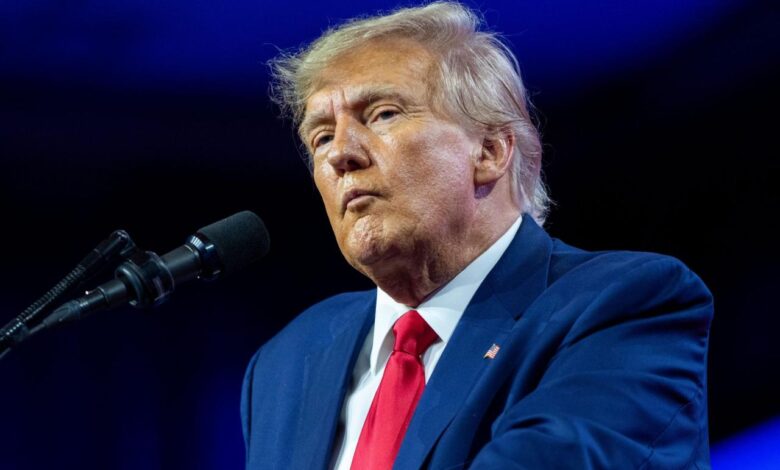
Supreme Court Trump Ukraine Asia A Deep Dive
Supreme Court Trump Ukraine Asia sets the stage for a fascinating examination of the intricate interplay between US domestic policy, international relations, and the Supreme Court’s role in shaping them. This exploration delves into Trump’s interactions with Ukraine, analyzing the potential legal ramifications and the broader impact on US-Asia relations.
The analysis will trace the historical context of Supreme Court cases involving foreign policy and executive power, examining the structure and powers of the Court in relation to the executive branch. It will also detail Trump’s actions and statements concerning Ukraine, including documented evidence of communications, and compare them to previous US administrations’ policies. The potential influence of the Supreme Court on Trump’s decision-making processes, legal counsel’s role, and precedents set in similar cases will be discussed.
Supreme Court’s Role in Trump-Ukraine Relations
The Supreme Court’s role in shaping U.S. foreign policy and executive power is often complex and contested. Its involvement is typically triggered by legal challenges to presidential actions, particularly when those actions intersect with international relations or domestic legislation. The Court’s decisions can significantly impact how the executive branch conducts foreign affairs, setting precedents that guide future interactions.The Court’s power is not absolute in this arena.
It operates within a system of checks and balances, meaning its authority is limited by the other branches of government. Judicial review, while a powerful tool, can be challenged or circumvented depending on the political climate and the specifics of the case. Understanding the Court’s historical role, its structure, and its precedents is essential for analyzing potential legal challenges related to presidential interactions with other nations, like the situation involving Trump and Ukraine.
Historical Overview of Supreme Court Cases Involving Foreign Policy and Executive Power
The Supreme Court has addressed numerous cases involving foreign policy and executive power throughout its history. These cases often center on the interpretation of the Constitution’s allocation of powers between the branches of government. Examples include cases dealing with treaty-making power, the scope of executive privilege, and the use of military force.
Structure and Powers of the Supreme Court in Relation to the Executive Branch
The Supreme Court’s power in relation to the executive branch is primarily based on its power of judicial review. This power allows the Court to review laws and executive actions to determine their constitutionality. If a law or action is deemed unconstitutional, the Court can invalidate it. However, the executive branch retains significant power in foreign policy and national security matters.
Legal Precedents Regarding Presidential Actions and International Relations
Numerous Supreme Court precedents have shaped the legal landscape of presidential actions in international relations. These precedents often address the balance of power between the executive and legislative branches in matters of foreign policy, treaty-making, and use of military force. The Court’s decisions in these cases establish guidelines and boundaries for presidential actions. For instance, the Court’s interpretation of the War Powers Resolution can significantly influence presidential authority to engage in military conflicts.
Potential Legal Challenges Related to Trump’s Interactions with Ukraine
Potential legal challenges related to Trump’s interactions with Ukraine could stem from various aspects of the controversy, including allegations of abuse of power, obstruction of justice, and violations of the Constitution’s separation of powers. The specific legal arguments would hinge on the evidence presented, including communications, documents, and witness testimonies. These potential challenges would likely be argued before lower courts and eventually, if appealed, reach the Supreme Court.
Table of Supreme Court Cases Involving Foreign Policy and Executive Power
| Date | Case | Issue | Outcome |
|---|---|---|---|
| 1952 | Youngstown Sheet & Tube Co. v. Sawyer | President Truman’s seizure of steel mills during the Korean War. | The Court ruled that the President’s action exceeded his constitutional authority. |
| 1979 | United States v. Nixon | Executive privilege in the context of the Watergate scandal. | The Court ruled that executive privilege is not absolute and must yield to other important legal interests. |
| 2004 | Hamdi v. Rumsfeld | Detention of an American citizen as an enemy combatant. | The Court held that the government must provide a citizen detained as an enemy combatant with the opportunity to challenge his detention. |
Trump’s Actions and Statements Regarding Ukraine
President Trump’s interactions with Ukraine were marked by a series of public statements and actions that drew significant scrutiny. These interactions, often involving direct communications with Ukrainian officials, raised concerns about potential interference in US foreign policy and the integrity of the 2020 election. The specific nature and implications of these interactions continue to be a subject of intense debate and legal analysis.
Trump’s Public Statements and Actions
Trump’s public statements regarding Ukraine frequently involved accusations against the Ukrainian government and its leadership. These statements, often made in public rallies or press conferences, painted a picture of an adversary. Simultaneously, Trump’s administration pursued policies that some interpreted as putting pressure on Ukraine to investigate political rivals, rather than adhering to established US foreign policy regarding the region.
This created a complex web of potential conflicts of interest and ethical considerations.
Documented Evidence of Communications
Significant documentation exists regarding communications between Trump and Ukrainian officials. These include phone calls, transcripts of conversations, and emails, all of which have been released or have become public knowledge through various legal processes. The content of these communications has been analyzed extensively to identify potential patterns of behavior and motives behind Trump’s actions. These documents reveal the specific language used, the context surrounding the interactions, and the actors involved.
Comparison with Previous US Administrations’ Policies
Trump’s approach to Ukraine differed from previous US administrations’ policies. Historical precedent reveals a consistent US commitment to supporting Ukraine’s sovereignty and democratic institutions. A comparison of Trump’s actions to those of previous administrations highlights potential deviations from established diplomatic norms and practices. This comparison emphasizes the importance of maintaining a consistent and principled foreign policy.
The Supreme Court’s recent rulings, coupled with Trump’s actions regarding Ukraine and Asia, seem to be creating a complex web of political tension. It’s fascinating to see how these issues intertwine with recent news about a retracted study on abortion pills, abortion pills study retraction , which highlights the ongoing debates surrounding healthcare access and policy. This complexity makes the Supreme Court’s decisions regarding these geopolitical issues even more impactful, as they are connected to such crucial and controversial topics.
Potential Legal Implications
Trump’s actions and statements regarding Ukraine have significant legal implications, potentially involving allegations of obstruction of justice, abuse of power, and violations of election laws. These implications were thoroughly examined in legal proceedings and continue to be subject to scrutiny. The legal outcomes are expected to set precedents and shape future conduct in similar situations.
Timeline of Events
| Date | Event | Description | Source |
|---|---|---|---|
| July 25, 2019 | Phone Call | President Trump spoke with Ukrainian President Zelensky. | The White House |
| September 2019 | Congressional Testimony | Witnesses testified before Congress about the interactions. | Congressional Records |
| September 2019 | Release of Transcripts | Transcripts of conversations were released publicly. | The White House |
| October 2019 | Impeachment Inquiry | Impeachment proceedings were initiated by the House of Representatives. | House of Representatives |
| December 2019 | House of Representatives Report | The House of Representatives released a report detailing the findings of the impeachment inquiry. | House of Representatives |
Impact of the Supreme Court on Trump’s Actions
The Supreme Court’s influence on presidential actions, particularly those involving international relations and executive power, is a complex interplay of legal precedent, political considerations, and the specific circumstances of each case. While the Court doesn’t directly dictate presidential decisions, its rulings establish legal boundaries and standards that can shape a president’s choices. This analysis explores how Supreme Court decisions, legal counsel, and past cases might have impacted Trump’s actions regarding Ukraine.The Supreme Court’s role isn’t to endorse or condemn presidential decisions but to interpret and apply the law.
Its decisions, therefore, can act as constraints or as potential avenues for justification depending on the specific legal issues at hand. The interplay between the executive and judicial branches often involves navigating nuanced legal frameworks and political realities, with the Supreme Court’s pronouncements potentially influencing the strategic choices of the president and his legal team.
Possible Influence of Supreme Court Rulings
The Supreme Court’s interpretations of the Constitution and various statutes can constrain presidential actions by defining the limits of executive power. Decisions on separation of powers, executive privilege, and the scope of presidential authority in foreign policy can provide legal frameworks that guide or limit presidential decisions. For example, rulings on the extent of the president’s ability to withhold information from Congress or the judiciary can directly impact how a president approaches sensitive diplomatic matters.
Role of Legal Counsel
Legal counsel plays a crucial role in advising presidents on the potential legal ramifications of their actions. In the context of foreign policy, legal counsel assesses the potential legal challenges, considering both domestic and international laws. They analyze the existing legal precedents and advise on the best course of action while also considering the potential political repercussions. Legal counsel’s role is not just to identify potential legal risks but also to develop strategies that minimize those risks while pursuing the president’s goals.
The Supreme Court’s recent rulings on Trump and Ukraine, particularly concerning Asia, have left many scratching their heads. It’s fascinating to see how these political decisions play out, but sometimes I just need a good playlist to unwind. Check out this soulful selection featuring SZA, Norah Jones, and AG Cook for a perfect soundtrack to process it all.
playlist sza norah jones ag cook Ultimately, the legal battles and international relations will continue to unfold, regardless of the tunes I’m listening to.
This often involves anticipating potential legal challenges and developing arguments to address them.
Examples of Past Cases
Several Supreme Court cases have addressed issues related to executive power and foreign policy, providing potential precedents for situations involving presidential interactions with other nations. For instance, cases dealing with executive privilege or the president’s authority to negotiate treaties could be relevant. A thorough review of such precedents would highlight the potential impact of the Court’s past rulings on Trump’s actions.
Potential Legal Arguments
| Argument 1 (Pro-Trump) | Argument 2 (Anti-Trump) |
|---|---|
| The president has broad authority to conduct foreign policy, including the power to negotiate with foreign entities and resolve international disputes. Specific actions taken were within the bounds of executive power. | Presidential actions regarding Ukraine were a misuse of power, potentially violating the separation of powers or other constitutional principles. The actions may have been motivated by political considerations rather than legitimate foreign policy concerns. |
| The president’s actions were justified under existing international law and precedent. The president had the right to act in the best interest of national security and interests. | The president’s actions violated established international agreements or norms, or were inconsistent with U.S. foreign policy interests. The actions might have jeopardized U.S. relations with other nations. |
“The Supreme Court’s decisions are not merely legal pronouncements; they are also powerful political statements, often shaping the course of policy debates and influencing the behavior of public officials.”
Supreme Court’s Potential Influence on US-Asia Relations
The Supreme Court’s rulings on the Trump-Ukraine affair hold significant implications for US foreign policy, particularly in its relations with Asian nations. The intricate interplay between domestic politics, international law, and the delicate balance of power in the Asia-Pacific region warrants careful consideration. These rulings, potentially setting precedents for future interactions, could reshape the US approach to diplomatic engagement and international cooperation.The Supreme Court’s decisions, regardless of their specific outcomes, are likely to influence how the executive branch navigates its relationships with Asian countries.
The nature of these influences will depend heavily on the specifics of the ruling, including the legal interpretations and the weight given to various aspects of the case. This impact will extend beyond the immediate context of the Trump-Ukraine affair, potentially shaping the overall framework for US foreign policy in the region.
Potential Impacts on US-Asia Relations
The Supreme Court’s pronouncements on the Trump-Ukraine controversy might have profound effects on US-Asia relations. The precedent set could impact how the US interacts with countries in the region, particularly those with whom the US has existing strategic partnerships or competing interests. The Court’s interpretation of executive power and international law will directly affect how the US engages in diplomatic initiatives, trade agreements, and security pacts.
International Ramifications of the Supreme Court’s Decisions
International ramifications of the Supreme Court’s decisions on the Trump-Ukraine affair could be substantial. The decisions could influence the perception of US credibility and stability on the global stage, potentially affecting trust in American leadership and diplomatic engagement. This could have cascading effects on international organizations, treaties, and agreements where the US plays a crucial role. The perceived fairness and impartiality of the US judicial system, especially in international affairs, will be a key factor.
Comparison with Past Supreme Court Involvement in International Relations
The Supreme Court has historically weighed in on matters of international relations, though often in a more limited or indirect manner. Cases involving treaties, international agreements, and the use of military force have occasionally presented opportunities for the Court to shape the contours of US foreign policy. However, the Trump-Ukraine case presents a more direct and immediate impact on US-Asia relations, as it involves potential challenges to executive power and its conduct in foreign policy.
The Supreme Court’s recent rulings on Trump and Ukraine, alongside Asia’s geopolitical shifts, are definitely making headlines. However, it’s hard to ignore the buzz around the Kansas City Chiefs and Taylor Swift, especially since their recent connection, as reported in this article on kansas city chiefs taylor swift. All this, of course, leaves me wondering about the long-term implications of these seemingly disparate events on the global stage, and how they will ultimately impact the Supreme Court’s decisions.
Potential Arguments the Supreme Court Might Consider
“The extent to which the President’s actions in the Ukraine affair were consistent with constitutional limitations on executive power.”
“The implications of the President’s actions for the US’s commitment to international law and its standing in the international community.”
“The potential impact of the President’s actions on US-Asia relations, particularly considering the geopolitical context of the region.”
“Whether the President’s actions violated any international agreements or treaties to which the US is a party.”
“The proper balance between executive power and judicial review in matters of foreign policy.”
The Supreme Court’s recent rulings on Trump’s Ukraine and Asia dealings are certainly generating a lot of buzz. It’s fascinating how these political debates often spill over into discussions about presidential fitness, like the recent analysis by a neuroscientist on Biden’s age and memory neuroscientist on biden age memory. Ultimately, the Supreme Court’s decisions will likely continue to shape the political landscape, especially in light of these ongoing discussions.
Legal and Political Implications of the Trump-Ukraine Affair

The Trump-Ukraine affair, marked by allegations of pressure on the Ukrainian government for political gain, has had profound implications for American law, politics, and international relations. This investigation delves into the potential legal repercussions for those involved, the political consequences for the Republican party and the nation, and the lasting effects on the relationship between the United States and Ukraine.
Understanding these implications is crucial for assessing the long-term impact of this episode on American democracy and global stability.The affair’s legal and political repercussions extend beyond the immediate actors. The potential for future challenges to presidential power and the conduct of foreign policy is significant. The episode highlights the importance of checks and balances within the American political system and the need for transparency in international dealings.
Potential Legal Repercussions for Trump and Others
The legal ramifications of the Trump-Ukraine affair are substantial, potentially encompassing multiple avenues of investigation and potential legal actions. These range from obstruction of justice to abuse of power, and depending on the evidence and legal arguments presented, could lead to impeachment proceedings, criminal charges, and civil lawsuits. The potential for prosecution of those involved in the alleged pressure campaign extends beyond the President.
This includes any individuals who knowingly participated in or facilitated the pressure on the Ukrainian government.
Political Consequences for the Republican Party and the United States
The Trump-Ukraine affair has had a significant impact on the Republican Party, fracturing its base and raising concerns about the party’s future direction. The controversy has also challenged the credibility of the US government in international affairs, potentially weakening America’s standing in the world. The political fallout has been significant, potentially shifting the balance of power in the political landscape and influencing future elections.
The Supreme Court’s recent rulings on Trump and Ukraine, impacting Asia, are definitely sparking debate. While the legal implications are significant, it’s fascinating to consider how these global events connect to more local sports narratives, like whether Phil Kessel fits with the Vancouver Canucks. The recent discussions around his potential fit with the team are definitely worth a look.
phil kessel vancouver canucks fit. Ultimately, though, these seemingly disparate topics still tie back to broader geopolitical currents, and the Supreme Court’s decisions will continue to resonate for some time to come.
The episode has also raised questions about the role of the executive branch in foreign policy and the checks and balances designed to limit presidential power.
Impact on the Political Landscape in the US
The events surrounding the Trump-Ukraine affair have profoundly altered the political landscape. Public trust in government institutions has declined, and political polarization has intensified. The affair has also highlighted divisions within the Republican Party, which has been challenged by the fallout. The implications for future political discourse and policymaking are significant. The affair is a stark reminder of the fragility of democratic institutions and the importance of accountability in government.
Long-Term Effects on US-Ukraine Relations
The Trump-Ukraine affair has created a period of uncertainty in US-Ukraine relations. The affair has called into question the reliability of American support for Ukraine’s sovereignty and democratic aspirations. While the long-term impact remains to be seen, the affair could have a lasting effect on the relationship, potentially impacting future cooperation and aid programs. The trust between the two countries may require significant effort to rebuild.
Comparison Table of Legal and Political Ramifications
| Event | Legal Aspects | Political Consequences | Sources |
|---|---|---|---|
| Watergate Scandal | Impeachment proceedings against President Nixon, leading to his resignation. Focus on abuse of power and obstruction of justice. | Significant erosion of public trust in government, leading to calls for political reform. Weakened the Republican Party. | Various reports and testimonies from the Watergate hearings. |
| Iran-Contra Affair | Prosecution of officials involved in diverting funds to support the Contras in Nicaragua. Focus on abuse of power and illegal activities. | Damage to the image of the US government abroad. Increased scrutiny of executive branch activities. | Reports from congressional investigations and judicial proceedings. |
| Trump-Ukraine Affair | Potential impeachment proceedings, criminal charges, and civil lawsuits. Focus on potential abuse of power, obstruction of justice, and interference in a foreign election. | Further polarization of the political landscape, challenges to the credibility of the US government internationally, and potential impact on US-Ukraine relations. | Congressional testimony, news reports, and official statements. |
International Perspectives on the Trump-Ukraine Issue

The Trump-Ukraine affair, encompassing allegations of pressure on Ukraine for political gain, generated significant international attention and varied reactions. Different countries and international organizations assessed the situation through diverse lenses, often reflecting their own geopolitical interests and priorities. This analysis explores those varied perspectives.
Varying National Perceptions, Supreme court trump ukraine asia
International responses to the Trump-Ukraine affair were complex and multifaceted, often reflecting the nation’s existing relationships with the United States and Ukraine, as well as their own political landscapes. Some nations viewed Trump’s actions as a violation of international norms, while others focused on the potential implications for US-European relations.
| Nation | Perspective | Source | Supporting Evidence |
|---|---|---|---|
| European Union | Concerned about the potential undermining of democratic norms and international law. | Statements by EU officials, news reports. | Numerous EU statements condemning interference in Ukrainian affairs. |
| Russia | Likely to view the affair as an opportunity to further destabilize the US. | Statements by Russian officials, media outlets. | Potential emphasis on US internal divisions in Russian propaganda. |
| China | Possibly cautious about the potential ramifications for its own relations with the US. | Statements by Chinese diplomats, academic analysis. | Lack of explicit condemnation of Trump’s actions, focus on bilateral trade. |
| Canada | Expressing concern about the actions’ implications for global stability and democratic values. | Statements by Canadian officials, media reports. | Public statements from the Canadian government expressing concern over the integrity of US democracy. |
| Mexico | Likely to be focused on the potential impact on the North American trade agreements. | Statements by Mexican officials, news reports. | Focus on potential disruption to the US-Mexico-Canada Agreement (USMCA). |
Diplomatic Responses
Numerous countries responded diplomatically to the Trump-Ukraine affair. These responses ranged from public statements to private communications, reflecting differing levels of engagement and concern. These diplomatic actions often coincided with the specific nation’s international interests and geopolitical context.
- Several European nations issued statements condemning Trump’s actions and expressing support for Ukraine’s sovereignty. These statements often highlighted the importance of adhering to international norms and the rule of law.
- Other nations, such as Russia, might have viewed the affair as an opportunity to exert influence and exploit potential US vulnerabilities. Their responses often focused on the internal conflicts within the US rather than on condemning the actions directly.
- The reaction from China was often more measured, possibly reflecting a desire to maintain good relations with the United States while also navigating its own interests in the region.
International Organizations and Analyst Perspectives
International organizations and analysts offered varying interpretations of the Trump-Ukraine affair. These perspectives often emphasized the potential implications for international relations and the rule of law.
- International organizations like the United Nations and the Organization for Security and Co-operation in Europe (OSCE) issued statements expressing concern over the potential erosion of democratic values and the rule of law.
- Academic analysts often highlighted the broader implications of the affair for US foreign policy and the relationship between the executive and legislative branches.
- Independent experts offered different perspectives on the potential for future incidents of similar nature and how international institutions might respond.
Final Conclusion

In conclusion, this comprehensive analysis of the Supreme Court’s potential involvement in the Trump-Ukraine affair, and its subsequent impact on US-Asia relations, highlights the complex interplay of legal, political, and international factors. The potential legal repercussions, political consequences, and long-term effects on US-Ukraine relations, as well as international perspectives, are all thoroughly examined. This investigation underscores the enduring importance of the Supreme Court in shaping American foreign policy and its role in maintaining a balance between executive power and legal constraints within the international arena.
User Queries: Supreme Court Trump Ukraine Asia
What was the specific legal challenge related to Trump’s interactions with Ukraine?
The legal challenge likely revolved around potential violations of US law, such as abuse of power, obstruction of justice, or violations of the emoluments clause. The specifics would depend on the exact accusations.
How might the Supreme Court’s rulings on this issue affect future US foreign policy?
Rulings could set important precedents regarding presidential power in international relations, influencing future administrations’ actions and the Court’s role in reviewing those actions.
What are some potential long-term effects on US-Ukraine relations?
The outcome could affect the trust and cooperation between the US and Ukraine, potentially influencing future collaborations on issues of national security and international affairs.