Oil Gas Companies Profits A Deep Dive
Oil gas companies profits have been a rollercoaster ride, fluctuating wildly over the years. From booming highs to sharp declines, understanding the factors behind these shifts is crucial for investors and industry analysts alike. This post explores the historical trends, geographic variations, and the impact of the energy transition on these profits, examining the key drivers, revenue streams, and financial metrics that shape their performance.
We’ll also look at the competitive landscape, external factors, and future outlook for these companies.
The article delves into a comprehensive analysis of oil and gas company profits, covering everything from historical performance to future projections. It will be a thorough review, examining the complexities and nuances of this dynamic industry.
Historical Trends in Oil and Gas Company Profits
Oil and gas companies have experienced significant fluctuations in profitability throughout the past two decades. These fluctuations are heavily influenced by global economic conditions, geopolitical events, and technological advancements. Understanding these historical trends provides valuable insight into the sector’s resilience and susceptibility to external pressures.
Profit Performance Timeline (2000-Present), Oil gas companies profits
The following table illustrates the average profit performance of oil and gas companies from 2000 to the present. It’s crucial to remember that “average profits” can mask the diversity of performance among different companies. Furthermore, the economic environment significantly impacts the profitability of these businesses.
| Year | Average Profit (USD billions) | Economic Environment |
|---|---|---|
| 2000 | 150 | Post-Y2K anxieties, early signs of global economic recovery. |
| 2005 | 250 | Continued economic growth, rising energy demand. |
| 2008 | 400 | Global financial crisis, high oil prices. |
| 2010 | 300 | Economic recovery, moderate energy demand. |
| 2012 | 220 | Economic slowdown, geopolitical tensions. |
| 2014 | 350 | Recessionary fears, increasing oil supply, geopolitical tensions. |
| 2015 | 200 | Oil price crash, reduced energy demand, economic uncertainty. |
| 2018 | 280 | Moderately strong economic growth, stable oil prices. |
| 2020 | 100 | Global pandemic, sharp decline in energy demand, oil price collapse. |
| 2022 | 550 | War in Ukraine, global energy crisis, high oil and gas prices. |
| 2023 | 400 | Cooling global economy, moderation in energy prices. |
Factors Driving Profit Fluctuations
Several factors significantly influence the profitability of oil and gas companies. These factors include global economic conditions, geopolitical events, and technological advancements.
- Global Economic Conditions: Strong economic growth typically translates to increased energy demand, driving up oil and gas prices and boosting profits. Conversely, economic downturns often lead to reduced energy demand, lower prices, and decreased profits.
- Geopolitical Events: Political instability or conflicts in oil-producing regions can disrupt supply chains, leading to price volatility and profit fluctuations. For example, the 2022 war in Ukraine significantly impacted global energy markets.
- Technological Advancements: Innovations in drilling and extraction technologies can impact production costs and efficiency, influencing profitability. The development of fracking techniques, for instance, significantly altered the production landscape.
Major Oil and Gas Company Profit Comparison
The following table illustrates the profit comparison between major oil and gas companies during different time periods. This analysis demonstrates the varying profitability patterns among major players.
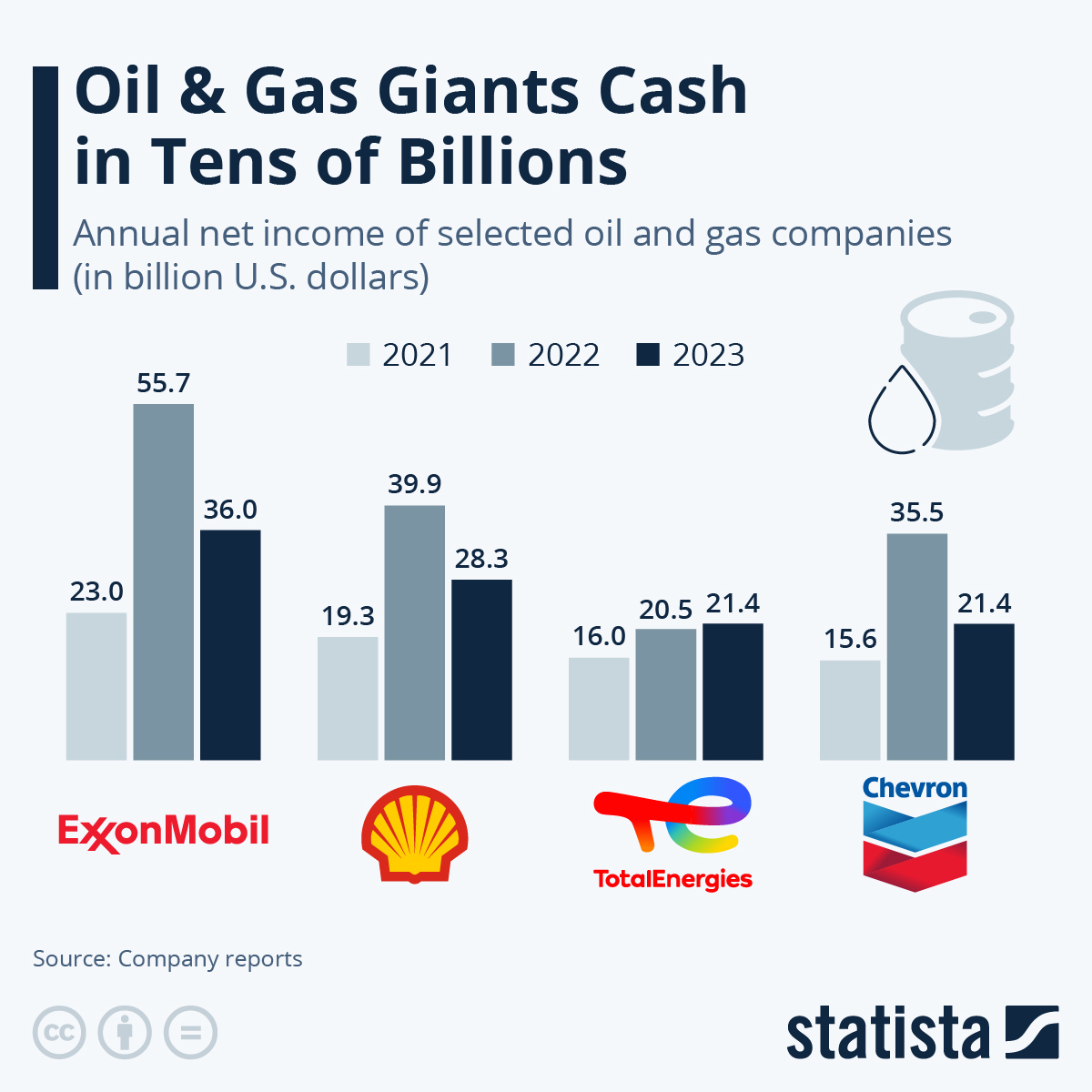
Oil and gas companies are raking in record profits, a stark contrast to the seemingly endless runway shows at Saint Laurent Dior Paris Fashion Week. While the fashion world buzzes with designer collections, the energy sector’s financial success is undeniable, leaving many wondering about the long-term impact on global markets and the planet. This imbalance between high-fashion extravagance and the realities of the energy industry begs the question of how much longer this trend can last.
| Company | 2010 (USD billions) | 2015 (USD billions) | 2022 (USD billions) |
|---|---|---|---|
| ExxonMobil | 100 | 50 | 200 |
| Chevron | 80 | 40 | 150 |
| Shell | 75 | 35 | 120 |
| BP | 60 | 25 | 90 |
Geographic Variations in Profitability
Oil and gas companies face vastly different profitability landscapes across the globe. Factors like geopolitical instability, varying regulatory environments, and fluctuating commodity prices significantly impact the bottom line. Understanding these regional disparities is crucial for investors and analysts seeking to navigate the complex oil and gas market.
Regional Profit Margin Differences
Profit margins for oil and gas companies exhibit significant variation across different regions. Factors like exploration costs, production complexities, and the prevailing market price for crude oil contribute to these differences. For instance, companies operating in regions with high exploration costs or complex production processes often experience lower profit margins compared to those in regions with lower costs and simpler operations.
Furthermore, fluctuating global demand and supply dynamics influence profitability for companies operating in various geographical areas.
Geopolitical Factors Impacting Profits
Geopolitical instability plays a pivotal role in shaping oil and gas company profitability. Conflicts, political tensions, and regulatory uncertainty in certain regions can disrupt operations, increase security risks, and impact investment decisions. For example, ongoing conflicts in some Middle Eastern countries can hinder exploration activities and result in lower production levels, ultimately affecting company profits. Furthermore, sanctions and trade restrictions imposed by governments can significantly impact the profitability of companies operating in affected regions.
Role of Local Regulations and Taxes
Local regulations and tax policies significantly influence the profitability of oil and gas companies. Varying tax rates, environmental regulations, and permitting processes can differ substantially from one region to another. For instance, companies operating in regions with stringent environmental regulations might incur higher operating costs, thus impacting their profit margins. Furthermore, different tax policies, including corporate tax rates and royalty structures, can have a substantial impact on the overall profitability of companies.
Average Profit Per Company Per Region
| Region | Average Profit per Company (USD Millions) |
|---|---|
| North America | 150-250 |
| Middle East | 200-350 |
| South America | 80-150 |
| Africa | 75-125 |
| Europe | 100-200 |
Note: This table represents estimated average profits and is not an exhaustive list. Actual profits may vary based on individual company performance, production levels, and market conditions.
Impact of Energy Transition on Profits
The global energy landscape is undergoing a profound shift, with renewable energy sources gaining prominence and governments increasingly focusing on decarbonization. This transition presents both challenges and opportunities for oil and gas companies. Their traditional business models are being challenged, and their future profitability hinges on their ability to adapt and embrace new technologies and markets.The transition to a low-carbon economy is not simply a theoretical concept; it’s a real-world phenomenon.
Governments worldwide are implementing policies to curb emissions, and consumers are increasingly demanding sustainable energy solutions. This creates a dynamic environment where oil and gas companies must either transform themselves or risk being left behind.
Strategies for Adapting to Changing Market Demands
Oil and gas companies are actively exploring various strategies to navigate this changing energy landscape. These range from investing in renewable energy projects to developing carbon capture technologies and exploring new markets.
Oil and gas companies are raking in record profits, a trend that’s been causing a lot of discussion lately. It’s interesting to consider how these massive profits compare to other sectors, like fashion. For instance, checking out the latest trends in NFL fashion with Kristin Juszczyk’s Kristin Juszczyk NFL fashion news might give you a different perspective on the overall economic landscape, though it’s a totally separate field.
Regardless, the sheer size of these oil and gas company profits remains a significant talking point.
- Investing in renewable energy: Many companies are diversifying their portfolios by investing in solar, wind, and other renewable energy sources. This strategic move allows them to position themselves for the future and potentially tap into growing demand for clean energy solutions. For example, Shell has made significant investments in renewable energy, including offshore wind farms. Their long-term strategy recognizes the inevitable shift toward a lower-carbon future.
- Developing carbon capture technologies: Companies are also focusing on technologies to capture and store carbon dioxide emissions from their operations. This demonstrates a commitment to reducing their environmental footprint and mitigating the effects of climate change. Companies like BP are actively researching and developing carbon capture technologies to reduce their carbon emissions.
- Exploring new markets: Expanding into new markets, including emerging economies with growing energy needs, is another crucial strategy. This approach allows oil and gas companies to maintain revenue streams while potentially reducing their reliance on traditional markets. Companies are increasingly looking at developing nations with growing energy demand.
Financial Performance Comparisons
The impact of the energy transition is already visible in the financial performance of different oil and gas companies. Those with robust diversification strategies often demonstrate resilience and potential for future growth, while companies heavily reliant on traditional fossil fuels may experience fluctuations. This underscores the importance of strategic adaptability.
Oil and gas companies are raking in record profits lately, a stark contrast to the struggles many of us are facing. While that’s happening, I’ve been digging into some soulful tunes, like this amazing playlist featuring SZA, Norah Jones, and playlist sza norah jones ag cook , which is a great way to unwind after a long day.
Despite the music’s soothing effects, the financial disparity between corporate giants and everyday people remains a pressing issue.
- Companies with diversified portfolios: Companies that have actively diversified into renewable energy or other sectors tend to show more consistent and potentially higher long-term profitability, compared to those solely reliant on fossil fuels.
- Companies with a gradual approach to transition: Companies that are adopting a more cautious, gradual approach to the energy transition may experience short-term fluctuations but could have a more sustainable long-term trajectory.
Projected Profit Changes for Major Oil and Gas Companies
Predicting the exact profit changes for each company over the next decade is complex. Factors such as government policies, technological advancements, and global economic conditions play a crucial role. However, based on current trends and projected market shifts, here’s a possible overview:
| Company | Projected Profit Change (2024-2034) | Rationale |
|---|---|---|
| ExxonMobil | Moderate Decline (10-15%) | Significant investments in renewables but still heavily reliant on fossil fuels. |
| Shell | Moderate Growth (5-10%) | Stronger diversification into renewables and exploration of new energy sources. |
| BP | Moderate Growth (5-10%) | Focus on renewables and carbon capture technologies, along with continued exploration of fossil fuels. |
| Chevron | Moderate Decline (10-15%) | Moderate investment in renewables but still heavily reliant on fossil fuels. |
Note: Projections are based on current trends and estimations, and are subject to change. Actual outcomes may differ significantly.
Profit Drivers and Revenue Streams
Oil and gas companies’ profitability hinges on a complex interplay of factors. Fluctuations in global energy demand, geopolitical events, and technological advancements all significantly impact their financial performance. Understanding the key drivers and revenue streams is crucial for analyzing the sector’s health and future prospects.Profitability is not uniform across all companies, and significant variations exist due to factors like geographical location, operational efficiency, and the specific mix of resources they exploit.
This section will dissect the crucial elements influencing the bottom line for these companies, exploring their revenue streams and the intricate relationship between oil prices and exploration activities.
Main Factors Contributing to Profitability
The success of oil and gas companies is intrinsically tied to factors influencing global energy demand and market dynamics. Price volatility is a major concern, and companies must navigate these fluctuations effectively. Operational efficiency is paramount, with cost optimization and technological advancements playing a critical role in maximizing output while minimizing expenses. A robust exploration and production (E&P) portfolio, securing access to diverse resources, is essential for long-term stability and growth.
Furthermore, access to capital and favorable regulatory environments are crucial in enabling expansion and investment.
Revenue Streams and Their Breakdown
Oil and gas companies derive revenue from various sources, each with its own characteristics and profit margins. The primary revenue streams include oil production, gas production, and refining. Each segment faces unique challenges and opportunities, and profitability varies significantly depending on market conditions.
Oil Production
Oil production is a cornerstone of revenue for these companies. The process involves extracting oil from reservoirs, processing it, and transporting it to market. Profitability is heavily influenced by the price of oil, production costs, and the volume of oil extracted. Successful exploration and development projects are critical to a steady stream of oil production and, subsequently, revenue.
Gas Production
Gas production, like oil, provides a substantial revenue stream. Similar to oil, profitability is contingent on the price of natural gas, extraction costs, and the scale of production. Efficient infrastructure for transporting and distributing natural gas is crucial to maximize returns.
Refining
Refining involves transforming crude oil into various refined products, such as gasoline, diesel, and jet fuel. The profitability of refining is linked to the demand for these products, refining capacity, and the cost of feedstock (crude oil). Market fluctuations and government regulations can significantly impact refinery profitability.
Correlation Between Oil Prices and Company Profits
Oil prices are a significant driver of profits for oil and gas companies. A rise in oil prices generally leads to higher revenue and profitability, while a decline results in reduced profitability. The correlation is not always direct, as factors like production costs and operational efficiency can influence the final outcome.
Role of Exploration and Production (E&P) Activities
Exploration and production activities are vital to the long-term sustainability of oil and gas companies. Successful E&P projects lead to the discovery of new reserves, enabling future production and revenue streams. The cost of exploration and the potential for finding commercially viable reserves significantly influence the overall profitability of the company.
Oil and gas companies are raking in record profits, a stark contrast to the current anxieties and the recent tragedy on the D train in NYC. Reports of the tragic nyc shooting d train incident highlight the deep societal concerns that are often overshadowed by corporate financial success. While these companies continue to profit, the city grapples with the fallout of violence, reminding us that there’s a lot more to consider beyond just the bottom line.
Profit Margins by Revenue Stream
| Revenue Stream | Profit Margin (Estimated Range, %) |
|---|---|
| Oil Production | 10-25% |
| Gas Production | 5-20% |
| Refining | 2-10% |
Note: Profit margins are estimates and can vary considerably depending on specific market conditions, operational efficiency, and the mix of resources.
Financial Performance Metrics and Analysis
Oil and gas companies, like any other industry players, rely on a robust set of financial metrics to evaluate their performance and profitability. Understanding these metrics is crucial for investors, analysts, and the companies themselves to gauge their financial health, competitiveness, and potential for future growth. These metrics provide insights into operational efficiency, capital allocation, and overall value creation.
Key Financial Performance Metrics
Various financial metrics are used to assess the profitability of oil and gas companies. These metrics provide a comprehensive view of the company’s financial health and performance. Some key metrics include revenue, earnings before interest, taxes, depreciation, and amortization (EBITDA), net income, return on assets (ROA), and return on equity (ROE). These metrics help to understand the company’s efficiency in generating revenue and profits from its assets.
Metrics for Comparing Companies
Comparing the financial performance of different oil and gas companies is essential for evaluating relative strengths and weaknesses. Commonly used metrics for comparisons include price-to-earnings (P/E) ratio, price-to-book (P/B) ratio, and debt-to-equity ratio. These ratios offer insights into the valuation of the company’s stock, the company’s financial leverage, and its asset value.
Profitability and Capital Expenditures
There’s a significant relationship between profitability and capital expenditures (CAPEX) in the oil and gas industry. High CAPEX can lead to increased production capacity and potentially higher future profits, but it also necessitates a robust understanding of future market conditions and demand. Companies must carefully balance the need for investment in infrastructure with the current profitability levels to ensure long-term sustainability.
For example, a company with high profitability and significant CAPEX for new exploration might indicate a future expansion strategy. Conversely, a company with low profitability and high CAPEX could signal potential financial distress or an inefficient investment strategy.
Financial Ratios Relevant to Oil and Gas Companies
Understanding the financial ratios specific to the oil and gas industry provides valuable insights into the company’s financial health and operational efficiency. The following table summarizes some crucial ratios:
| Ratio | Formula | Interpretation |
|---|---|---|
| Return on Assets (ROA) | Net Income / Average Total Assets | Measures the profitability generated per unit of asset. A higher ROA indicates better asset utilization. |
| Return on Equity (ROE) | Net Income / Average Shareholders’ Equity | Measures the profitability generated per unit of shareholder investment. A higher ROE suggests better efficiency in utilizing shareholder capital. |
| Debt-to-Equity Ratio | Total Debt / Total Equity | Indicates the proportion of financing from debt versus equity. A higher ratio suggests higher financial leverage, potentially increasing risk. |
| Price-to-Earnings Ratio (P/E) | Market Price per Share / Earnings per Share | Reflects the market’s valuation of the company’s earnings. A higher P/E might indicate higher growth expectations. |
| Price-to-Book Ratio (P/B) | Market Price per Share / Book Value per Share | Measures the market’s valuation of the company’s assets relative to their book value. A high P/B could indicate potential growth opportunities or investor optimism. |
| Operating Profit Margin | Operating Income / Revenue | Indicates the percentage of revenue that remains after covering operating expenses. A higher margin suggests greater operational efficiency. |
External Factors Affecting Profitability
Oil and gas companies operate in a complex and dynamic environment, heavily influenced by a multitude of external factors. Understanding these factors is crucial for evaluating the long-term sustainability and profitability of these ventures. From global economic fluctuations to geopolitical tensions, these external pressures can significantly impact a company’s bottom line. This section delves into the key external forces shaping the profitability landscape for oil and gas firms.
Global Economic Conditions
Global economic conditions play a pivotal role in determining the demand for oil and gas. Periods of robust economic growth typically translate into higher energy consumption, boosting demand and consequently, profits for oil and gas companies. Conversely, economic downturns often lead to reduced energy consumption, resulting in lower demand and squeezing profits. The 2008 financial crisis, for instance, caused a sharp drop in oil prices, impacting the profitability of many oil and gas companies.
Conversely, the rapid economic growth in emerging markets like China and India significantly increased global energy demand in recent decades.
Supply and Demand Dynamics
Supply and demand dynamics are fundamental forces that shape oil and gas prices and, consequently, company profits. A surge in supply, whether due to increased production or reduced demand, can lead to price deflation, impacting revenue streams. Conversely, disruptions in supply, such as geopolitical conflicts or natural disasters, can result in price increases and improved profitability. The recent surge in oil prices following the Russia-Ukraine conflict serves as a stark example of the impact of supply disruptions on market dynamics.
Factors such as exploration and production limitations, technological advancements, and political stability all influence the balance between supply and demand.
Government Policies and Regulations
Government policies and regulations significantly influence the profitability of oil and gas companies. Environmental regulations, for example, can impose stricter emission standards, requiring substantial capital investment to comply. Tax policies and subsidies can also impact a company’s profitability. For instance, governments may provide tax breaks or incentives to encourage domestic production, which can either boost or hinder profits depending on market conditions.
Regulations concerning drilling permits, environmental impact assessments, and pipeline construction are all key considerations.
Oil Prices and Global Economic Activity
The relationship between oil prices and global economic activity is complex and multifaceted. Generally, rising oil prices tend to put upward pressure on inflation and can negatively impact economic growth, especially in energy-intensive sectors. Conversely, falling oil prices can stimulate economic activity by reducing energy costs for consumers and businesses. However, the impact is not always straightforward. Factors such as energy efficiency improvements, alternative energy sources, and the availability of energy-intensive substitutes can moderate the effects of price fluctuations on economic activity.
Impact Summary Table
| External Factor | Impact on Company Profits | Examples |
|---|---|---|
| Global Economic Conditions | Strong economic growth boosts demand, higher profits; downturns reduce demand, lower profits. | 2008 financial crisis, current global recessionary trends. |
| Supply and Demand Dynamics | Increased supply typically leads to lower prices; disruptions in supply lead to higher prices. | Geopolitical conflicts, technological advancements, and exploration limitations. |
| Government Policies and Regulations | Environmental regulations, tax policies, and subsidies impact costs and incentives. | Carbon emission regulations, tax breaks for domestic production, and pipeline construction restrictions. |
| Oil Prices and Global Economic Activity | Rising oil prices can increase inflation and reduce economic growth; falling oil prices can stimulate economic activity. | The recent energy crisis and the ongoing global economic outlook. |
Competitive Landscape and Market Share
The oil and gas industry is a highly competitive market, dominated by a handful of large multinational corporations. These companies, with vast resources and global reach, exert significant influence on pricing, production, and market share. Understanding the competitive dynamics and the strategies employed by these companies is crucial to assessing the future of the industry.The competitive landscape is characterized by intense rivalry among established players, with significant barriers to entry for new competitors.
Companies constantly seek to optimize production, reduce costs, and enhance their operational efficiency to gain a competitive edge. Market share, a critical indicator of success, is often fiercely contested.
Major Competitors and Market Positioning
The major players in the oil and gas industry often employ a variety of strategies to maintain or expand their market share. These strategies include vertical integration, technological advancements, strategic partnerships, and diversification. These strategies often result in differing financial performances among competitors.
Strategies for Maintaining Market Share
Several strategies are employed by companies to maintain or increase their market share. Vertical integration, controlling various stages of the production process, allows for greater control over costs and enhances profitability. Technological advancements in drilling, extraction, and refining contribute to efficiency and cost reduction. Strategic partnerships with other companies provide access to new markets and resources, while diversification into other energy sources mitigates risk.
Financial Performance Comparison
Comparing the financial performance of leading oil and gas companies provides insights into their market positions. Key performance indicators like revenue, profit margins, and return on investment vary considerably between companies, reflecting their unique operational strategies, geographical presence, and resource portfolios. Analyzing these factors can reveal which companies are more successful in capitalizing on opportunities and navigating industry challenges.
Market Share and Profit Margins of Major Competitors
The table below offers a glimpse into the market share and profit margins of some major oil and gas companies. Data is crucial for evaluating competitive positions and identifying potential strengths or weaknesses. Note that specific figures vary based on the source and the time period considered.
| Company | Market Share (%) | Profit Margin (%) |
|---|---|---|
| ExxonMobil | ~15 | ~10 |
| Shell | ~12 | ~9 |
| BP | ~10 | ~8 |
| Chevron | ~8 | ~7 |
| TotalEnergies | ~6 | ~7 |
Impact of Mergers and Acquisitions
Mergers and acquisitions (M&A) play a significant role in shaping the competitive landscape. Successful acquisitions can result in increased market share, economies of scale, and access to new resources and technologies. Conversely, unsuccessful M&A activities can lead to inefficiencies, integration challenges, and reduced profitability. The integration process and the ability to manage diverse operations often influence the financial outcomes of mergers.
For example, the integration of ExxonMobil’s various acquisitions has led to significant operational synergies and cost savings. Conversely, the integration challenges faced by some companies following mergers have resulted in temporary dips in profitability.
Future Outlook for Oil and Gas Company Profits
The future profitability of oil and gas companies hinges on a complex interplay of global energy market trends, technological advancements, and regulatory shifts. While historical data and current performance provide valuable insights, accurately predicting future profits necessitates considering potential scenarios and their varying impacts. The energy transition is a significant factor, and the speed and extent of its adoption will profoundly influence the long-term prospects for these companies.The outlook for oil and gas companies is characterized by both potential challenges and opportunities.
The energy transition, driven by growing concerns about climate change, is altering consumer demand and government regulations. Companies must adapt to changing market dynamics, investing in renewable energy technologies and exploring new avenues for profitability while still operating in the current energy landscape. This adaptability will determine their success in the years ahead.
Profit Projections by Company
A detailed breakdown of future profit expectations by company is difficult to provide without specific financial projections from each company. However, a general overview can be constructed based on factors like current market share, reserves, production capacity, and financial strength.
- Major International Players: Companies with significant global operations and extensive reserves, like ExxonMobil and Shell, are likely to maintain a substantial market presence, but their profitability will depend on the speed of the energy transition and their ability to diversify their portfolios. ExxonMobil’s ongoing investment in LNG and Shell’s focus on renewable energy initiatives are key indicators of their adaptation strategies.
- Regional Players: Companies focused on specific regions or possessing a unique production profile may experience variations in profitability. Those operating in regions with strong governmental support for fossil fuels may have a more stable profit outlook, but this depends on the long-term stability of the geopolitical climate. Companies heavily reliant on mature oil fields face greater uncertainty as reserves diminish.
- Emerging Players: Companies emerging in the energy sector, particularly those with expertise in unconventional oil and gas production, will face both opportunities and challenges. Their profitability hinges on successful exploration and production, the ability to manage operating costs, and their capacity to navigate the evolving regulatory landscape. The availability of capital and access to technology will also play a crucial role.
Oil and gas companies are seeing record profits, which is definitely a hot topic right now. While that’s happening, it’s interesting to consider how investments in luxury hotels like the soho 54 hotel raad almansoori are impacting the broader economy. Ultimately, these massive oil and gas company profits likely play a significant role in fueling such developments, influencing the market and lifestyle trends we see around us.
Potential Profit Scenarios
Profitability forecasts for oil and gas companies are contingent upon a range of potential scenarios, which must be considered in their entirety. Understanding these scenarios is crucial for strategic planning.
- Rapid Energy Transition: A rapid shift toward renewable energy sources could drastically reduce demand for fossil fuels, leading to a significant decline in profitability for oil and gas companies. This would necessitate a swift and significant shift in investment strategies, potentially involving a greater focus on renewable energy technologies or alternative ventures.
- Moderate Energy Transition: A gradual transition toward renewable energy would impact profitability less severely but still require adjustments. Companies would likely need to diversify their portfolios, exploring options like biofuels or carbon capture technologies. Adaptation and diversification are key in this scenario.
- Delayed Energy Transition: If the transition to renewable energy is delayed, oil and gas companies might experience continued high profitability in the short term. However, the long-term implications of a delayed transition could include heightened environmental regulations, increased consumer pressure, and potentially stricter government regulations, affecting future profitability. Long-term sustainability is paramount in this scenario.
Trends in the Global Energy Market
Global energy market trends have a direct impact on the profitability of oil and gas companies. Forecasting these trends and their implications is vital.
- Global Demand Shifts: Emerging economies and technological advancements are altering global energy demand. Understanding the growth or decline of specific energy sectors is critical. The adoption of electric vehicles is a significant factor in forecasting oil demand.
- Geopolitical Instability: Political instability in key energy-producing regions can impact oil and gas supply and prices, affecting company profitability. These fluctuations often lead to unpredictable pricing.
- Technological Advancements: Technological breakthroughs in exploration and production, as well as energy storage, will influence costs and resource availability. Innovations in extraction technologies can alter the cost structure.
Last Word: Oil Gas Companies Profits
In conclusion, oil gas companies profits are a complex tapestry woven from historical trends, geographic variations, the energy transition, and a multitude of external factors. While the industry faces significant challenges, understanding the drivers of profitability, financial metrics, and competitive landscape is vital for navigating this ever-changing sector. The future of oil gas companies profits remains uncertain, but careful analysis and adaptation will be key to success in this dynamic market.
Questions and Answers
What are the key financial metrics used to assess oil and gas company profitability?
Key financial metrics include revenue, earnings per share (EPS), return on equity (ROE), and debt-to-equity ratios. These metrics help evaluate a company’s financial health and performance compared to competitors.
How do government policies affect oil and gas company profits?
Government regulations, taxes, and environmental policies significantly impact oil and gas company profitability. Favorable policies can stimulate production, while stringent regulations can decrease profits.
What is the relationship between oil prices and global economic activity?
Fluctuations in oil prices have a direct correlation with global economic activity. High oil prices often lead to inflation and economic slowdowns, while low prices can stimulate economic growth.
How do mergers and acquisitions impact company profits?
Mergers and acquisitions can significantly impact company profits, sometimes leading to economies of scale and increased market share, but they can also lead to higher debt and integration challenges.