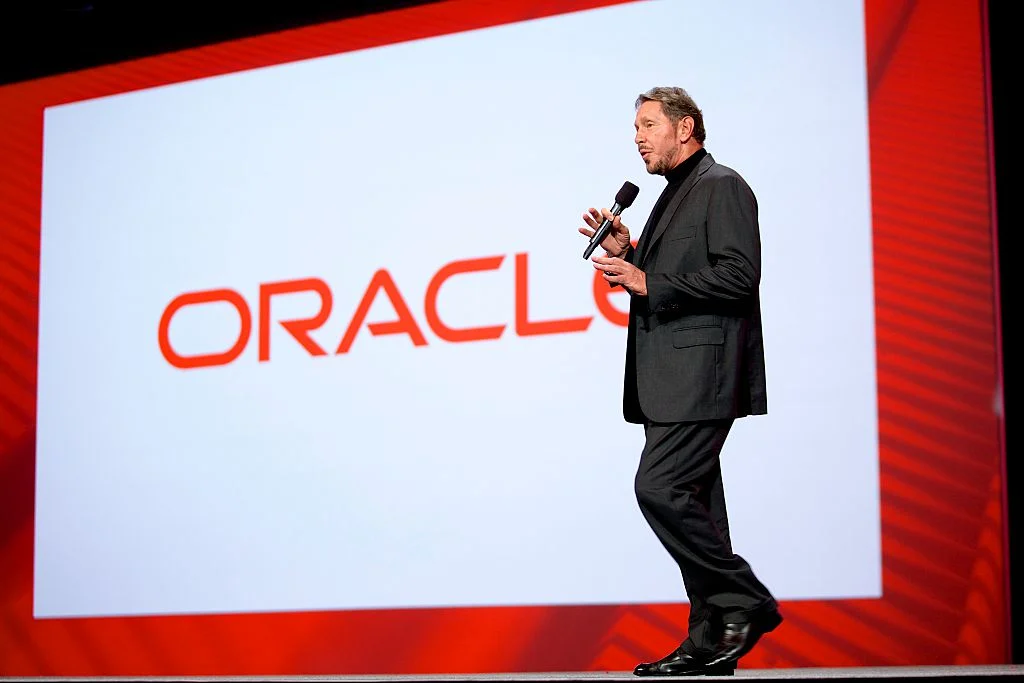
In an unexpected financial about-face, Oracle co-founder, Chief Technology Officer, and executive chairman Larry Ellison has officially canceled a planned, massive divestment of his company stock. The decision, revealed in an official corporate announcement on Saturday, brings a sudden halt to a scheduled sell-off that would have seen one of technology’s wealthiest figures liquidate tens of millions of shares. The reversal arrives at a crucial juncture for the enterprise software giant, which has been navigating an aggressive capital expenditure cycle centered on artificial intelligence infrastructure, alongside complex geopolitical and media-industry entanglements.
The abrupt termination of the stock sale plan has drawn intense scrutiny from market analysts, institutional investors, and technology observers alike. While Oracle’s leadership has remained tight-lipped regarding the precise catalysts behind Ellison’s change of heart, the decision to retain his massive equity stake underscores a renewed, highly visible vote of confidence in the firm’s long-term strategic trajectory. As Oracle pushes deeper into the high-stakes arena of cloud computing, AI-driven data centers, and high-profile strategic partnerships, the preservation of Ellison’s controlling equity posture serves as a powerful signal to Wall Street.
Chronology of the Planned Divestment and Sudden Cancellation
The sequence of events leading up to Saturday’s announcement began through standard regulatory disclosures required by federal securities laws. Initially, Oracle disclosed through a Form 144 filing with the United States Securities and Exchange Commission (SEC) that Larry Ellison intended to unload a substantial block of company stock. According to financial wire reports, the pre-arranged trading plan—often structured under Rule 10b5-1 to protect corporate insiders from insider trading allegations—covered a staggering 50 million shares of Oracle common stock.
At the time of the initial filing, based on prevailing market valuations, the targeted stake was valued at approximately $7.5 billion. Such a massive divestment by a founder of Ellison’s stature naturally commanded the attention of market watchers, routinely sparking discussions regarding liquidity needs, estate planning, or capital reallocation toward external philanthropic and entrepreneurial ventures.
However, the dynamics shifted abruptly over the weekend. In its official Saturday release, Oracle confirmed the complete dismantling of the trading plan before any portion of the equity could be liquidated. “No Oracle stock was sold under that plan, and he has no other plans to sell any of his Oracle stock,” the company explicitly stated in its public communication. The firm elected not to provide a detailed rationale for the cancellation, leaving financial analysts to interpret the macroeconomic and corporate signals surrounding the decision.
Financial Context and Market Performance
The cancellation of the multi-billion-dollar stock sale unfolds against a volatile financial backdrop for Oracle Corporation. As of mid-September, Oracle’s stock price has experienced downward pressure, trading down approximately 22 percent since the commencement of the year. This contraction reflects a broader reassessment across the technology sector, where investors are increasingly scrutinizing the astronomical capital expenditures required to build, scale, and maintain next-generation artificial intelligence infrastructure.
Unlike consumer-facing software enterprises, Oracle has leaned heavily into the heavy industrial side of the digital economy. The corporation has been spending aggressively on the construction and expansion of advanced data centers designed to handle intensive cloud workloads and generative AI model training. These capital-intensive outlays have temporarily squeezed margins and pressured short-term valuations, testing the patience of short-term institutional shareholders even as enterprise demand for cloud migration remains robust.
By choosing to cancel the sale of 50 million shares during a period of relative equity weakness, Ellison has effectively chosen to absorb the paper loss rather than lock in diminished valuations or reduce his economic exposure to the firm he co-founded in 1977. In corporate finance, an insider opting against a planned liquidation during a downturn is frequently interpreted as a bullish indicator, suggesting that the executive believes the current market valuation does not adequately reflect the intrinsic long-term value of the underlying enterprise.
Strategic Divergence: AI Expansion, TikTok Partnerships, and Media Acquisitions
Larry Ellison’s decision cannot be viewed in isolation from his broader portfolio of professional commitments, family business ventures, and high-stakes geopolitical alignments. Over the past year, Ellison has positioned himself at the center of several intersecting commercial battles that require substantial financial backing and unwavering corporate stability.
Foremost among these is Oracle’s deepening integration into the national technology infrastructure landscape. In addition to scaling its cloud and data center footprint to capture soaring enterprise artificial intelligence budgets, Oracle has assumed a vital security and ownership role regarding the United States operations of TikTok. Following prolonged regulatory and legislative battles concerning national security, data privacy, and foreign ownership, Oracle emerged as a primary domestic technology and security partner charged with safeguarding U.S. user data and ensuring compliance with federal oversight mandates. This arrangement has elevated Oracle’s profile not merely as an enterprise database provider, but as a critical national security stakeholder in the digital age.
Simultaneously, Ellison’s personal capital allocation strategy has extended far beyond the walls of Oracle’s Redwood City headquarters. The billionaire tech mogul has actively deployed his personal wealth to support his son, David Ellison, in complex entertainment and media industry maneuvers. Most notably, Larry Ellison provided critical financial backing for David Ellison’s high-profile acquisition bid for Warner Bros., a multi-billion-dollar media consolidation effort valued at approximately $40 billion.
This ambitious entertainment play, however, has not proceeded without friction. The proposed transaction has faced rigorous regulatory scrutiny and legal challenges, including contested proceedings and settlement discussions involving state attorneys general, such as California’s top legal office. Observers have noted that managing a multi-billion-dollar family-backed media consolidation while simultaneously executing a massive equity divestment from his primary wealth generator could have created unnecessary financial and optics complexities. Retaining his complete Oracle stake fortifies his personal balance sheet, ensuring maximum financial flexibility as the legal and commercial battles surrounding the Warner Bros. acquisition continue to unfold.
Fact-Based Analysis of Implications for Investors and the Market
The immediate implication of Ellison’s canceled stock sale is the removal of a significant potential overhang from Oracle’s trading ecosystem. A planned insider sale of 50 million shares—representing billions of dollars in equity supply entering the public market—can exert psychological and technical downward pressure on a stock, as institutional and retail investors anticipate the impending dilution or liquidity event. With the trading plan officially rescinded and the company emphasizing that no further sales are contemplated, that market overhang has instantly evaporated.
Furthermore, the move reinforces stability at the top of Oracle’s leadership hierarchy. Larry Ellison remains one of the technology industry’s most influential figures, and his vast ownership stake aligns his personal financial destiny directly with the ongoing success of Oracle’s cloud and artificial intelligence initiatives. While the company continues to absorb heavy capital expenditure costs associated with data center buildouts, institutional investors may take comfort in the knowledge that the company’s controlling architect is steadfastly maintaining his equity position.
Nevertheless, Oracle faces a demanding operational road ahead. The capital markets will continue to evaluate whether the heavy spending on AI data centers will yield the accelerated revenue growth and margin expansion necessary to reverse the stock’s year-to-date losses. Additionally, the operational complexities of managing its expanded responsibilities—spanning enterprise cloud services, TikTok’s U.S. security architecture, and supporting complex media mergers—will require disciplined execution from CEO Safra Catz and the broader executive team.
As Oracle prepares for its upcoming earnings disclosures and strategic updates, the spotlight will remain fixed on how the company balances its aggressive infrastructure investments with shareholder returns. For now, however, the stabilization of Larry Ellison’s equity holdings provides a firm foundation, signaling to the broader financial community that Oracle’s long-term captain remains wholly invested in the enterprise he built.