

NASAs Jupiter Moon Io Unveiled
Nasa jupiter moon io – NASA’s Jupiter moon Io sets the stage for this enthralling narrative, offering readers a glimpse into a world of intense geological activity and fascinating interactions within the Jovian system. This fiery moon, a volcanic wonderland, is a testament to the dynamic forces shaping our solar system.
From its fiery volcanoes spewing plumes of gas and ash to its unique orbital dance with Jupiter and its fellow Galilean moons, Io reveals a story of cosmic drama. We’ll delve into its fascinating history, explore the extreme volcanic activity that characterizes its surface, and examine the theories behind its unusual internal structure.
Introduction to Io
Io, a captivating moon of Jupiter, stands out as a world of intense geological activity. Its surface is a dynamic landscape sculpted by volcanic eruptions, unlike anything seen elsewhere in our solar system. This unique characteristic sets Io apart from other Jovian moons and makes it a prime target for scientific exploration. This dynamic nature is directly related to the powerful gravitational forces at play within Jupiter’s system.Io’s geological activity is driven by tidal forces, generated by the gravitational interactions between Jupiter and other moons.
These forces create immense internal stresses, leading to volcanic eruptions that reshape the surface continually. The intense heat generated by these interactions is what fuels the extraordinary volcanic activity observed on Io.
NASA’s recent explorations of Jupiter’s moon Io have been fascinating, revealing a surprisingly active volcanic landscape. Meanwhile, the hockey world is buzzing about potential trade interest in Blues player Pavel Buchnevich, potentially shaking up the NHL. Regardless of the trade rumors, the discoveries about Io’s geology are still incredibly exciting and offer new insights into planetary science.
Historical Context of Discovery and Early Observations
Io was discovered by Galileo Galilei in 1610, alongside three other Jovian moons. This discovery was a pivotal moment in astronomy, marking the first time celestial bodies beyond our own were observed. Early observations provided rudimentary data on Io’s size and position within Jupiter’s system.
Io’s Place within the Jovian System and Orbital Dynamics
Io orbits Jupiter at a moderate distance, but its position is strategically important within the Jovian system. Its orbit is affected by the gravitational influence of Europa and Ganymede, leading to complex orbital interactions. These interactions are essential for understanding the dynamic environment within the Jovian system. Io’s orbital period is approximately 1.77 Earth days.
Major Features of Io’s Surface
Io’s surface is characterized by a multitude of active volcanoes, lava flows, and volcanic plumes. These features are constantly changing, with new eruptions and resurfacing events occurring frequently. The constant activity results in a highly dynamic and varied landscape. The surface is predominantly composed of solidified volcanic materials, such as sulfur and sulfur dioxide.
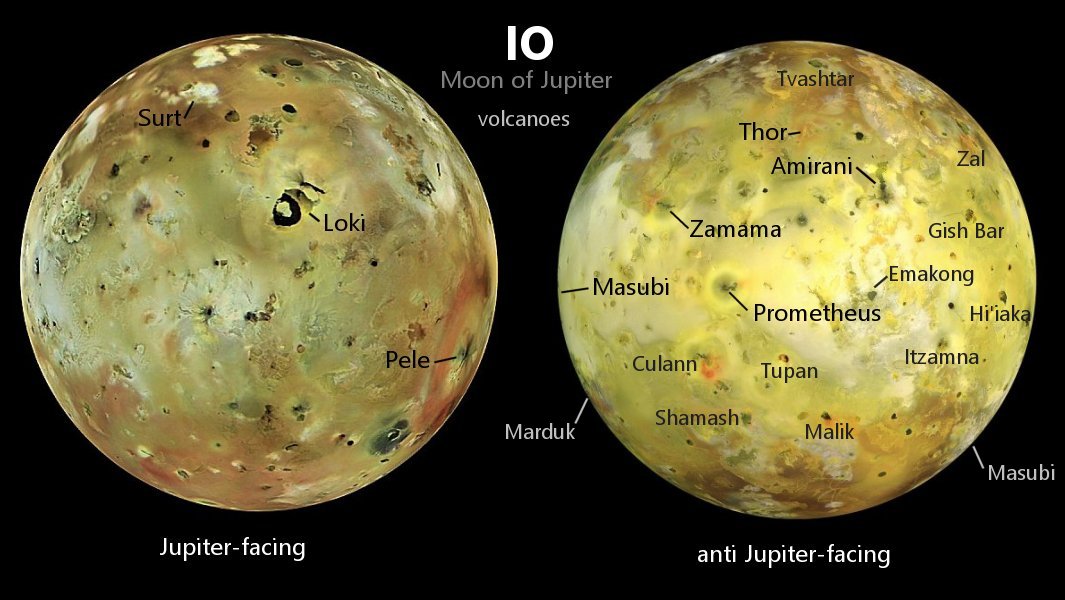
- Volcanic Activity: Io’s surface is covered by active volcanoes, which are a direct result of internal tidal forces. These volcanoes spew out lava, ash, and sulfur compounds, constantly reshaping the landscape. Examples include the Pele and Loki hotspots, which exhibit frequent and substantial eruptions.
- Lava Flows: Extensive lava flows are visible across Io’s surface, covering vast areas with solidified lava. These flows demonstrate the scale and intensity of volcanic activity, leaving behind distinctive patterns and formations.
- Volcanic Plumes: Volcanic plumes, towering above the surface, are a striking feature of Io’s active geology. These plumes, composed of volcanic material, rise many kilometers into space, offering valuable insights into the composition and internal processes of the moon.
- Sulfur Deposits: The presence of sulfur and sulfur dioxide is a key characteristic of Io’s surface. These materials contribute to the distinct colors and textures observed in images, ranging from yellow to orange and red. The varying colors and textures are indicative of the different types of volcanic activity and composition.
Volcanic Activity on Io
Io, a moon of Jupiter, is a truly remarkable celestial body. Its surface is dominated by intense volcanic activity, unlike anything seen elsewhere in our solar system. This relentless geological upheaval shapes the moon’s appearance and provides crucial insights into the inner workings of planetary systems.The volcanic eruptions on Io are not sporadic events but a constant, powerful display of geological dynamism.
This unrelenting activity is driven by a complex interplay of tidal forces from Jupiter and its other moons, which generate immense internal heat within Io. This heat fuels the potent volcanic processes.
Frequency and Intensity of Eruptions
Io’s volcanoes are among the most active in the solar system. Eruptions are frequent and powerful, often producing massive plumes of volcanic material that extend far into space. The sheer intensity of these eruptions is remarkable, capable of ejecting significant quantities of lava and gas, including sulfur dioxide, far above Io’s surface. This constant activity leaves a visible impact on the moon’s surface, altering its landscape over time.
Types of Volcanic Features
Io’s volcanic landscape exhibits a diverse range of features. Lava flows, characterized by the movement and spreading of molten rock across the surface, are common. These flows often create extensive plains and cover significant portions of the moon. Another prominent feature is volcanic plumes, which are erupting columns of gas and volcanic debris. These plumes are often towering structures, reaching thousands of kilometers into space.
NASA’s latest findings on Jupiter’s moon Io are fascinating, revealing incredible volcanic activity. It’s amazing how much we’re learning about these celestial bodies! Speaking of fascinating things, have you heard about the potential connection between the Kansas City Chiefs and Taylor Swift? The buzz is definitely there, as reported in this article kansas city chiefs taylor swift.
Regardless, the sheer scale and complexity of Io’s volcanic processes still leave me in awe, reminding us of the vastness and wonder of the universe.
Calderas, large, bowl-shaped depressions formed by the collapse of volcanic structures, are also observed. These depressions are often associated with significant eruptions and provide a snapshot of past volcanic activity.
Composition of Volcanic Materials
Io’s volcanic materials are primarily composed of sulfur and sulfur dioxide, along with other volatile compounds. The presence of these materials is directly related to Io’s internal structure and the heat-driven processes within. The abundance of sulfur compounds on Io’s surface results in a colorful and varied landscape, ranging from bright yellow to dark reddish-orange hues. These colors are a direct manifestation of the chemical composition of the volcanic materials.
The composition of these materials reflects the moon’s internal differentiation and the processes driving its volcanic activity.
Comparison to Other Celestial Bodies
Io’s volcanism stands in stark contrast to other celestial bodies in our solar system. While Earth and Mars exhibit volcanic activity, the frequency and intensity observed on Io are unparalleled. The extreme heat generated within Io, resulting from tidal forces, is the driving force behind this exceptional volcanism. This difference highlights the unique conditions that shape the geological evolution of different planetary bodies.
For example, the volcanic activity on Earth, while still significant, is primarily driven by internal heat from radioactive decay. This contrasts sharply with Io’s tidal heating. The extreme volcanism on Io demonstrates the dynamic nature of planetary interiors and the critical role of external forces in shaping planetary evolution.
Io’s Internal Structure and Formation
Io, Jupiter’s volcanic moon, is a fascinating world sculpted by intense internal forces. Its dynamic geology is a direct consequence of its unique formation and position within the Jovian system. Understanding Io’s internal structure is crucial to comprehending the processes that drive its spectacular volcanic activity.Io’s interior is believed to be composed of a metallic core, a silicate mantle, and a thin crust.
The presence of a partially molten core, heated by tidal forces, is a key factor in the extraordinary volcanic activity observed on the surface. This internal dynamism plays a significant role in shaping the moon’s geological features and its overall appearance.
Theorized Internal Structure
Io’s internal structure is theorized to consist of a solid, metallic core, likely composed of iron and nickel, surrounded by a silicate mantle. The presence of a partially molten layer within the mantle is a crucial component, contributing significantly to the intense volcanic activity. This molten layer, heated by tidal forces and radioactive decay, allows for the movement of molten material, creating the driving force behind the eruptions.
Formation and Evolution within the Jovian System
Io’s formation and evolution are intricately linked to the Jovian system. It is believed that Io formed from the accretion of dust and gas in the early solar system, similar to other moons. However, its proximity to Jupiter and the strong gravitational interactions with other Jovian moons, particularly Europa and Ganymede, profoundly influenced its evolution. These interactions led to a unique internal heating mechanism, unlike any other known moon in our solar system.
Role of Tidal Forces
Tidal forces from Jupiter are the primary driver of Io’s internal heat. The constant gravitational tug-and-pull from Jupiter causes Io to deform, generating friction within its interior. This frictional heating is the primary energy source fueling the intense volcanic activity that characterizes Io. The varying distances of Io from Jupiter, and the subtle gravitational influences from other moons, create variations in tidal forces and thus influence the volcanic activity on Io’s surface.
Comparison to Other Jovian Moons
| Moon | Core | Mantle | Crust | Internal Heat Source |
|---|---|---|---|---|
| Io | Metallic (partially molten) | Silicate (partially molten) | Thin silicate | Tidal forces, radioactive decay |
| Europa | Metallic | Silicate (likely icy) | Icy | Radioactive decay |
| Ganymede | Metallic | Silicate (likely icy) | Icy | Radioactive decay |
| Callisto | Metallic | Silicate (likely icy) | Icy | Radioactive decay |
The table above summarizes the differences in the internal structure of Io and other Jovian moons. The significant difference lies in Io’s extreme internal heating, primarily driven by tidal forces, which sets it apart from the other Galilean moons, whose internal heating is largely due to radioactive decay.
Io’s Atmosphere and Surface Composition
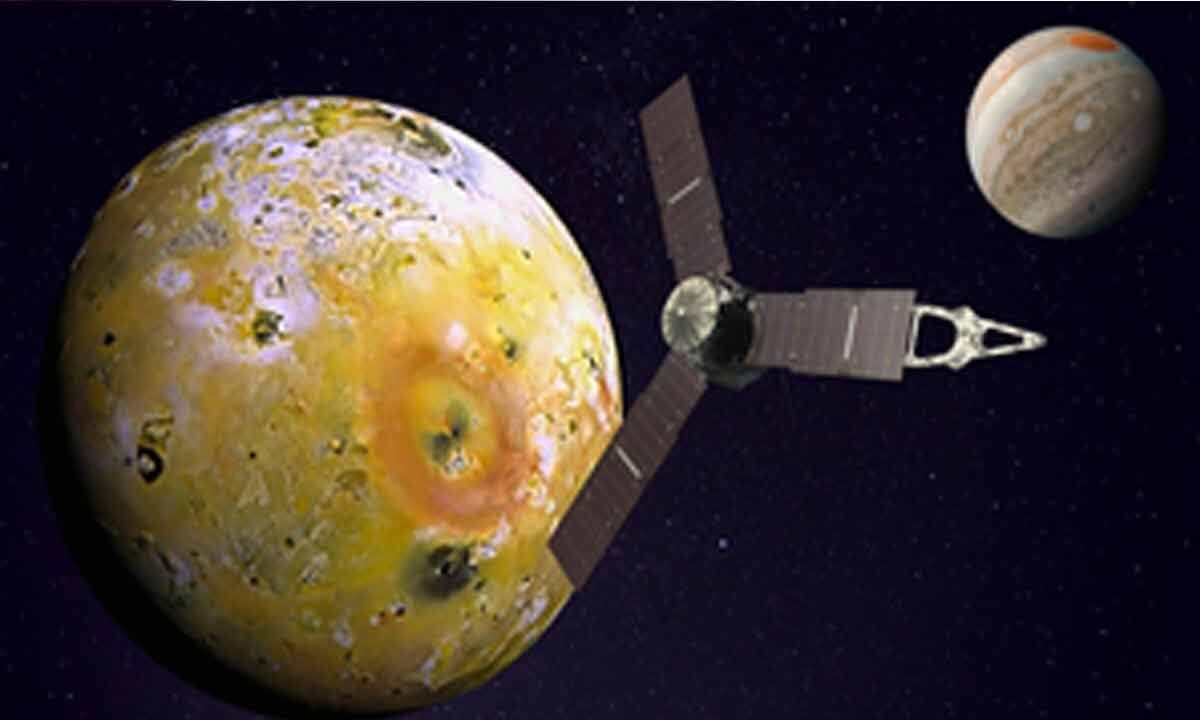
Io, Jupiter’s volcanic moon, boasts a surprisingly dynamic and chemically complex environment. Its intense internal heat drives spectacular volcanic activity, impacting its tenuous atmosphere and surface composition in dramatic ways. This activity, unlike that on Earth, is directly influenced by Jupiter’s immense gravitational forces and magnetosphere. Understanding these interactions provides crucial insights into the processes shaping the environment of this fascinating celestial body.Io’s atmosphere, though extremely thin, plays a critical role in its surface chemistry and interaction with the Jovian magnetosphere.
This atmosphere, unlike Earth’s, is not a stable, self-sustaining system, but rather a constantly replenished mixture of gases originating from volcanic eruptions. The composition and characteristics of this atmosphere are influenced by the various types of volcanic activity and the environment in which they occur.
Io’s Tenuous Atmosphere
Io’s atmosphere is exceptionally thin, meaning the atmospheric pressure is extremely low compared to Earth’s. It’s primarily composed of sulfur dioxide (SO2), with trace amounts of other gases like sodium, potassium, and oxygen. The presence of these gases, along with the volcanic activity, creates a dynamic atmosphere that constantly interacts with Jupiter’s magnetosphere. The SO2 molecules in Io’s atmosphere are constantly being replenished by volcanic emissions.
These emissions are responsible for the varying concentrations of gases observed, and the behavior of the atmosphere is strongly linked to the ebb and flow of volcanic activity.
Surface Chemical Elements and Compounds
Io’s surface is a harsh landscape dominated by volcanic features. A wide range of chemical elements and compounds are found on its surface, shaped by the constant volcanic activity. These materials are ejected from volcanoes in various forms, from lava flows to plumes of gas and dust. The diversity of materials reflects the complex interplay of chemical processes within Io’s interior.
Interaction with the Jovian Magnetosphere
Io’s tenuous atmosphere interacts significantly with Jupiter’s powerful magnetosphere. As charged particles from Jupiter’s magnetosphere collide with neutral gas molecules in Io’s atmosphere, they ionize and become part of a plasma torus surrounding Jupiter. This interaction creates a significant phenomenon: the Io plasma torus. This torus is a doughnut-shaped region of ionized gas and particles, extending around Jupiter, primarily from Io’s volcanic activity.
The intense interaction leads to a significant transfer of energy and matter between Io and Jupiter’s magnetosphere.
Surface Material Distribution
The diverse materials on Io’s surface are distributed unevenly, influenced by the type and location of volcanic activity. The composition of the surface varies significantly across the moon’s surface, reflecting the complex interactions of the materials emitted by the volcanoes. These materials are distributed in patterns that often correspond to the volcanic centers and features. Understanding the distribution of these materials aids in deciphering the internal processes and evolution of the moon.
| Material | Distribution | Description |
|---|---|---|
| Sulfur Dioxide (SO2) | Mostly concentrated in the atmosphere | A major constituent of Io’s atmosphere, constantly replenished by volcanic outgassing. |
| Sulfur (S) | Surface deposits, lava flows | Abundant in various forms, including sulfurous compounds. |
| Sodium (Na) | Volcanic plumes, surface deposits | Ejected from volcanoes, forming clouds and surface deposits. |
| Potassium (K) | Surface deposits, volcanic plumes | Found in various compounds, likely originating from the moon’s interior. |
| Oxygen (O) | In various compounds | Found in various oxides and compounds. |
Interactions with Jupiter and Other Moons
Io, the most volcanically active body in our solar system, isn’t alone in the Jovian system. Its dynamic environment is profoundly shaped by its gravitational interactions with Jupiter and the other Galilean moons, particularly Europa and Ganymede. These interactions, a complex dance of gravitational forces, are crucial to understanding Io’s unique characteristics.
Gravitational Interactions with Jupiter
Jupiter’s immense gravity exerts a powerful tidal force on Io. As Io orbits Jupiter, the planet’s gravity stretches and compresses Io, generating internal friction and heat. This process, known as tidal heating, is the primary driver of Io’s intense volcanic activity. The elliptical nature of Io’s orbit further exacerbates this effect, as the gravitational pull varies throughout its orbit.
This variability is a key factor in the moon’s intense internal heat.
Interactions with Other Jovian Moons
The other Galilean moons, Europa and Ganymede, also play a significant role in Io’s dynamic environment, though their influence is less pronounced compared to Jupiter’s. These moons, through their own orbital paths, subtly alter the gravitational forces acting on Io. These gravitational interactions can lead to slight variations in Io’s orbital parameters over time, influencing the precise timing and intensity of its volcanic activity.
Comparison of Effects on Different Moons
The impact of these interactions varies significantly between the moons. Jupiter’s tidal forces are most prominent on Io, leading to the intense volcanic activity we observe. Europa and Ganymede experience tidal forces, but to a much lesser extent, resulting in different geological characteristics. For instance, Europa’s surface displays evidence of a subsurface ocean, a result of its tidal interactions with Jupiter, but without the extreme volcanic activity seen on Io.
Ganymede, being the largest of the Galilean moons, exhibits a more complex internal structure influenced by its interactions with Jupiter and the other moons, yet it lacks the extreme volcanism of Io.
Orbital Paths of Jovian Moons
The following table illustrates the orbital paths of Io and the other Galilean moons. Note the significant differences in orbital distances and periods, reflecting the varied gravitational influences.
| Moon | Semi-major Axis (km) | Orbital Period (days) |
|---|---|---|
| Io | 421,700 | 1.77 |
| Europa | 671,000 | 3.55 |
| Ganymede | 1,070,000 | 7.16 |
| Callisto | 1,883,000 | 16.7 |
Note: Semi-major axis refers to the average distance of the moon from Jupiter. Orbital periods represent the time it takes for each moon to complete one orbit around Jupiter.
Exploration of Io: Nasa Jupiter Moon Io
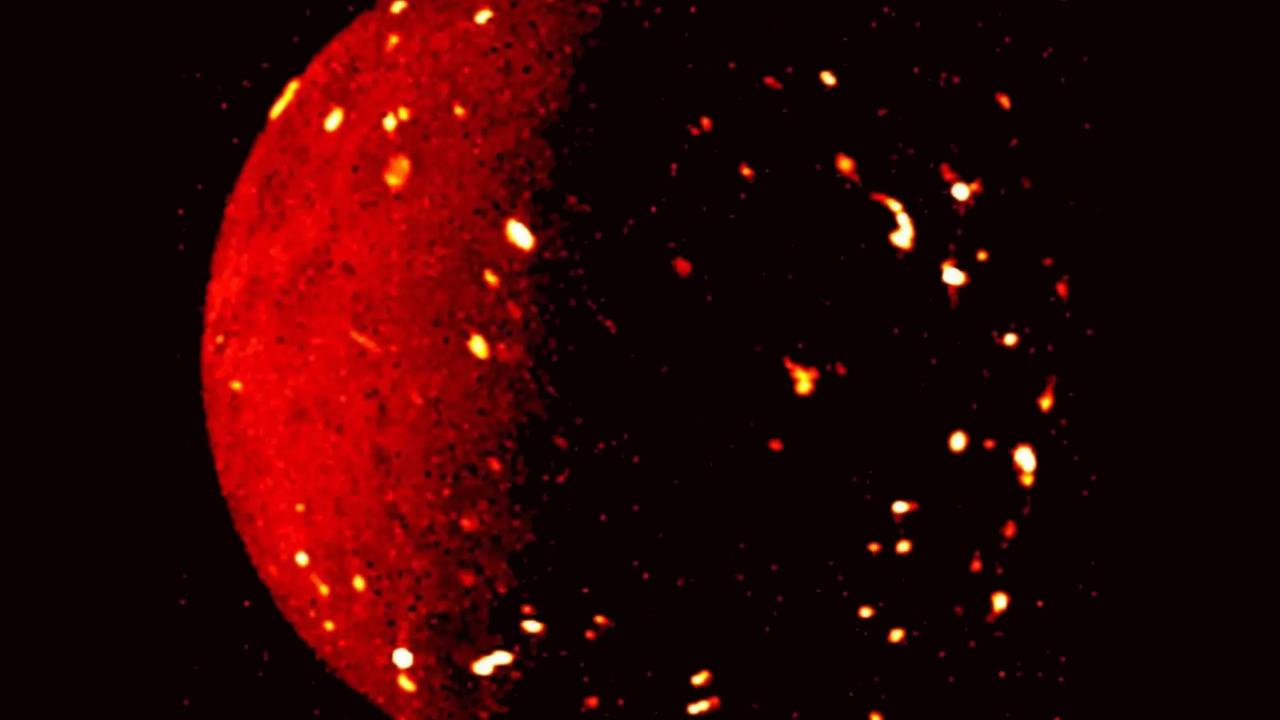
Io, Jupiter’s volcanic moon, has captivated scientists for decades. Its astonishingly active geology, a stark contrast to the icy moons of the outer solar system, demands close scrutiny. Understanding the processes driving Io’s fiery surface is crucial to comprehending the evolution of planetary bodies and the potential for life beyond Earth. This exploration delves into the missions that have illuminated Io’s mysteries and the exciting prospects for future discoveries.
NASA’s recent discoveries about Jupiter’s moon Io, with its volcanic activity, are truly fascinating. These findings are incredibly important for understanding planetary science, and I’m particularly interested in how they might relate to the Davine Joy Randolph Awards, which recognize outstanding contributions in STEM fields. These awards, as highlighted on davine joy randolph awards , demonstrate the vital importance of supporting the next generation of scientists, engineers, and researchers, especially those studying celestial bodies like Io.
Ultimately, exploring our solar system, including Io, continues to be crucial for our scientific progress.
Missions and Spacecraft
Early probes provided glimpses of Io’s unique environment. The Voyager missions, with their flybys in the 1970s, were instrumental in revealing the extent of Io’s volcanic activity. Their cameras captured images of lava flows and plumes erupting from volcanoes, providing the first detailed view of this active world. Later, the Galileo mission, orbiting Jupiter from 1995 to 2003, offered more comprehensive data.
Galileo’s instruments, including a magnetometer and a suite of imaging cameras, provided crucial data about Io’s atmosphere, magnetic interactions, and internal structure. More recently, the New Horizons flyby in 2007, en route to Pluto, gave a renewed perspective on Io’s volcanic activity and its interaction with Jupiter’s magnetosphere.
Key Discoveries
Io’s exploration has yielded significant findings across various scientific disciplines. Volcanic activity is the most prominent feature, characterized by massive lava flows, sulfurous deposits, and towering plumes of volcanic material. The presence of a thin atmosphere, primarily composed of sulfur dioxide, was a surprising discovery. Furthermore, observations revealed complex interactions between Io and Jupiter’s magnetic field, leading to the creation of plasma torus and auroral displays.
The sheer intensity of Io’s volcanic activity and its unique interactions with Jupiter’s environment make it a crucial case study for understanding planetary processes.
Future Missions, Nasa jupiter moon io
Future missions to Io hold immense potential for further unraveling its secrets. A mission focused on detailed observations of the moon’s volcanic plumes, capturing high-resolution images and spectroscopic data, would be invaluable. A potential mission design might involve a dedicated orbiter with instruments specifically tailored to study the plumes’ composition and dynamics. This would allow scientists to analyze the composition of the materials ejected from Io’s volcanoes and understand the processes driving these eruptions.
Further exploration of Io’s subsurface could also reveal valuable insights into the moon’s formation and evolution. This could involve sophisticated radar or seismic probes to map Io’s interior. Furthermore, a potential mission focused on Io’s interaction with Jupiter’s magnetosphere could help in understanding the dynamics of plasma interactions in the Jovian system.
Timeline of Io Exploration Missions
| Mission | Year(s) | Key Findings |
|---|---|---|
| Voyager 1 | 1979 | Initial close-up images, revealing volcanic activity and a thin atmosphere. |
| Voyager 2 | 1979 | Further images, providing data on Io’s surface features and magnetic interactions. |
| Galileo | 1995-2003 | Detailed orbital observations, leading to a better understanding of Io’s internal structure, atmosphere, and interactions with Jupiter. |
| New Horizons | 2007 | Flyby providing updated observations of Io’s volcanic activity and interactions with Jupiter’s magnetosphere. |
Future missions are yet to be planned, but the potential for a dedicated Io orbiter or a subsurface probe is significant. These missions would contribute significantly to our understanding of this intriguing world.
Visualizing Io
Io, a volcanic moon of Jupiter, stands out in the Jovian system with its dynamic and intensely active surface. Unlike the more subdued, cratered landscapes of other Galilean moons, Io’s surface is a testament to its internal heat engine, constantly reshaping itself through volcanic eruptions and lava flows. This unique visual character provides crucial insights into the moon’s geological processes and the power of planetary activity.Io’s surface is a breathtaking display of geological fury, constantly being altered by volcanic activity.
The sheer scale and intensity of this activity make Io a fascinating subject of study, offering a glimpse into the dynamic processes that shape planetary bodies throughout the solar system.
NASA’s latest findings on Jupiter’s moon Io are fascinating, but the struggles of Ukrainian renters in Williamsburg, Brooklyn, highlight a different kind of astronomical event – the ever-shifting housing market. Renters williamsburg brooklyn kiev ukraine are facing a challenging landscape, similar to the complex volcanic activity happening on Io. Despite the complexities of both, the universe, in all its forms, continues to inspire wonder, and hopefully, the search for solutions.
Volcanic Features
Io’s surface is dominated by volcanoes, ranging in size from small vents to immense caldera-like structures. These volcanic features are a striking visual element, characterized by their varied colors and textures. Lava flows, often spanning hundreds of kilometers, spread across the surface, creating vast, dark, and smooth plains. The different colors, from reddish-orange to dark gray, reflect the varying compositions of the volcanic materials.
The textures of the flows show a wide range of fluidity and viscosity, creating a visual narrative of the eruption processes.
Lava Flows and Their Appearance
Lava flows on Io are often remarkably fluid, with sinuous channels and extensive spreading patterns. These flows are primarily composed of silicate materials, often rich in sulfur and sulfur dioxide, resulting in the characteristic colors observed across the surface. The extensive coverage of these flows on certain regions can be seen in the images of the volcanic plains, with a smooth, even surface texture.
These lava flows are a key indicator of the internal heat driving Io’s geological activity. Their varying colors are a result of the differing compositions of the volcanic materials. The color spectrum often ranges from the reddish-orange hues of sulfur to the darker gray of solidified lava.
Differentiation from Other Jovian Moons
Io’s surface dramatically contrasts with the other Galilean moons. While Europa’s surface is smooth and icy, Ganymede’s surface is marked by a complex mix of craters and tectonic features, and Callisto’s surface is heavily cratered, exhibiting a more ancient and static appearance. Io’s vibrant colors and active volcanic features set it apart, emphasizing its geological dynamism. The other moons exhibit different types of geological activity, or have been geologically inactive for long periods.
Visual Representation of Io’s Surface
Imagine a landscape of vibrant colors, with a multitude of dark, smooth plains punctuated by glowing, reddish-orange volcanic vents. These vents, some relatively small, others vast and caldera-like, are scattered across the surface, indicating ongoing volcanic activity. The flows of lava, often in a sinuous pattern, stretch across the plains, creating a complex interplay of shapes and colors.
NASA’s recent findings about Jupiter’s moon Io are pretty fascinating, right? The volcanic activity is mind-blowing. Speaking of fascinating things, have you seen Ann Maddox on Vanderpump Rules lately? Ann Maddox’s journey on the show is definitely something to follow. Back to space, though – Io’s unique geological features really highlight the incredible diversity of our solar system.
The overall visual impression is one of intense geological activity and a dynamic surface, constantly being reshaped by internal forces. The varying shades of orange and red reflect the different sulfur compounds on the surface. The dark areas represent solidified lava flows, while the brighter areas are potentially areas with more recently erupted materials.
Example of a Visual Feature
Consider a prominent lava flow. It might span several hundred kilometers, appearing as a dark, smooth area on the surface. Its shape could be sinuous or even sheet-like, depending on the flow characteristics. The flow’s width and length would indicate the volume of lava erupted and the distance it traveled. The presence of such features signifies the magnitude of the geological processes operating on Io.
The dark color suggests the solidified lava flow, while the presence of surrounding volcanic vents indicates the active nature of the source region. Its size in comparison to other features on the surface would emphasize the scale of the volcanic activity.
Closing Notes
In conclusion, NASA’s Jupiter moon Io stands as a remarkable example of the diverse and dynamic environments within our solar system. Its relentless volcanic activity, unique orbital characteristics, and intricate interactions with other celestial bodies make it a compelling subject of scientific inquiry. Further exploration promises to unlock even more secrets about this fascinating world.
Question Bank
What makes Io’s volcanoes so unique?
Io’s volcanoes are unlike anything on Earth. They’re driven by tidal forces from Jupiter, generating immense heat within the moon’s interior, which fuels constant eruptions of lava, ash, and gases.
How does Io’s orbit affect its geological features?
Io’s elliptical orbit around Jupiter results in immense tidal forces that flex and distort the moon’s interior, contributing significantly to its volcanic activity.
What are some of the spacecraft that have studied Io?
Numerous NASA spacecraft, including Voyager, Galileo, and New Horizons, have provided valuable data on Io’s surface, atmosphere, and interactions with Jupiter’s magnetosphere.
What are the potential future missions for studying Io?
Future missions could focus on detailed analysis of Io’s volcanic plumes, its internal structure, and its potential to harbor subsurface water.